Get Full Government Meeting Transcripts, Videos, & Alerts Forever!
Get email alerts on the Elections topic
No spam. Unsubscribe anytime.
Elections official seeks 60 additional poll pads and ballot‑on‑demand printers ahead of March primaries
Summary
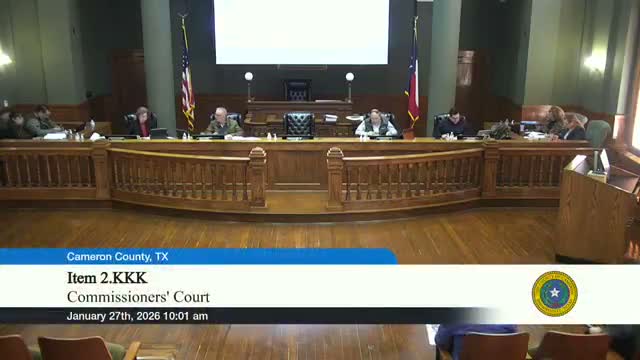
Elections staff told the Cameron County Commissioners Court it needs 60 more electronic poll pads and 60 ballot‑on‑demand printers to ensure two check‑in stations and printers at each polling site for the March 3 primaries; the court approved seeking funds and proceeding with the purchase.
Elections officials asked the commissioners court to authorize the purchase of 60 additional electronic poll pads and 60 ballot‑on‑demand printers to ensure two separate check‑in stations and printers at each polling location for the March 3, 2026 party primaries.
The request, presented by the county’s elections administrator, said current equipment and the parties’ inability to agree on joint primary operations mean the county must increase its inventory to maintain service and redundancy on election day. “We are making a request for 60 additional e poll pads because we will turn over some of the pads that are used during early voting and convert them for election day,” the elections official said, explaining the need for backup units when a device fails.
Why it matters: county staff said having two poll pads and two ballot printers at each site is essential to avoid service disruptions if hardware or software issues occur. Staff also flagged a possible future mandate from the legislature (Senate Bill 2753) that could shorten the time between the end of early voting and election day, which would reduce time for equipment turnaround.
Details and funding: elections staff reported 137 current poll pads (with 45 used for early voting this cycle) and said the county needs roughly 170 total devices to meet the two‑per‑site standard across 88 polling locations. County finance staff noted quotes attached to the agenda of about $156,000 for the gear and estimated recurring support costs of roughly $9,000 per year. The court approved the purchase authorization and directed staff to identify funding, including potential savings or tax‑note balances from 2024–25.
What the court did: The commissioners approved the request by voice vote and instructed staff to pursue funding options and, if available, seek partial reimbursement from primary finance funds or other sources. The approval was procedural; the court did not record a roll‑call vote with individual tallies.
Next steps: staff will finalize procurement details and return with contract documents or expense allocations as needed.