Get Full Government Meeting Transcripts, Videos, & Alerts Forever!
Get email alerts on the Housing Tif Guidelines topic
No spam. Unsubscribe anytime.
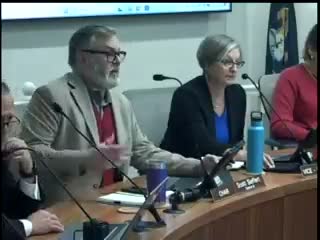
Grand Traverse County adopts interim TIF checklist for rental housing; one commissioner votes no
Summary
The Grand Traverse County Board of Commissioners adopted interim guidelines to bring tax-increment-financing and PILOT rental projects to the county earlier in the review process, set a 20% minimum of units under 100% AMI as a starting point, and lowered the program’s AMI threshold in the pilot policy; the motion passed with one dissent.
The Grand Traverse County Board of Commissioners on a voice-and-roll vote approved an interim checklist intended to govern tax-increment-financing (TIF) and payment-in-lieu-of-taxes (PILOT) projects that include rental housing, a measure the board said is intended to give the county earlier opportunity to review and influence projects that request public tax incentives.
The move, brought by Commissioner Andrews and seconded by Commissioner Morris, passed with a single opposing vote from Commissioner Walter. Commissioners and staff described the checklist as an interim, implementable guide designed to funnel applications to county staff “at the time of application,” ensuring the county is aware of proposals before they are advanced through local municipalities.
Commissioner Andrews framed the checklist as a transparency and timing fix: “We want it from day 1,” he said, arguing that earlier involvement offers the board the ability to raise concerns such as sewer connections or AMI (area median income) determinations before a local government approves a project.
Maxwell Cameron, community development coordinator for Grand Traverse County, said the ad hoc committee developed the checklist over multiple meetings and intends it as a practical tool. “These are the guidelines that we have been working on as a committee over the course of 5 or so meetings,” Cameron said, describing the checklist as a ‘front‑end’ notice to staff and planners so the county is aware of applications as they are filed.
A central point of debate was the guideline’s affordability threshold. The interim checklist proposes a minimum that 20% of a project’s units be rented to households earning less than 100% AMI to qualify for incentives. Several commissioners said the 20% floor was intended as a modest, implementable start; Commissioner Andrews and others said it aligns with brownfield practice and helps projects ‘pencil out.’ Commissioner Walter pushed back, saying the number felt insufficient. “Twenty percent feels really low,” Walter said, asking staff for pro formas and past-project math to justify the floor.
Legal limits also shaped the discussion. Commissioners noted that housing pilot applications are subject to a state statutory 90‑day provision that cannot be overridden, meaning the county cannot deny consideration for applications filed within that statutory window. “That 90‑day rule basically means we cannot as a matter of law consider an application that we get late on those pilots under state law,” a county official said during the discussion.
Board members said the measures are interim and expected to change after a planned housing feasibility study and follow‑up analysis. Administration will produce implementation guidance and distribute the checklist to municipal planners, Brownfield, and the county’s planning contacts to encourage earlier, concurrent review.
Action taken: the board adopted the interim guideline checklist for rental housing projects involving TIF and PILOT incentives (motion by Commissioner Andrews; second by Commissioner Morris). The roll-call result recorded one ‘no’ (Commissioner Walter) and the remaining commissioners voting ‘yes.’
What’s next: administration will develop implementation guidance under the board’s Section 10 authority, distribute the checklist to planners and local units, and begin a housing feasibility study (discussed separately) that may prompt revisions to the interim checklist.