Get Full Government Meeting Transcripts, Videos, & Alerts Forever!
Get email alerts on the Ethics Policy topic
No spam. Unsubscribe anytime.
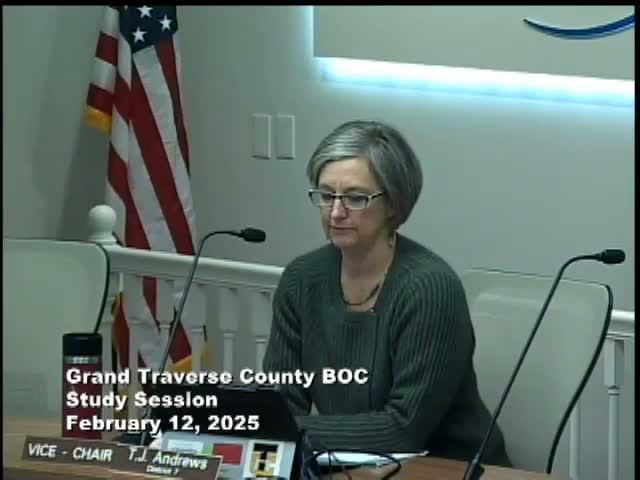
Grand Traverse County commissioners debate new ethics panel, agree to revisions and no vote
Summary
County legal counsel presented redlined changes to the ethics policy that would create an ad-hoc ethics panel for complaints; commissioners raised concerns about scope, partisan selection, and employee versus elected-official processes and asked counsel and staff to refine the investigative procedures before returning.
The Grand Traverse County Board of Commissioners heard a presentation on proposed revisions to the county ethics policy and agreed not to take formal action at the study session, asking legal counsel and staff to return with clarified language.
Legal counsel Matt, introduced by the chair, summarized a redlined draft that keeps the county’s existing framework but proposes clearer investigative procedures and an ad-hoc ethics panel the chair would appoint when a complaint is referred. "There are basically four categories that we're dealing with here: commissioners, appointed officials, countywide elected officials, and employees," Matt said, and he explained that, absent a criminal statute, the maximum internal sanction for a commissioner would be a public censure.
The core dispute centered on who handles which complaints and whether an abstention should be treated as resolving a conflict. Counsel said he removed language that suggested abstention cured a conflict because "abstention does not resolve a legally prohibited conflict of interest." He cited two statutes to guide remedies — MCL 15.322 (contracts of public servants) and provisions of the County Boards of Commissioners Act, noting that some contract approvals may require a supermajority vote.
Several commissioners pressed that routine employee investigations belong with HR and the county administrator, not an ethics panel, recommending either two separate policies (one for employees, one for elected officials/appointees/administrator) or a tighter investigative process that funnels ordinary employee complaints to administration. HR Director Donna Kinsey said investigations are conducted by at least two staff members who prepare a written summary and recommendation; she added, "When we do an investigation, it's never done just by me or just by Nate. There's always two people that go and do that investigation."
Commissioners also questioned how a panel would be composed and how to prevent partisan appointments. A public commenter urged bifurcating processes for employees and upper-level officials and asked that the board provide a clear investigatory procedure to avoid harm before any eventual electoral remedy.
The board took no vote on the policy at the study session. The chair and counsel agreed to refine the redlines and tighten the investigative procedure — distinguishing employee-level processes from those that apply to the administrator, appointees and elected officials — and to return at a future meeting with revisions.
Next steps: counsel will submit edited redlines referencing the relevant statutes and administrators will continue to apply existing HR investigatory procedures until the board receives and considers the revised policy.