Get Full Government Meeting Transcripts, Videos, & Alerts Forever!
Get email alerts on the On Site Wastewater Regulation topic
No spam. Unsubscribe anytime.
County to set public hearing on proposed on‑site wastewater regulation after staff-led review
Summary
Grand Traverse County health officials presented a draft on‑site wastewater regulation and the board voted to set a public hearing and follow a two‑step adoption process that will allow revisions and public comment before final approval, with staff planning outreach and guideline drafting ahead of a Jan. 1, 2026 effective date in the draft.
Grand Traverse County health officials told the Board of Commissioners they are ready to begin a formal public‑hearing process for a draft on‑site wastewater regulation but are not seeking final adoption today.
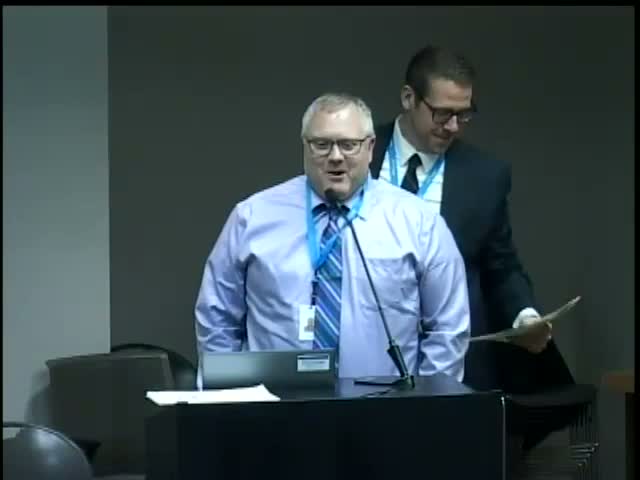
Brent Wheat, the county environmental health director, and Mike Leahy, deputy health officer, said the draft regulation grew from an ad‑hoc committee that included township officials, private septic inspectors and local stakeholders and that staff recommend a two‑step process: set a public‑hearing date, solicit comments and then return to the board for adoption or further edits. Wheat said the draft lists Jan. 1, 2026, as the regulation's effective date and that staff will prepare public‑facing guidelines and outreach materials.
“We were here in study session 01/22/2025,” Leahy said, outlining the ad‑hoc committee work and the committee's revisions. He said the health department has prepared preliminary budget material and recommended staging implementation so the county can build a program supported by fees, grants and local appropriations.
Commissioners voiced several cautions and requests. Commissioner Henschel asked staff to carefully consider suggestions submitted by Aspire North (a local realty association) and to prioritize improved record‑keeping. Commissioner Andrews, who moved the motion to adopt the resolution to set a public hearing and proceed in a two‑step process, said the hearing's purpose is to incorporate stakeholder input before final approval. “The purpose of the public hearing, as I understand it, would be to take that input into consideration,” Andrews said.
Staff described next steps: draft and publish guidelines, notify the public (the presentation referenced notice requirements under state public‑health code language), and prepare a budget request for 2026 that would include one FTE and a vehicle to support inspections and program administration. The department said grant funds and fees would be part of sustaining the program.
Public commenters expressed mixed views. Connor Miller of Aspire North Realtors praised the county for collaborative drafting and asked for greater transparency in mapping properties subject to compliance, clearer timelines for department actions and a public listing of certified inspectors. Tony Ann Sorgi, speaking during the second public comment period, urged caution about creating the impression of a widespread health crisis, saying septic‑related illnesses are rare and praising local sanitarians and plumbers for their work.
The board voted to adopt the staff recommendation to set a public hearing and follow a two‑step adoption process; the vote carried. Staff will return with schedule details, the full packet for the hearing and any language edits that arise from public comment.