Get Full Government Meeting Transcripts, Videos, & Alerts Forever!
Get email alerts on the Mental Health topic
No spam. Unsubscribe anytime.
Munson CEO reports Phase 2 psychiatric urgent care is open and ARPA funds still available for expansion
Summary
Munson Medical Center told the Grand Traverse County Board its mental health crisis center opened Phase 2 (24/7 psychiatric urgent care) in July, saw early increases in visits, and is using $5 million in ARPA funding to support a multi‑phase buildout that includes adult and pediatric residential beds; licensing and sustainability remain in progress.
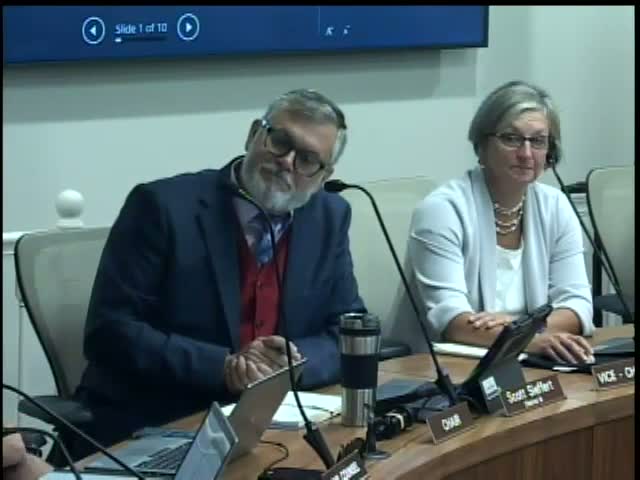
Laura Glenn, CEO of Munson Medical Center, told the Grand Traverse County Board on Aug. 14 that the county-funded mental health crisis and wellness center has moved into Phase 2, expanding to 24/7 psychiatric urgent care and adding psychiatric coverage on site.
Glenn said the center opened Phase 2 in July and described early usage: “We saw 58 urgent care visits and over a 100 crisis center contacts,” and said Phase 1 had seen about 280 individuals over six months representing 20 counties. She said Grand Traverse County is the single largest county served but exact county breakdowns are being tracked and can be provided to the board.
The board approved a $5,000,000 ARPA allocation to support the project. Glenn said about $4,000,000 has been spent to date and a little more than $1,000,000 remains for operational ramp-up and further phases. “So the psychiatric urgent care … brings a psychiatrist to that location and dramatically expands the services that we can offer,” she said, adding the ARPA funds are intended to balance revenues and expenses while patient volumes ramp up.
Why it matters: Commissioners asked for more data on how many unique patients versus repeat visits are being seen, the payer mix, and how changes to Medicaid eligibility could affect sustainability. Glenn said the center is tracking visits by age, gender and county, and that roughly 40% of patients so far have been Medicaid enrollees; the center expects a mix of Medicaid, Medicare and commercial payers.
Board members pressed for clearer sustainability projections. Glenn described a three‑year ramp plan that projects a fully mature urgent-care volume of about 10 visits per day, while acknowledging that the pro forma is assumption‑driven: “Weare anticipating once fully ramped up we'll see about 10 patients a day. Again, we could be totally wrong.”
Glenn also said Munson has preliminary licensing approval for the residential phases and is preparing to bid construction for pediatric crisis residential beds. She explained that the model relies on sharing staff across urgent care and residential phases to reach long‑term sustainability; Michael Corby, the center director, was named as the person coordinating that work.
What happens next: Commissioners requested follow-up reporting with unique‑patient counts, a county breakdown (including the share from Grand Traverse County), and clearer financial projections that incorporate potential Medicaid eligibility changes. Munson agreed to return with more granular data as the center tracks volume and payer trends.