Get Full Government Meeting Transcripts, Videos, & Alerts Forever!
Get email alerts on the Marijuana Funds topic
No spam. Unsubscribe anytime.
Commissioners debate transparent grant process for marijuana tax revenue, warn against using volatile receipts for ongoing county costs
Summary
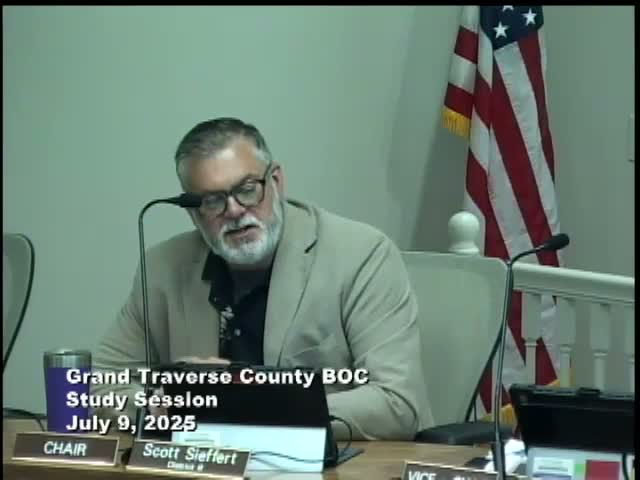
An ad hoc committee proposed a spend plan for marijuana tax revenue (a working split between internal county uses and external grants); commissioners debated eligibility, scoring, board approval authority and the risk of using a volatile revenue stream to supplant recurring county budgets.
County administration and the ad hoc committee presented a draft spending plan for annual marijuana tax receipts, proposing a process-driven grant program and an internal allocation for county needs. The draft visible to commissioners illustrated a roughly two-track approach: a portion retained for internal county priorities and a portion distributed by a public grant process to eligible organizations that meet county priorities.
Commissioner Walter, who chaired the ad hoc, described multiple community partner meetings and said the intent was a transparent application and scoring process modeled on prior ARPA grant processes. Commissioners raised multiple questions: should townships and municipalities be eligible applicants directly or only as partners with nonprofits; how should scoring and prioritization be structured; who has final authority to approve grant awards; and whether the county should use some funds to address internal priorities such as recruitment and retention.
Several commissioners urged that final award agreements come to the full Board of Commissioners for approval rather than being executed solely by the ad hoc or administrators, and others urged caution about using marijuana revenue to supplant general-fund commitments given the potential volatility of the industry.
Why it matters: The county receives roughly nine hundred thousand dollars annually in marijuana-related revenue (amounts vary), and decisions about whether to devote that money to one-time investments, ongoing county operations or community grants will affect future budgets and service priorities.
Next steps: Staff and the ad hoc committee will refine eligibility, scoring and approval language and return a revised spend plan for board consideration. Commissioners asked for a one-year review requirement in the plan to assess outcomes and allow adjustment.
Quotes: "We tried to keep the process separate for both of those funds," said Commissioner Walter, describing the committee's transparency goals. "We created a retention ad hoc committee to study this issue precisely and I'm not sure why we would single out the Prosecutor's Office" (Commissioner Andrews on staff compensation priorities).