Get Full Government Meeting Transcripts, Videos, & Alerts Forever!
Get email alerts on the Animal Control topic
No spam. Unsubscribe anytime.
Grand Traverse County forms ad hoc animal‑control committee after public outcry over Mighty Mac case
Summary
After public testimony about a 2024 case that left a dog emaciated and later euthanized, county health staff outlined limits of the local animal‑control ordinance and the board approved an ad hoc committee including the sheriff's office, prosecutor and humane‑society partners to review policy and enforcement.
The Grand Traverse County Board of Commissioners voted to form an ad hoc committee to review animal‑control policy and enforcement after several residents detailed what they described as failures in the handling of an emaciated dog known locally as "Mighty Mac."
At the board's request, Mike Lahey, deputy director of the county public health department, explained the current local ordinance and the limits of county enforcement. "We enforce dog‑related complaints and submit reports and cases to the prosecuting attorney's office," Lahey said, and noted that "we cannot investigate animal cruelty and neglect independently; we require assistance from law enforcement." He told the board the county's animal‑control team is three people who respond to about 3,000 calls a year, impound roughly 350 dogs annually and see fewer than 150 reclaimed by owners.
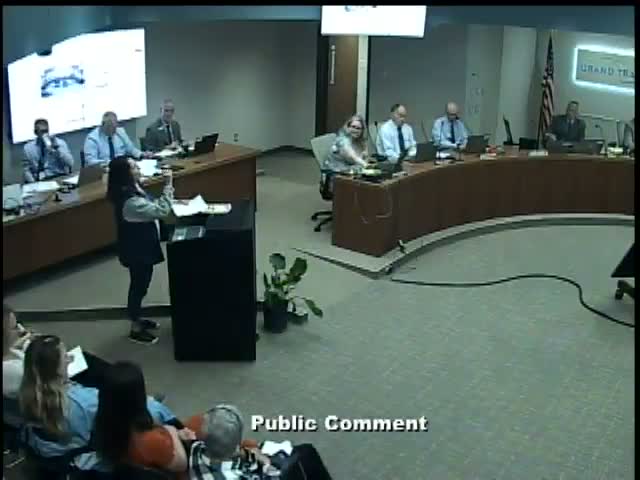
Public commenters directly connected the case of Mighty Mac to gaps in enforcement. "This sends a message ... that animal abuse is acceptable in our community," Sue Coffin said, urging the board to consider stronger local ordinances and to work with the prosecutor to pursue charges.
After the presentation and public comment, Chair (name listed in the minutes as the meeting chair) moved to create an ad hoc committee "to look at what Mike and the health department is doing" and to invite the sheriff's office, the prosecuting attorney's office, the health department and Cherryland Humane Society to participate. The motion, which the board supported, authorizes open meetings of the ad hoc committee and specifies county commissioners and key agency partners will be involved.
Health department staff described current county authority under state law and the local ordinance: the county enforces dog licensing, stray and confinement rules, manages kennel permits, and uses education and warnings as first responses. Lahey and environmental health director Brent Wheat said more serious allegations of cruelty or neglect fall under Michigan Penal Code provisions (Act 328 of 1931) and are handled by prosecutors after law‑enforcement investigation.
Lahey emphasized the role of community partners in rehoming and care: "We have 12 contracted kennels and are often at capacity," he said, and cited partnerships with the Cherryland Humane Society and local veterinary clinics to provide boarding, vet care and discounted services.
The board directed staff to convene the ad hoc committee and invited county counsel and other stakeholders to participate in the review. The motion passed by voice vote; no dissent was recorded.
The committee's charge was described as a broad review of how the county and partners respond to reports of neglect and cruelty — including gaps in ordinance language, coordination with law enforcement and prosecutorial thresholds — with the goal of recommending ordinance updates or administrative changes to improve outcomes for animals and people.
What happens next: staff will convene partners and return to the board with proposed committee membership, a meeting schedule and preliminary topics for the committee to address.