Get Full Government Meeting Transcripts, Videos, & Alerts Forever!
Get email alerts on the Budget topic
No spam. Unsubscribe anytime.
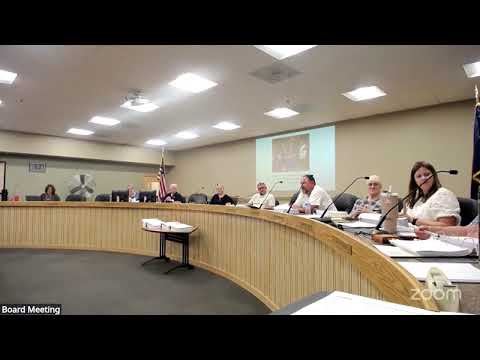
Klamath County SD budget committee reviews proposed 2026–27 budget, flags staffing shortages and enrollment dip
Summary
The Klamath County SD budget committee reviewed the proposed 2026–27 budget, citing revenue assumptions, projected state allocations and pressures from staffing shortages, rising PERS and insurance costs; the committee scheduled follow-up work before adopting final numbers.
Klamath County SD budget staff on Thursday presented a proposed 2026–27 budget that relies on state allocations and local revenues while warning of staffing shortages, rising benefit costs and recent enrollment shifts.
"We were at 6,907 as of March 31, and April 30 numbers came out this morning — we were actually 6,929," the presenter told the committee, framing a modest enrollment change that affected state 'true up' calculations. The presenter said the district currently estimates the state owes about $991,000 following the true-up process.
Why it matters: enrollment figures feed state funding calculations and the district faces rising fixed costs. The presenter said salaries and benefits account for about 78% of general fund expenditures and noted PERS employer rates rose in the current biennium (tier 1/tier 2 to about 29.7%; OPSRP to about 26.52). The presenter also said the district expects a roughly 20% increase in PACE insurance costs, pending final numbers from the insurer.
Details: staff described revenue assumptions for 2026–27 that include a projected modest increase in local resources (about 3% growth), and cited an approximate state school fund allocation figure shown in slides. The presenter quoted the Student Investment allocation for the biennium at $7,664,883 and described Measure 98 and federal grant dollars that augment district programming.
Committee members pressed on budget design, asking how the district projects enrollment and where transfers are going. A finance member explained the district uses a straight-line average projection for cohorts, a conservative method that can overstate enrollment in a declining trend.
Staffing and contracts: the presenter said the district continues to rely on contracted services — especially in special education where positions such as speech-language pathologists and school psychologists are scarce — and will convert contracts to salaried positions if hires are successful. "There's a lot of contracts there... until then, we'll have to contract out for those services," the presenter said.
Capital and contingency: the district reported capital projects in progress and plans for bathroom remodels and other facility work at several schools. The presenter said the district aims to maintain an ending fund balance near 4% and flagged asbestos abatement, archaeological permitting and fuel cost volatility as additional cost risks.
Next steps: the committee did not adopt final budget figures and scheduled another budget meeting to resolve outstanding line-item questions, after which staff will update the ending fund balance and present a finalized proposal.