Get Full Government Meeting Transcripts, Videos, & Alerts Forever!
Get email alerts on the Environmental Education topic
No spam. Unsubscribe anytime.
North Hartford students present 'Pollution Busters' plan for Swan Creek Watershed
Summary
A team from North Hartford High School presented a multi-tiered watershed plan proposing agroforestry, urban BMPs, living shorelines and community outreach to reduce nutrient and sediment pollution in the Swan Creek Watershed.
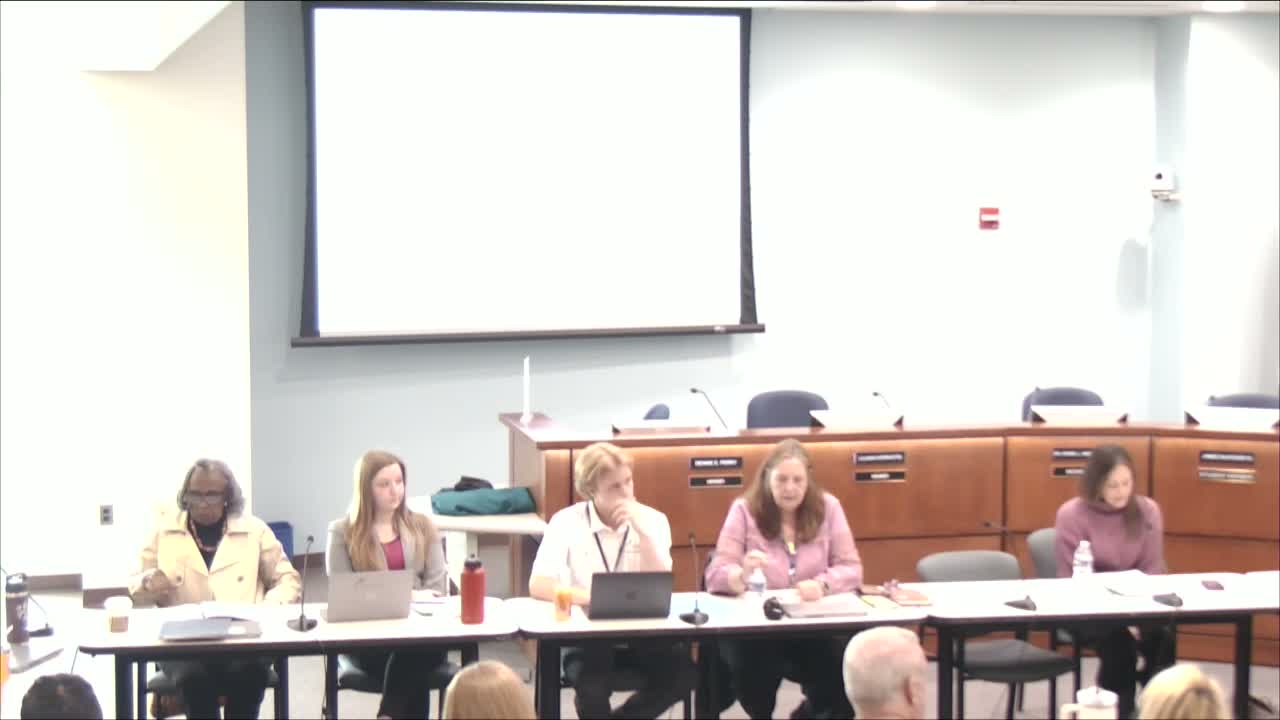
A student Envirothon team from North Hartford High School presented a comprehensive plan to reduce nonpoint-source pollution in the Swan Creek Watershed at the Harford County Board of Education work session on April 20.
Coach Laura O'Leary and Dr. Mack introduced the "Nonpoint Ninjas," who described threats to the approximately 16,000-acre watershed — including nutrient runoff, sediments and thermal pollution — and proposed a three-tiered approach of citizen, policy and infrastructure actions. Student speakers Anna, Bailey, Luke, Nina and Emma outlined on-farm practices (agroforestry systems such as silvopasture and alley cropping), engineered solutions (bioreactors to reduce nitrates), urban measures (bioswales, bioretention ponds, street sweeping) and living shorelines to stabilize coasts.
Students cited implementation details and funding possibilities, mentioning federal and state programs and grant sources that could offset costs. They estimated some outcomes from BMPs (for example, street sweeping reduced sediment loads by 70% and some agricultural practices could reduce phosphates by 30–35%), and offered community engagement ideas such as an Earth Day-style festival, rain-barrel workshops and planting events tied to new living shorelines.
The presentation concluded with an ecosystem impact summary — improved soil health, cooler water temperatures and expanded habitat — and a short Q&A in which board members thanked the students and asked about competition timelines. The team said county competition is May 8 and state competition is June 11; if they advance, nationals are scheduled in mid-July.