Get Full Government Meeting Transcripts, Videos, & Alerts Forever!
Get email alerts on the Data Centers topic
No spam. Unsubscribe anytime.
Commission hears ACCG briefing on data centers and advises ordinance work, utility coordination
Summary
An ACCG consultant told Dougherty County commissioners data centers are ‘a fact of life,’ urged transparent public engagement and recommended drafting a local data‑center ordinance addressing zoning, power, water and noise. Commissioners asked staff to start ordinance work and consult utility partners.
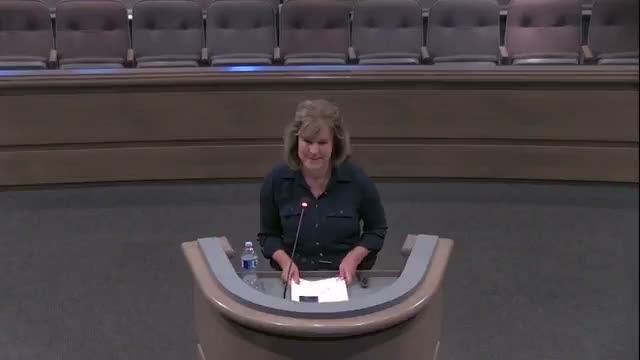
An ACCG consultant briefed the Dougherty County Board of Commissioners on April 20 on what data centers are, the scale of recent development in Georgia and the local questions counties should ask before agreeing to host one.
The presenter described different kinds of facilities — enterprise, colocation, hyperscale and edge centers — and said recent advances in AI and cloud computing have driven demand for facilities that can consume “tens or hundreds of megawatts” of power. On incentives, she noted a 2018 state law created a sales‑tax exemption for equipment inside large data‑center warehouses and a job‑creation credit that is scheduled to sunset in 2031.
Why it matters: data centers can add large personal‑property tax bases and construction jobs while imposing unusual demands on power and water systems. The county’s choices now — whether to adopt a dedicated ordinance, impose conditions or use a moratorium to buy time — will shape how any future project is sited and regulated.
The presenter listed common local tools and mitigations that counties have used: zoning that keeps facilities away from residences, setback requirements, pre‑ and post‑construction sound studies, limits on light and visual impact, requirements for closed‑loop water systems or recycled water use, and specifications for emissions‑controlling generators. She urged commissioners to “start having conversations with your power providers now” and pointed to a Georgia Data Center Ordinance Hub and Spalding County’s ordinance as models.
Commissioners asked how data centers pick locations. The presenter said infrastructure is decisive: “power absolutely is part of that conversation” and firms often seek sites that already have industrial parks and permitting frameworks in place. She said acreage needs vary by scale — “as little as 100 acres” up to “2,000 acres” for the largest hyperscale campuses — and stressed that developers pay heavily for land but require reliable, high‑capacity power and backup systems.
Several commissioners advocated referring the topic to the government affairs committee and to planning staff so the county can begin drafting ordinance language similar to other recent work (for example, battery energy storage ordinances). Staff noted that a moratorium is a legitimate short‑term option to allow time to draft rules and consult regional partners.
The consultant repeatedly emphasized engagement and transparency, saying ACCG’s role is to educate local officials — not to recommend a yes/no decision — and recommended the county include the public, utilities, economic development partners and nearby governments early in the process. The commission did not take a final vote on a policy today but directed staff and its government affairs committee to begin work on the topic and to report back.