Get Full Government Meeting Transcripts, Videos, & Alerts Forever!
Get email alerts on the School Budget topic
No spam. Unsubscribe anytime.
Parkrose budget trainer outlines process, warns of tight reserves and $3.7M short-term borrowing
Summary
At a Parkrose School District budget-committee training, the district finance lead explained the budget structure, said the district relies on property tax for roughly 70% of revenue, warned of limited discretionary funds and announced a planned $3,705,000 tax anticipation note to manage cash timing.
Sherry, the district finance lead who ran the training, told budget committee members that the district’s budget is governed by state law and is structured differently from a household or business account. "This is why we're here. Those kids," she said, framing the presentation around student services and the choices the board will face.
Why it matters: Sherry described Parkrose as "property tax heavy," saying roughly 70% of the district’s revenue comes from property taxes and that next year’s budget package totals roughly $41 million with about $1.1 million in beginning fund balance. Those constraints, she said, limit how much the district can reallocate once fixed costs and contractual obligations are met.
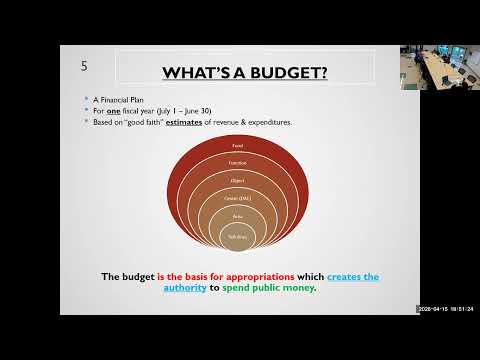
What she explained: The presentation walked committee members through the district’s 21-fund structure and the accounting codes that drive reporting (fund → function → object → department/area → subarea). Sherry emphasized that some costs—most notably special education—are embedded across many lines rather than sitting on a single page, and that maintenance-of-equity reporting (MOE) and pension (PERS) obligations are major cost drivers.
On cash timing and borrowing: Sherry said the district plans to take a short-term tax anticipation note of $3,705,000 to bridge timing gaps between when grants and property-tax revenues are received and when bills come due. She described that instrument as restricted by its legal documents and intended to be repaid on schedule.
On bargaining and reserves: The training underscored that ongoing contract negotiations are a primary pressure on the budget. Sherry said the district’s reserves are low relative to recommended practice and that major increases in salary/benefit obligations could force reductions in staff or programs if agreements are not reached.
Process and next steps: Sherry laid out the phases the committee will follow—proposed, approved, adopted and (if needed) supplemental budgets—and explained legal public-notice requirements (5–30 days) and when public comment will be taken (after the superintendent’s presentation at the budget hearing). She asked committee members to use provided materials to prepare questions for the scheduled briefings and upcoming budget meetings.
What was not decided: The session was informational; no formal votes or motions were recorded during the training. Sherry and staff promised to distribute the presentation materials and a link to an explanatory video for committee members who could not view it during the meeting.
Next procedural step: Committee members will review the proposed budget materials ahead of the next scheduled briefing so they can bring specific questions to the upcoming budget meeting.