Get Full Government Meeting Transcripts, Videos, & Alerts Forever!
Get email alerts on the Courthouse Security topic
No spam. Unsubscribe anytime.
Montgomery County judges and sheriff urge funding, staffing and training after task force security report
Summary
Judges and sheriff's office leaders told a Montgomery County public-safety committee the statewide courthouse security task force recommendations (minimum CSO staffing, secure parking, hardened public spaces, training) are necessary but will require significant new hiring, budget changes and interagency coordination.
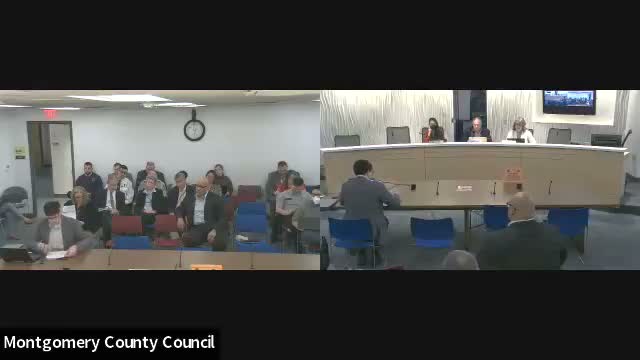
County staff presented a statewide courthouse safety task force report and judges, the sheriff and court security managers told the Montgomery County Public Safety Committee on the need to follow its recommendations while acknowledging major operational and budgetary hurdles.
The report recommends at least one court security officer (CSO) in the courtroom for all proceedings, a second CSO for in-custody or higher-risk proceedings, and a roving CSO on each floor with one or more courtrooms; secure attached underground parking for judges in new facilities; hardened public spaces (reinforced glass, ballistic-protective bench enclosures, video surveillance) and stronger screening procedures. Staff also recommended two separate non-lapsing state funds to support one-time security upgrades over a five-year period.
"We've been assisted by the council," said Judge Jim Bonifant, the administrative judge for the circuit court. He described repeated instances of disruptive behavior and direct threats against judges and staff, and asked the committee to consider both short-term staffing and longer-term infrastructure changes.
Sheriff Maxwell Wey said the sheriff's office is accredited and pursues best practices, but faces staffing shortages that make meeting the recommendations challenging: "We're unfortunately facing roughly a 20% deficit in our frontline staffing," he said, and added that recruiting, academy training and field training take many months.
Steve Barlow, district court security manager, described how the district court staffs two special police officers per courtroom plus screening-area staff and said bailiffs are largely filled by prior police or correctional officers. Barlow also said many threats have a mental-health component and that the Judicial Threat Management Center and local law enforcement coordinate daily on threat analysis.
Committee members pressed panelists on which measures could be implemented quickly and which would take years. Panelists described recent state grants and local partnerships that have funded camera upgrades and other physical-security improvements, but said staffing increases and facility retrofits would require additional budget allocations and time to recruit and train personnel.
Why it matters: the county's busiest courthouses handle criminal, family, civil and juvenile matters daily; judges and court staff said heightened volatility in certain dockets, particularly family court, and repeated threats make both immediate and long-term steps central to courtroom safety. The committee did not approve an immediate county-funded staffing package during the session; council members asked staff to include staffing and equipment options in the upcoming county executive's recommended budget.
The committee also heard that some protections, such as notification and video-handling procedures, must balance transparency with juror confidentiality and security concerns, and that seizure- and cruelty-related holds retain separate statutory appeal processes that trigger due-process timing.
The committee moved on to corrections projects and later considered Bill 27-24 regarding animal-shelter hold periods.