Get Full Government Meeting Transcripts, Videos, & Alerts Forever!
Get email alerts on the Data Center topic
No spam. Unsubscribe anytime.
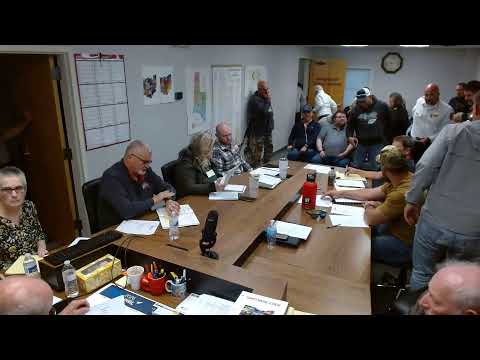
William Distelburst warns Mount Orab council about data center’s likely power, water and tax impacts
Summary
A resident and former data-center hardware worker told the Mount Orab Village Council that a proposed data center could require new substations, strain sewer and water systems and carry long tax-abatement timelines; he urged the village to require developers to fund upgrades to avoid rate increases for residents.
William Distelburst, a resident who said he has worked on data-center hardware, told the Mount Orab Village Council that the proposed data center near the village will bring significant electricity, water and tax-policy effects that merit careful permitting and negotiation.
"If it is the case that the substation is being built because of the data center facility, then the construction of the substation is most likely being financed by the data center operator and not the community," Distelburst said. He told the council that filings with Duke Energy and PJM indicate an initial substation load of about 10 megawatts and, he said, that could be extended "up to 2 gigawatts through 2029." Distelburst warned that extreme weather could overload the grid and described efforts by grid operators to curtail data-center load in emergencies.
Distelburst also raised water- and sewer-treatment concerns, saying the village’s sewage system currently handles about 700,000 gallons a day, with planned upgrades to about 1,180,000 and a projected peak capacity of 2,750,000 gallons per day in 2027. He told the council that a data center could use "between 300,000 to upwards of over 5,000,000 gallons per day," and said the village should not approve water connections or discharge permits until capacity and treatment plans are verified.
On tax policy, Distelburst said data centers typically operate for decades and that tax agreements lasting 10–15 years can shape how much revenue a locality receives over a facility’s useful life. He recommended that the council require developers to pay for infrastructure upgrades and negotiate terms that protect residents from rate increases.
Residents and council members followed with questions about who would pay for upgrades and whether forecasting and rate-setting (including PJM-era energy forecasting and a claimed state bill referenced as Ohio House Bill 706 in the remarks) would shift costs to ratepayers. Several speakers said the town should insist that developers pay for needed infrastructure, citing examples elsewhere where residents experienced higher electric bills after data-center-related upgrades.
The council did not take formal action on the data-center presentation at this meeting. Distelburst offered to provide his remarks in writing to the council.