Get Full Government Meeting Transcripts, Videos, & Alerts Forever!
Get email alerts on the Utilities Policy topic
No spam. Unsubscribe anytime.
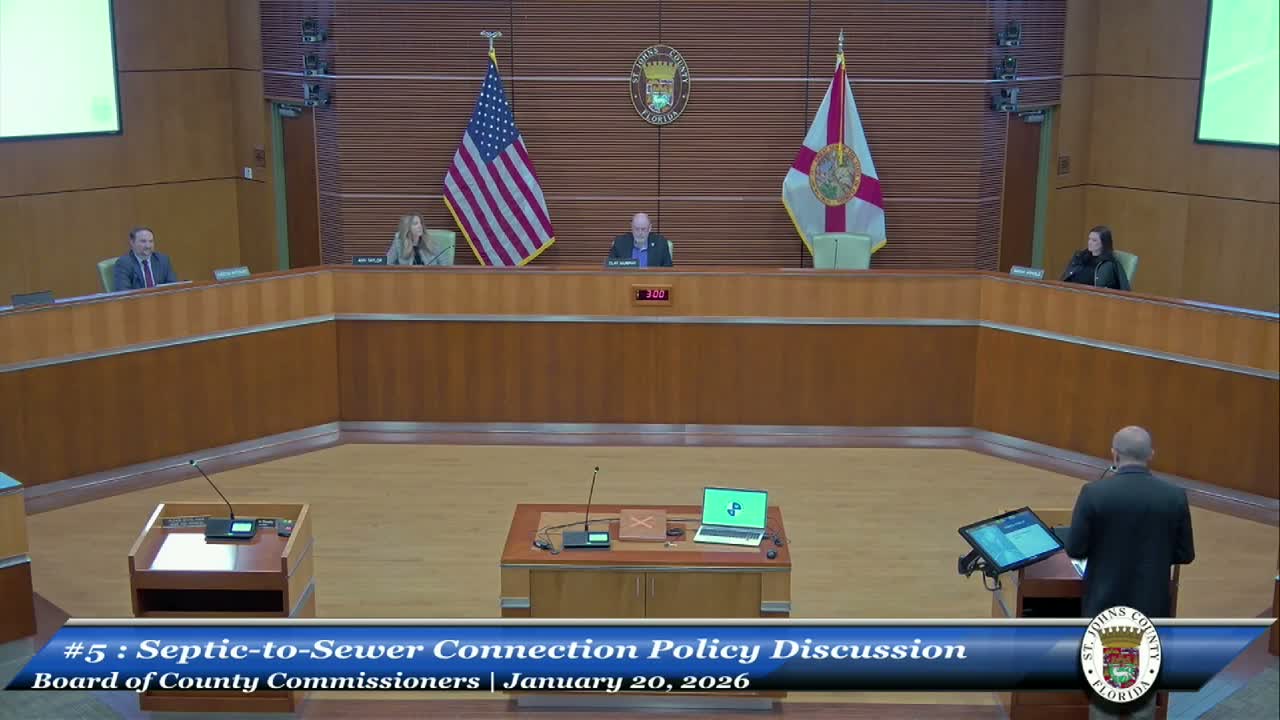
Board adopts new septic‑to‑sewer policy: single charge, financing option and expanded radius to spur conversions
Summary
The utilities director recommended and the board approved policy changes to make septic‑to‑sewer conversions more affordable: a one‑stop infrastructure charge, exemption of duplicate admin fees, a seven‑year 5% financing option for customers, and expanding the eligible connection radius from 200 to 1,000 feet with minimum‑connection safeguards.
St. Johns County adopted a set of policy changes aimed at increasing residential conversions from septic to central sewer, with the stated objectives of improving water quality and expanding equitable access to sewer infrastructure.
Utilities director Neil Shenkari told the board the current line‑extension program proved costly and administratively complex for single homeowners. Staff recommended creating a single standardized infrastructure charge (staff analysis suggested an overall utility charge component around $2,250), exempting separate administrative and tap fees, and allowing customers to finance the remainder over seven years at an interest rate of 5 percent. In examples presented, a fully converted household facing total upfront costs of roughly $8,155 could finance that amount for an estimated monthly payment of about $115.
The policy also expands staff authority to consider coordinated projects within a 1,000‑foot radius (up from 200 feet) while preserving operational safeguards such as a minimum‑connection threshold to avoid creating isolated flows that increase maintenance costs. Staff emphasized that gravity systems are preferred where grant funding makes them feasible, but grinder systems will remain an option given cost differences.
Commissioners praised the environmental and public‑health rationale for encouraging conversions. Commissioner Whitehurst highlighted the environmental benefit of a new State Road 207 wastewater facility, which staff said would remove an estimated one million pounds of nutrients from the Matanzas watershed over the next 20 years. The board voted 4–0 to adopt the staff recommendations and directed staff to prepare ordinance amendments to implement the changes.
The adoption is voluntary for homeowners; staff said no property will be forced to connect without a separate legal action. Staff also noted the county will continue to seek grants to reduce homeowner costs where possible.