Get Full Government Meeting Transcripts, Videos, & Alerts Forever!
Get email alerts on the Banking And Financial Practices topic
No spam. Unsubscribe anytime.
Khan describes Epsteins complex web of accounts, cash practices and bank transitions
Summary
Khan told the committee Epstein maintained roughly 2530 bank accounts across properties and investments, that JPMorgan dropped Epstein around 2013 and Deutsche Bank later cut ties, and that Epstein explored starting an international bank in the U.S. Virgin Islands after losing major banking relationships.
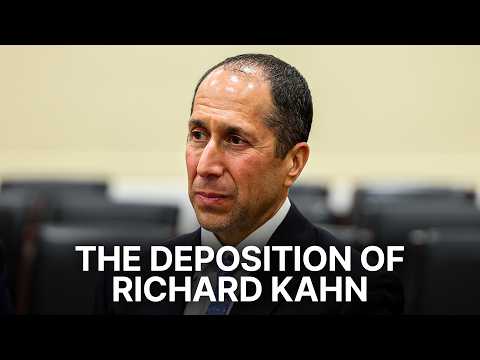
In testimony before the House Committee on Oversight and Government Reform, Richard Khan gave a sustained account of Jeffrey Epsteins banking and cash-handling practices and the estates post-publication scramble for new banking relationships.
Khan said Epstein maintained approximately 25 to 30 bank accounts across entities that held homes, aircraft and investments. JPMorgan Chase was Epsteins primary bank until it ended the relationship around 2013; Epstein then shifted much of his business to Deutsche Bank, which Khan said later terminated Epstein's accounts after publicity around the Miami Herald series in 2018. "JPMorgan dropped Epstein as a client, and I believe 2013 was the year," Khan testified.
The witness described routine petty cash procedures and accounting controls: petty cash was kept in a safe, disbursed against receipts and tracked on QuickBooks; property managers, pilots and assistants typically signed for needed petty cash for household expenses. Khan said he sometimes transported roughly $6,000 in cash to Epstein every three weeks when meeting him. "The amounts that I recall from the last few years of working for Epstein was typically $6,000, that I would bring him approximately every 3 weeks," he said.
On suspicious withdrawal patterns, the committee noted a repeated $9,800 cash-withdrawal figure. Khan said he was not involved in withdrawals and was not a signatory on most accounts; he said he did not know who authorized specific withdrawals. "I was not involved in the process," Khan said when asked about the $9,800 amounts.
Khan also described efforts after banks declined Epstein's business: he said Epstein explored launching an International Banking Entity in the U.S. Virgin Islands (Southern Country/Southern Trust) to build a capital base for banking services, including meetings with a consultant and a site visit, but those plans were halted after Epsteins arrest.
The committee entered bank inquiries and wire-transfer exhibits and pressed Khan on due-diligence steps. Khan said when banks asked about specific transactions he would consult QuickBooks, identify likely purposes (for example, payments on a barge project) and ask Epstein or staff for supporting documentation; if no explanation was available, the payment was treated conservatively for gift-tax reporting.
Khan said some entities held high cash balances for practical reasons (to cover multiple upcoming months of bills or property construction) rather than to conceal activity. He emphasized that the entities were tax-reporting and that much of the work was recorded in the books and records he reviewed.