Get Full Government Meeting Transcripts, Videos, & Alerts Forever!
Get email alerts on the Deposition Overview topic
No spam. Unsubscribe anytime.
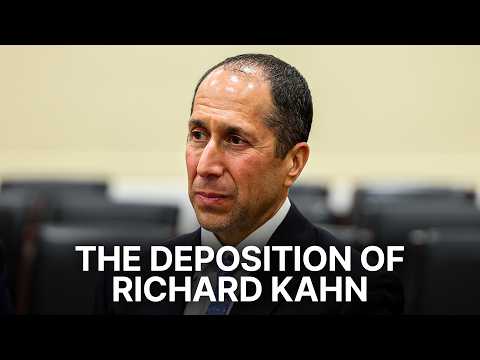
Richard Khan, Epstein accountant and co-executor, tells House Oversight he did not see minors while employed and helped set up victims fund
Summary
In a deposition to the House Committee on Oversight and Government Reform, Richard Khan described his longstanding bookkeeping role for Jeffrey Epstein, said he never observed minors or abuse in Epsteins presence, recounted setting up the Epstein Victims Compensation Program that paid roughly 136 claimants, and discussed the estates assets and legal exposures.
Richard Khan, a longtime outside accountant for Jeffrey Epstein and a co-executor of his estate, testified March 4 before the House Committee on Oversight and Government Reform that his relationship with Epstein was strictly professional and that he never observed minors or abuse while working for him. "I never saw minors in Epstein's presence. Period," Khan told the committee.
Khan said he first worked for Epstein in October 2005 and later served as a co-executor after Epsteins death. He described setting up the Epstein Victims Compensation Program and said it paid roughly 136 claimants about $121 million, with nearly 60 additional mediated settlements reached outside that program. "The Epstein Victims Compensation Program, in my view, was a great success," Khan said in his opening statement.
The witness said he was unaware of criminal conduct while employed, and that he handled bookkeeping, gift tax reporting and other accounting tasks. He told members he regularly tracked payments, gifts and payroll and said that when questions about bank transactions arose he would check the books and seek explanations from Epstein or staff.
Khan provided committee members an approximate accounting of Epstein's estate: he said the estate tax return showed assets "somewhere between 550 and $600,000,000." He also acknowledged loans Epstein made to employees, including three to four loans to Khan himself totaling about $3 million, with interest paid annually and no forgiveness while Epstein was alive. Khan said he later received a distribution from the 2013 Butterfly Trust and that he had taken on the co-executor role to help compensate victims and manage estate affairs.
On the question of who benefitted from the estate, Khan said the 1953 trust lists him and Darren Endyke as beneficiaries and includes a $25 million bequest to Khan on paper, but he cautioned that probate, remaining lawsuits and ongoing costs could substantially reduce or eliminate that payout. "I believe I am in the top 3 of beneficiaries," Khan said, but added he does not expect to receive the full listed amounts once liabilities are resolved.
Khan also told the committee he regretted having continued to work for Epstein after learning of the 2008 conviction and later revelations. "Looking back with what I know today ... I should have never trusted Epstein on anything he said," he testified. He said his decision to stay after the 2008 case reflected financial pressure and family obligations at the time.
The committee entered multiple emails, invoices and checks as exhibits and questioned Khan about his role in reviewing invoices, sponsorships and payments. Khan said he would typically forward invoice summaries to Epstein for approval rather than read detailed legal invoices himself. He acknowledged helping to organize financial information for staff and occasionally paying expenses from unearned HBRK funds at Epsteins direction, but said he did not prepare Epstein's personal tax returns.
The deposition ranged across banking relationships, staff roles, gifts and trust management; the committee paused and then resumed rounds of questioning by majority and minority staff. The committee has not indicated an immediate vote or further public action; transcripts and exhibits will be released according to committee rules.