Get Full Government Meeting Transcripts, Videos, & Alerts Forever!
Get email alerts on the Book Removal topic
No spam. Unsubscribe anytime.
Public speakers press Harford County board to reverse library removal of Flamer and explain closed-session vote
Summary
Dozens of residents, students and educators urged the Harford County Board of Education to reinstate the book Flamer and to explain why the board’s final action occurred in a closed hearing rather than in public, saying the book addresses bullying and student mental-health needs.
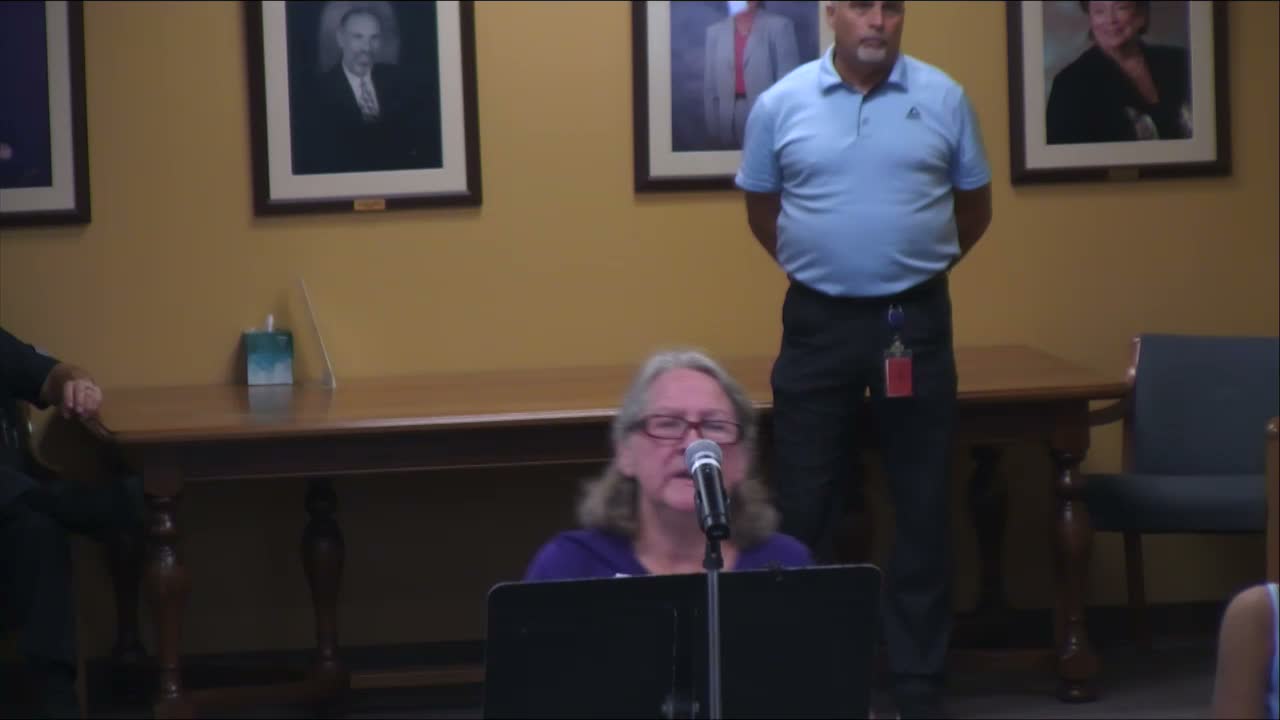
Dozens of public commenters pressed the Harford County Board of Education on Sept. 22 to reverse its removal of the novel Flamer from school libraries and to explain why the board finalized the action in a closed hearing, which several speakers said felt opaque and inconsistent with district procedures.
Charlene Haupt of Bel Air opened the remarks by opposing book bans and pressing the board for transparency after she received information about negotiations between health insurers; Neil Thompson and others explicitly asked the board to clarify whether policy or procedure prevented a partial removal limited to middle-school shelves. Tarcy Thompson and several speakers cited the district’s appeals procedure, which they read as requiring any final action to be taken publicly at a subsequent board meeting and not solely in a closed reconsideration hearing.
Multiple retired educators, school staff, students and parents said Flamer—which several commenters described as addressing bullying and mental-health topics—serves vulnerable students. Ellen Muskin, a retired educator, read a passage from the book and said it “addresses bullying and other topics relevant to Harford County students.” Aberdeen High School student Iris Bauer told the board that governing bodies should understand the systems they oversee and urged the board to consult school-based staff when making decisions.
Several public speakers linked the removal to student mental‑health concerns. Katie York, a virtual commenter focused on suicide-prevention, warned that removing books that reflect LGBTQ+ experiences “erases the experience of those who are most vulnerable” and urged the board to reverse the decision to protect students’ safety and sense of belonging.
Other commenters supported the board’s removal, saying the book contains material they considered inappropriate for middle-school libraries and that the district must prioritize age‑appropriate materials and student safety. A representative from Moms for Liberty thanked the board for its stance and commended President Pointon’s recent communications to staff. The meeting included heated exchanges and frequent calls to keep comments directed to the board rather than individuals.
Multiple speakers requested the board present the rationale and applicable procedures at the Sept. 30 listening session and to publish the reconsideration committee’s findings and the basis for the board’s closed-session action. The board did not vote on Flamer during the Sept. 22 meeting; public commenters said the lack of an open-session vote contributed to the perception of diminished transparency.
The board’s public comment period ended after in-person speakers concluded and two virtual commenters addressed related concerns. The board has scheduled a listening session Sept. 30 where several commenters asked for fuller explanations of process and policy.