Get Full Government Meeting Transcripts, Videos, & Alerts Forever!
Get email alerts on the Land Use topic
No spam. Unsubscribe anytime.
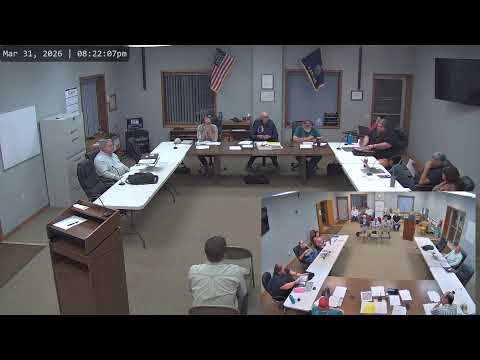
Linn County planning commission approves conditional-use permit for a custom butcher shop
Summary
The Linn County Planning and Zoning Commission approved a conditional-use permit for Thomas Yoder to build and operate a small custom butcher shop at 12891 West 2200 Road, subject to standard state and county conditions including a pre-approved waste-disposal plan and verification of water/septic capacity.
The Linn County Planning and Zoning Commission voted to approve a conditional-use permit for applicant Thomas Yoder to construct and operate a custom butcher shop on agriculturally zoned land at 12891 West 2200 Road.
Planner Jenny presented staff findings recommending approval of case USKS107LU20263, saying the proposed use is consistent with the county’s comprehensive plan and compatible with surrounding agricultural land. Staff recommended conditions including compliance with KDA and KDHE standards, submittal and approval of a waste-disposal plan before operation, verification and permitting of water and septic systems, driveway and site-plan approval, hours of operation limited to 7 a.m.–6 p.m., no retail sales unless separately approved, and a CUP review after one year.
Applicant Thomas Yoder told the commission he moved to the area two years ago and intends a small-scale, community-focused meat-processing operation. He estimated a typical throughput of roughly 12–15 beef per week (up to about 20) and possibly up to 20 hogs per week, and said he expects processing on two days each week. On questions about odor and byproduct management, Yoder said he intends to use a rendering service and maintain cold storage until offhaul; he also said the operation would consider composting where feasible.
Commission discussion followed the county’s checklist of findings (character of neighborhood, nearby zoning and uses, impacts, and public benefit). Commissioners agreed the site is rural and largely used for pasture and that the proposed small-scale processing operation would be compatible with surrounding agriculture when required controls are in place. A motion to approve the CUP based on staff conditions was made, seconded, and carried by voice vote.
Next steps for the applicant include finalizing the site plan and submitting the required waste-disposal and septic/water documentation to county staff and the appropriate state agencies before beginning operations. The commission scheduled a CUP review after one year of operation to confirm compliance with the conditions of approval.