Get Full Government Meeting Transcripts, Videos, & Alerts Forever!
Get email alerts on the Budget topic
No spam. Unsubscribe anytime.
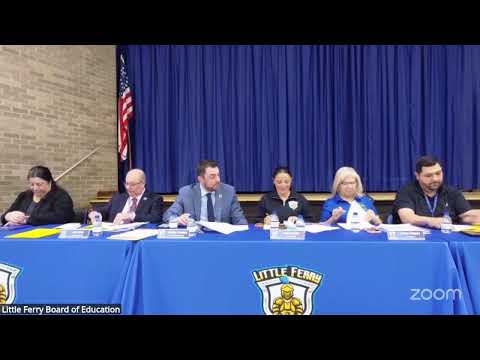
Little Ferry Board adopts 2026–27 budget after presentation citing healthcare and special‑education cost increases
Summary
The Little Ferry Board of Education adopted its 2026–27 budget after a public hearing in which administrators cited a large health‑care cost increase, special‑education tuition pressure and a state funding shortfall; the board approved the levy and plan with a motion and roll‑call vote.
The Little Ferry Board of Education adopted its 2026–27 budget at its April 30 public meeting following a presentation from district administrators about rising health‑care and special‑education costs.
The superintendent presented the budget and outlined three guiding goals for the plan — to be strategic, consistent and fiscally responsive — and described several cost drivers. “I am very proud of this budget,” the superintendent said during the presentation.
Why it matters: administrators told the board that a sharp increase in health‑care expenses and rising special‑education tuition are the principal pressures on the levy. Finance staff said the district experienced what was described in the presentation as a 36% increase in health‑care costs, with a year‑over‑year impact discussed in the meeting (the presenter cited the figure and an $883,000 effect in the transcript). The presenters also said the district’s state aid no longer covers the full formula; two years ago district funding matched the formula, and the presenters said funding is now about 75% of that level.
What the budget does: presenters said the district used the allowed 2% tax‑levy cap plus a health‑care adjustment to set the levy. The presentation referenced advertised figures of 3.5% and 3.7% and described a final levy impact discussed in the presentation as 3.9%; administrators said they balanced projected revenues and reserves to avoid reductions in staff or programs. Capital plans described in the presentation include purchases such as furniture for the new Liberty School, a new kitchen at Memorial School and investment in a building management system (BMS) meant to control temperatures and detect HVAC faults remotely.
Board action and vote: after the budget presentation the chair called for a motion to adopt the budget; a motion and second were made on the floor. The clerk read members’ responses; the transcript records several trustees voting “yes” and several trustees absent, and the chair announced, “Budget is adopted.” The transcript does not identify the motion’s maker or seconder by name. (Individual roll‑call lines in the transcript show specific trustees as present, absent or voting yes.)
Context and next steps: presenters said the district plans to pursue in‑house delivery of some special‑education services to reduce contracted provider costs and will use capital reserves and targeted debt‑service contributions to moderate the levy impact. Administrators also said they are coordinating with architects and vendors to integrate the new building management system with upcoming facilities work. The board did not state any additional conditions attached to the budget adoption at the meeting.
The chair closed the budget hearing and the board moved to other routine business.