Get Full Government Meeting Transcripts, Videos, & Alerts Forever!
Get email alerts on the Hazard Mitigation Elevation topic
No spam. Unsubscribe anytime.
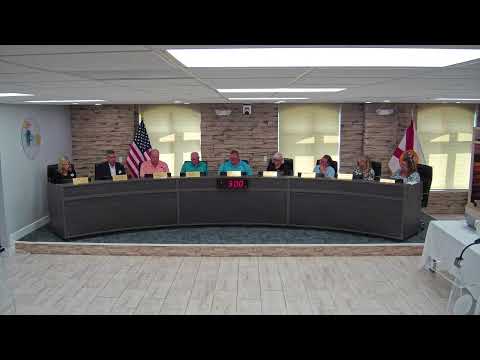
Consultants brief Fort Myers Beach council on FEMA elevation grants for 25 homeowners
Summary
Consultants told Fort Myers Beach council that FEMA has approved Hazard Mitigation grants to elevate about 25 island homes, outlined reimbursement timelines and deed restrictions requiring perpetual flood insurance, and warned homeowners about procurement, the 50% substantial-improvement rule and potential out‑of‑pocket matching costs.
Mark, a consultant leading the presentation for the town, told the Fort Myers Beach Town Council on Monday that FEMA has approved Hazard Mitigation Grant Program (HMGP) funding to elevate about 25 island homes and that a homeowner kickoff meeting will be held later the same day.
The consultants said the program reimburses eligible costs after work is completed and vetted. "This is a reimbursement grant," Mark said, adding that FEMA will reimburse up to 75% of an approved project cost and that homeowners or other nonfederal sources must provide the nonfederal match. He and Robert Ludd described the process: surveys and elevation certificates, professional-engineer reviews, permitting and procurement that must follow town rules, and quarterly or milestone payment requests.
Why it matters: the grants reduce flood risk for participating homeowners and lower emergency calls, but they also create long-term limits on property use. The consultants said a deed-recorded acknowledgement will prohibit enclosed living space under elevated structures and require flood insurance "for the life of the structure." That restriction, they said, will bind future owners.
What the council and consultants said: staff and consultants walked through eligibility and documentation requirements, including the need for line-item invoices and proper procurement so reimbursement is not denied. Mark cautioned that the cost estimates submitted to FEMA were prepared about three years ago; construction costs have risen since then and any increased expense beyond the approved project amount will generally be borne by the project (the homeowner or other match sources).
The consultants described a typical timeline: consultants said verified reimbursement requests will normally be processed within about 60 days, though it can extend to 120 days in some cases; the closeout period for each project is commonly 90 days after the end of a funded activity. Robert Ludd said the town will perform closeouts and record photo evidence and certificates of occupancy and elevation.
Council members asked for practical safeguards. The mayor and other councilors pressed staff on how the town will track deed restrictions and ensure future permitting flags enclosed work below elevated homes; staff said project records and the property appraiser/permit system will be annotated so future permit reviewers can see the restrictions. Consultants said they will help screen invoices and recommend eligible expense submissions, but the town remains the fiscal agent and ultimately responsible for eligibility decisions.
What homeowners will face: the consultants emphasized cost-effectiveness rules applied by FEMA, the need to avoid adding new living area under elevated homes, and the risk that projects whose elevation costs equal or exceed 50% of structure value may trigger full compliance upgrades (windows, roof, wind-load improvements) under the town’s substantial-improvement rules. The council and consultants advised homeowners to obtain permits and clarify eligibility before spending money.
Next steps: the consultant team will hold one-on-one site meetings with homeowners to verify eligibility and procurement steps; staff will produce outreach materials listing available grant programs and eligible expense examples.
At the close of the presentation, council members expressed support for dedicating staff or program-management funds to ensure accurate reviews and to reduce the risk of later federal clawbacks.