Get Full Government Meeting Transcripts, Videos, & Alerts Forever!
Get email alerts on the Environment topic
No spam. Unsubscribe anytime.
Committee backs statewide decontamination standards in bid to curb golden mussels
Summary
The committee advanced AB 1772 as amended to appropriations after proponents highlighted Tahoe's prevention program and proponents said amendments would create statewide decontamination standards, reciprocity, monitoring and funding discussions were ongoing.
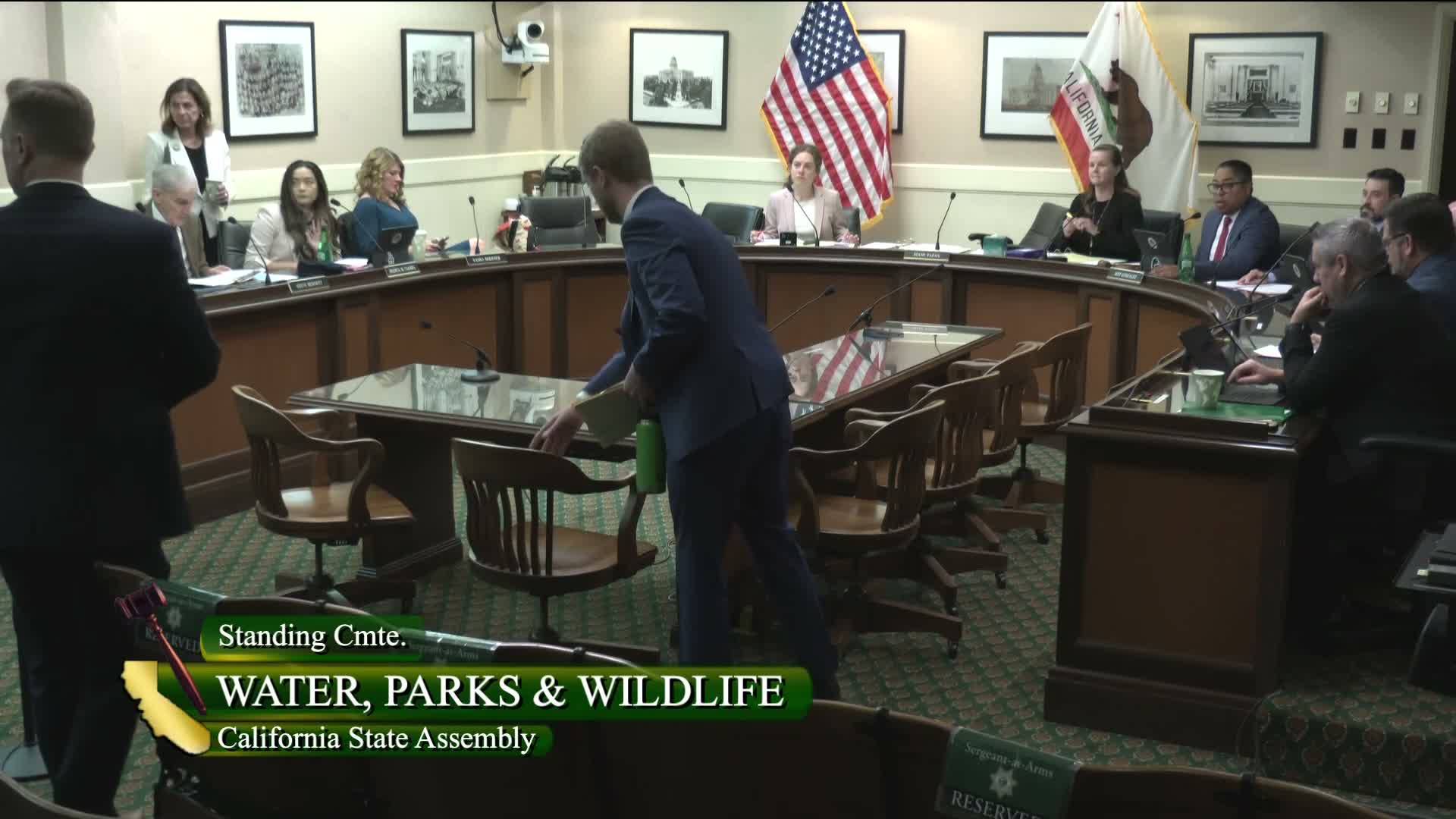
The committee voted to move AB 1772, a bill designed to create a statewide framework to prevent the spread of golden mussels, as amended to the Appropriations Committee. The bill’s author and witnesses described golden mussels as a recently detected, fast-moving invasive species that can raise costs for water systems, reduce recreational access and harm native ecosystems.
Devin Middlebrook of the Tahoe Regional Planning Agency urged the committee to adopt the bill, citing Tahoe’s experience: "In 2025, Tahoe boat inspectors prevented 72 boats with invasive species from entering Lake Tahoe, including 1 boat with attached golden mussels," Middlebrook said, and warned that golden mussels "could have devastating consequences on Tahoe's famed clarity and $5,000,000,000 annual recreation-based economy." He described Tahoe’s decontamination and inspection work as a model for statewide standards.
Industry witnesses thanked staff and the author for their work; Mark Smith (representing the National Marine Manufacturers Association and several water agencies) said stakeholders have invested considerable time in developing the measure and stand ready to answer technical questions. Support also came from county supervisors, irrigation districts and marine trade groups; some water agencies said they supported the bill "if amended" and were reviewing proposed committee language.
Jerry Desmond of Recreational Boaters of California described his group's position as cautious rather than opposed. He urged clearer protections for fairness in who pays fees, robust reciprocity so certifications are recognized across regions, and a defined post-infestation approach in waterways where mussels are already established.
Committee members asked technical questions about whether the bill’s current language—described in analysis passages as a "voluntary framework"—would effectively be mandatory at access points if agencies could deny entry to vessels that did not meet decontamination standards. Agency representatives and proponents said committee amendments will clarify decontamination goals and that implementation will aim for mandatory decontamination to prevent overland transfer between water bodies, with funding sources to be determined.
The clerk recorded the committee motion as "due passed as amended to appropriations." Multiple members voted "aye" during roll call; the clerk later reported the bill as out of committee and left the roll open for additional signatures.