Get Full Government Meeting Transcripts, Videos, & Alerts Forever!
Get email alerts on the Long Term Care topic
No spam. Unsubscribe anytime.
Senate advances long-term care insurance bill amid sharp debate over refunds and industry risk
Summary
Lawmakers passed an amended bill easing consumer reporting and oversight of long-term care insurers but stopped short of specifying immediate, sweeping refunds. Supporters called it a first step to protect policyholders; critics warned caps or retroactive refunds could trigger a damaging run on insurers.
Lawmakers passed an amended package intended to give regulators more data and tools to limit steep long-term care premium increases and to help consumers hit by rising rates.
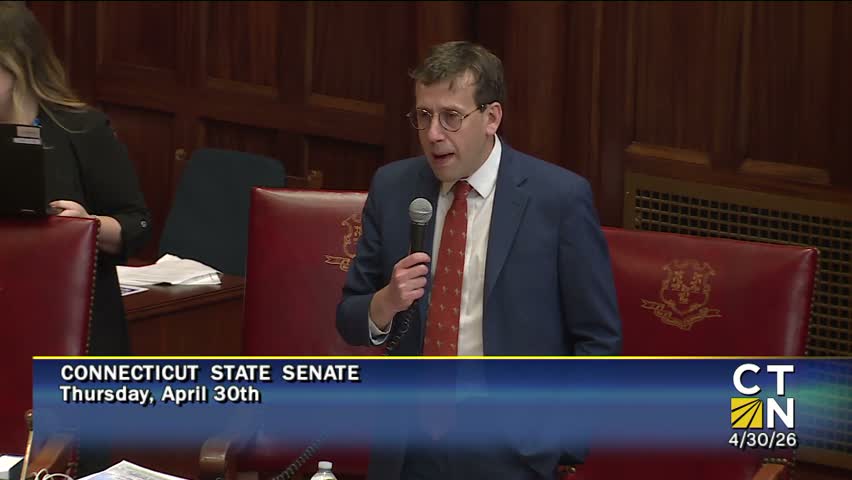
The bill, championed by Human Services Committee Chair Senator Lesser, requires insurers to provide the insurance commissioner with more granular, aggregated reporting about actual and incurred losses and disaggregated annual filings aimed at protecting consumer privacy. "This amendment . . . provides information about actual and incurred losses," Lesser said, adding it would give regulators better tools to curb excessive rate requests and require disclosure to consumers.
The measure also orders the insurance commissioner to study whether policyholders should be eligible for refunds if insurers file rate increases that exceed inflation and to report back by July 1, 2027. "We're asking the insurance commissioner to consult with the Office of Policy and Management," Lesser said; the study will assess feasibility and actuarial sustainability.
Opponents pressed the Senate over a provision that contemplates refunds for longstanding policyholders, saying it could precipitate a run on insurers and destabilize an already fragile market. Ranking member Senator Perillo asked how a full refund would work in practice and warned of perverse incentives: "How is it then that I could cancel my coverage and then be entitled to get all the previously paid premiums back?"
Senator Wong and others repeatedly urged lawmakers to require a fiscal analysis and to consider the industry'wide consequences. "That sounds like a great idea, but has the committee reviewed the consequential fiscal note?" Wong asked, noting the risk that large carriers could leave Connecticut if exposed to open-ended refunds.
Supporters said the immediate goal is transparency and consumer protections rather than immediate mass refunds. The bill includes enforcement language and possible referrals to the attorney general when companies engage in bad acts, and it authorizes the commissioner to explore refund mechanisms that are actuarially feasible.
After multiple amendments, including an ultimately unsuccessful tax-deduction proposal from Senator Sampson that would have made long-term care premiums deductible, the amended bill passed on a roll call. Sponsors said they will continue oversight and expect the insurance commissioner'led study to guide any further action.
What's next: The insurance commissioner must report back on feasibility, and lawmakers signaled they would revisit refunds or other relief depending on that analysis.