Get Full Government Meeting Transcripts, Videos, & Alerts Forever!
Get email alerts on the Wildfire Funding topic
No spam. Unsubscribe anytime.
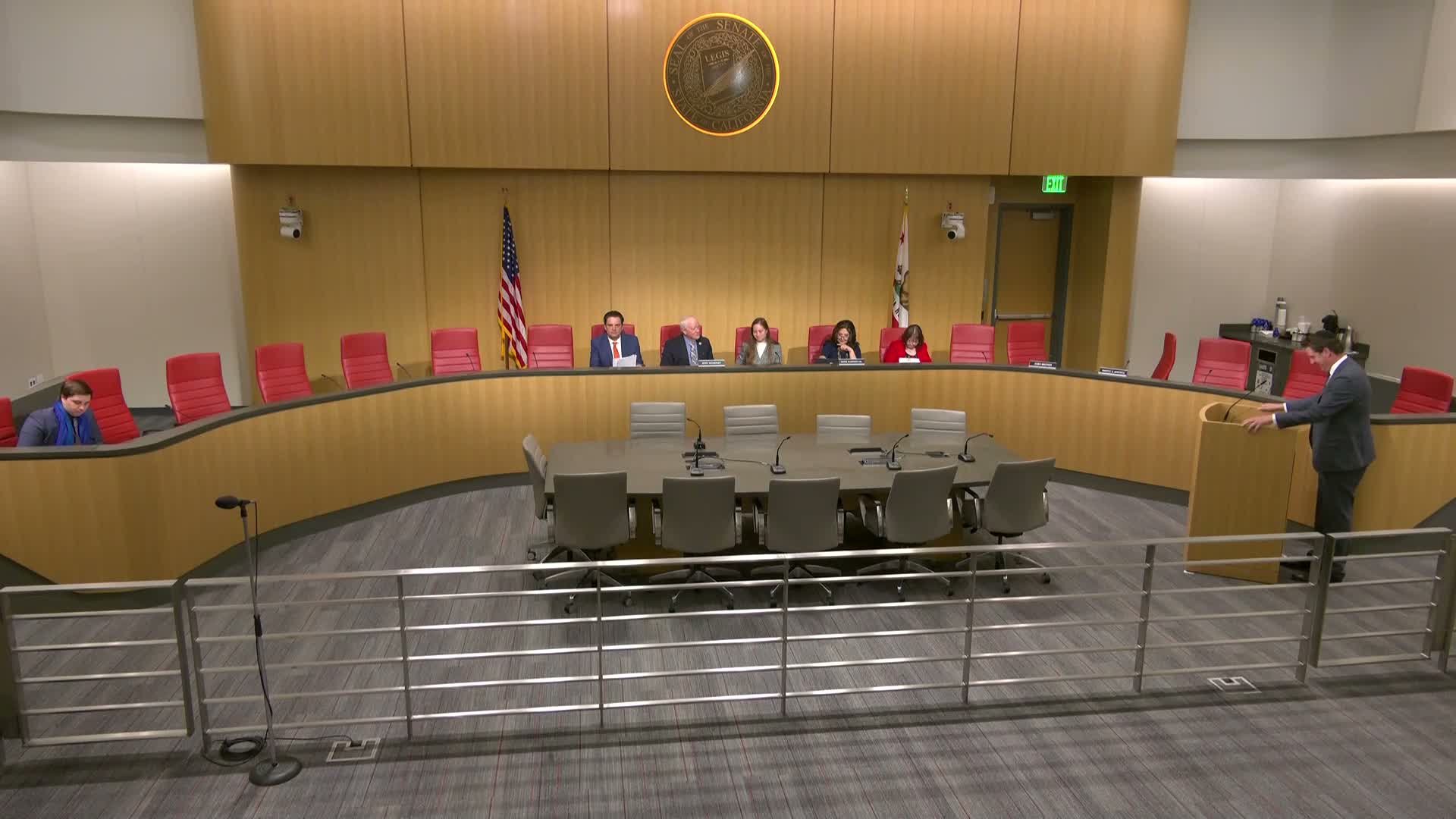
Senate committee advances bill to reinstate CAL FIRE fee amid sharp debate over equity and administration
Summary
SB 14 04 would restore a fee on property owners in State Responsibility Areas to fund CAL FIRE wildfire prevention and suppression. Supporters argued the fee expands funding options; rural counties, taxpayers groups and some senators raised equity and constitutional concerns. The committee passed the measure to Appropriations with votes recorded.
Sen. Stern presented SB 14 04 to reinstate a State Responsibility Area (SRA) fee on property owners in areas where CAL FIRE has responsibility for fire prevention and suppression, arguing that wildfire risk and suppression spending have increased and that the state needs more stable revenue sources.
Joe Guardias of NRDC supported the bill, citing rising costs for suppression and the need to grow the investment pool for wildfire prevention. A PG&E representative said the utility also supports incremental funding that helps reduce utility ratepayer burdens tied to vegetation management.
Opponents including Stacy Heaton representing rural counties and the Howard Jarvis Taxpayers Association raised multiple concerns: disproportionate effects on low‑income residents in wildland‑urban interface areas, potential double‑charging for services already covered by county contracts or utility spending, high administrative costs to collect the fee, and constitutional arguments that the originally enacted fee was a tax requiring a two‑thirds legislative vote.
Senators extensively debated affordability, administrative collection costs, and whether Cap‑and‑Trade (GGRF) or other state funds should be prioritized. Several members asked the author to work on fee mechanics, administrative cost caps, and hardship exemptions. The committee ultimately passed SB 14 04 to the Committee on Appropriations (recorded tallies varied by roll call; commonly 3 yes, 1 no).
Next steps: The author said he would continue to work with stakeholders on administration, hardship exemptions and fee design as the bill moves to Appropriations.