Get Full Government Meeting Transcripts, Videos, & Alerts Forever!
Get email alerts on the Reading Screeners topic
No spam. Unsubscribe anytime.
Committee debates $40M for reading screeners and proposed delays to initial screening
Summary
The governor requests $40 million one‑time to support kindergarten–grade‑2 reading‑difficulty screener implementation and proposes statutory windows (91 days for kindergarten, 46 days for grades 1–2) before screening results could trigger special‑education referrals; advocates and many parents urged keeping screening at the start of the school year and preserving the funding.
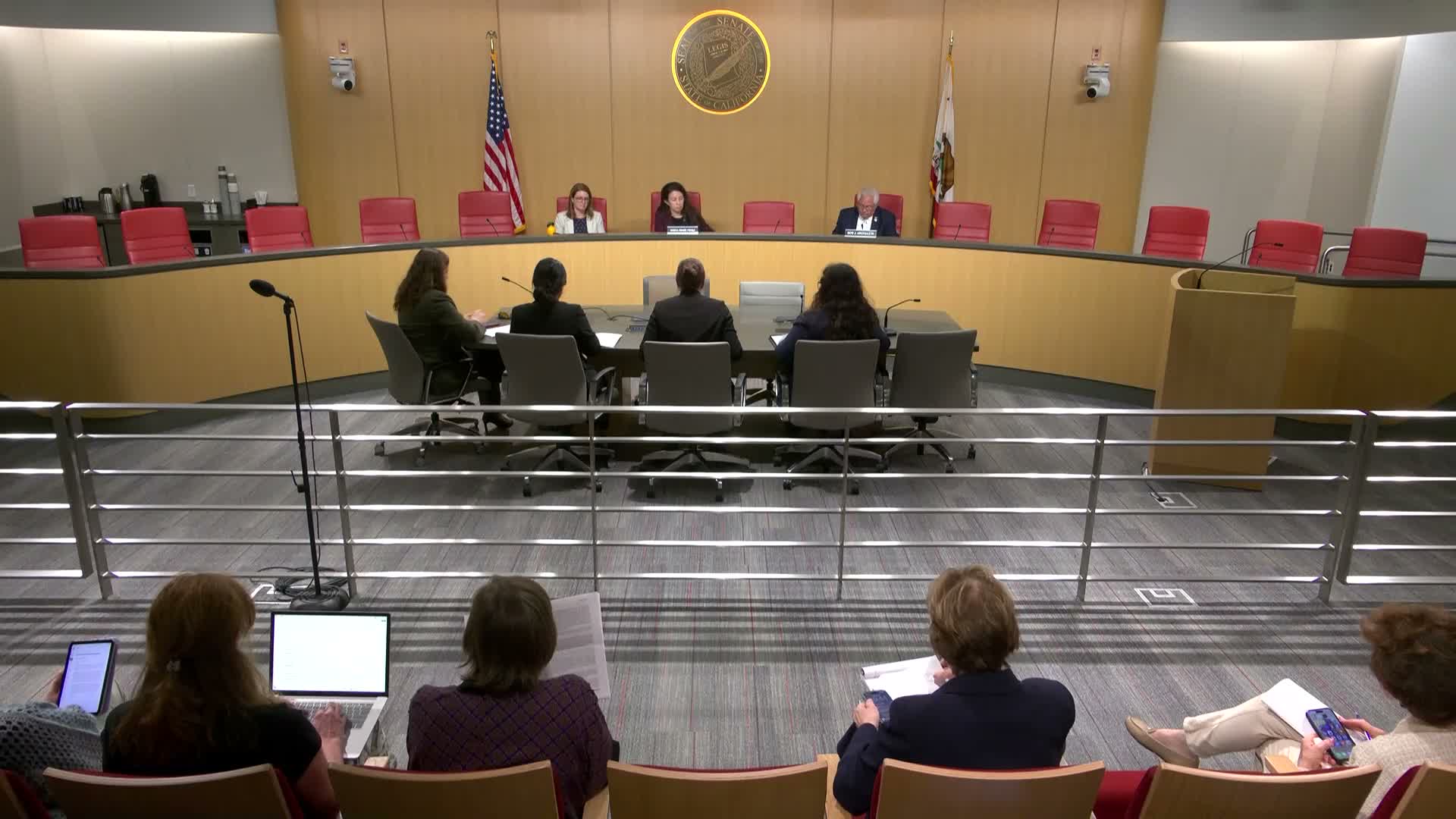
The subcommittee spent extended time on the governor's reading‑difficulty screener proposal, which pairs a $40 million one‑time Proposition 98 implementation appropriation with statutory changes that would restrict when a screener could trigger special‑education identification.
Elena Powell of the Department of Finance described the administration's reasoning: preliminary data show a steep decline in initial flags after roughly 90 instructional days in kindergarten and after 46 days in grades 1–2, and the proposed timelines are intended to reduce overidentification. “This language is intended to do is ensure that at risk flags would only trigger the broader process of evaluation for special education services only after sufficient exposure to foundational reading instruction has occurred,” Powell said.
The Legislative Analyst's Office told the committee it believes the $40 million figure is likely an overestimate for screening administration and recommended rejecting the specific $40 million request, suggesting that the legislature could redirect funds through the proposed discretionary block grant if it wanted to support LEA implementation. LAO staff also noted that the cost of targeted supports for students identified by screeners is unknown and varies across districts.
The California Department of Education said it supports the $40 million investment and the practice of 1:1 or small‑group administration, but acknowledged friction on the statutory timing. Nancy Brynelson, co‑director of statewide literacy for CDE, told the committee that a screener is an early signal to investigate and plan supports, and that screening results should not be an automatic referral to special education. “This is not an automatic, should not be an automatic, referral to special education,” Brynelson said, adding that follow‑up might include one‑to‑one tutoring, small‑group instruction or further diagnostic evaluation.
Stakeholders were sharply divided. Literacy coalitions, parents and many teachers urged preserving the $40 million for training and criticized the proposed statutory delay, arguing that many validated screeners are normed for beginning‑of‑year administration and delaying screening could delay timely intervention. Decoding Dyslexia California's Renee Webster Hawkins told the committee, “There are no benefits to delaying screening or supplemental instruction when a child needs it.” Several research and advocacy organizations asked the committee to maintain LEA flexibility around screening timing.
Committee members requested additional evidence and broader state comparisons; DOF and CDE agreed to follow up with more data on studies and screening tools. The committee did not vote on the proposal at the hearing.
Next steps: DOF and CDE said they will provide additional evidence on the chosen time windows and the committee will consider that information as it weighs funding and statutory language.