Get Full Government Meeting Transcripts, Videos, & Alerts Forever!
Get email alerts on the Environment topic
No spam. Unsubscribe anytime.
Bill would tighten state pipeline standards, decommission repeat spillers; oil industry warns of supply impacts
Summary
AB 1536 would require 60‑day public comment on exemptions, CEQA review for projects receiving exemptions, best‑available‑technology leak detection and require decommissioning for pipelines that have spilled over 10,000 gallons; environmental and coastal groups supported the measure, while petroleum representatives warned it could affect crude transport and gasoline supplies.
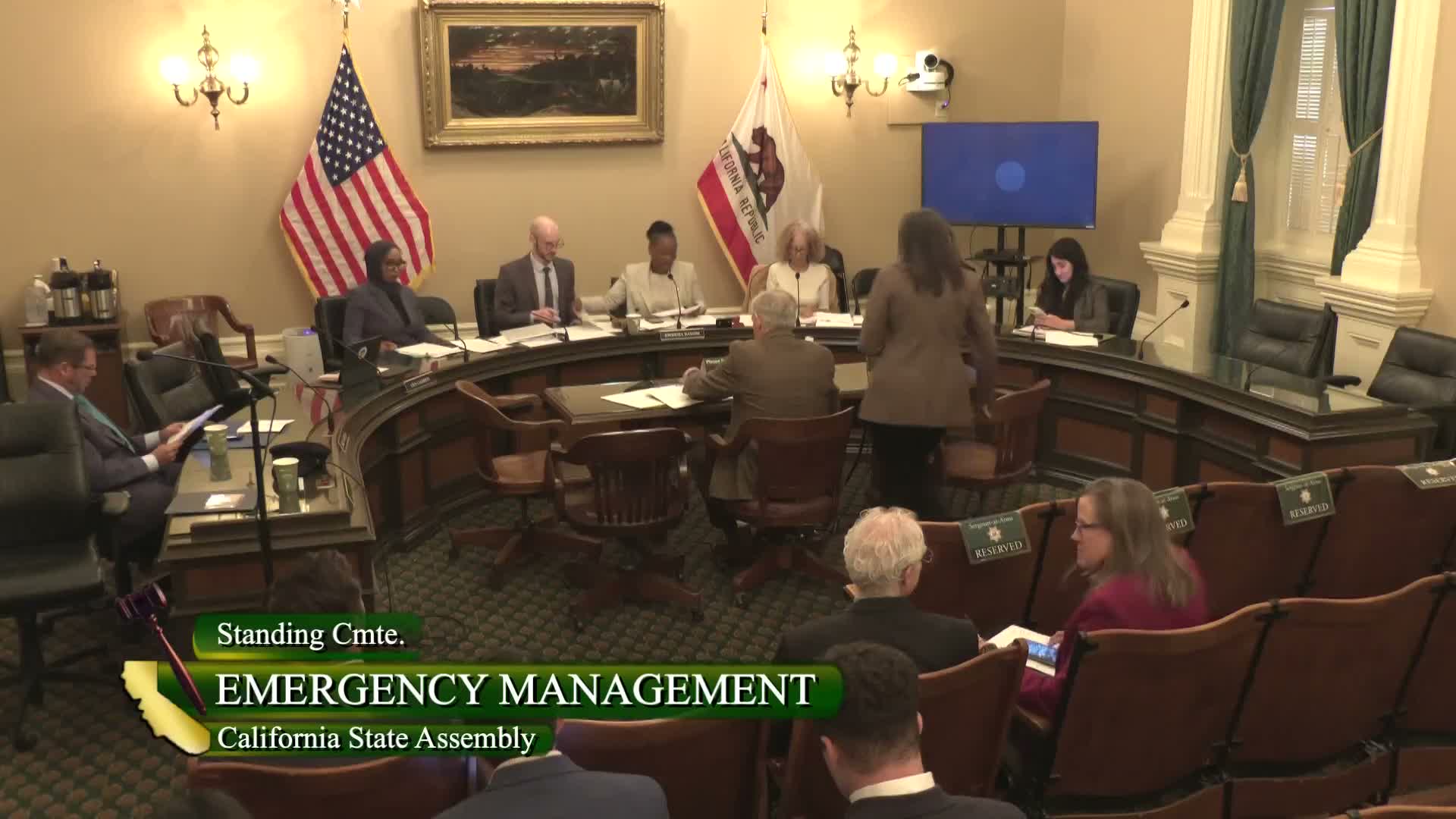
Assemblymember Bennett presented AB 15 36 (the "Save Our Shores Act") on behalf of Assemblymember Addis to strengthen safety standards for pipelines operating in state waters. The bill would require a 60‑day public comment period on exemptions to safety regulations, CEQA review for projects receiving exemptions, best‑available‑technology leak detection and response plans, and decommissioning of pipelines with a history of spills of more than 10,000 gallons.
Christina Scaringe of the Center for Biological Diversity described the coastal economic stakes and said California has had 16 spills of 10,000 gallons or more since 2010. Peter Belden, a coastal small‑business owner and longtime lifeguard, described prolonged reputational and economic impacts after the Huntington Beach spill and urged support.
The Western States Petroleum Association opposed the bill in testimony delivered by Paul D'Aero, arguing the 10,000‑gallon threshold and decommissioning requirement would affect thousands of miles of pipeline and could disrupt crude conveyance to refineries, potentially raising transport costs. D'Aero said some pipelines that spilled quantities above the threshold have been repaired and that the bill’s provisions could require closure of lines that are otherwise operational.
Committee members debated how the threshold was set. Supporters said the 10,000‑gallon number aligns with federal regulation thresholds and that the pipelines implicated include repeated offenders; opponents said the figure is arbitrary and would have broad economic effects. The committee moved the bill to Appropriations for further consideration.