Get Full Government Meeting Transcripts, Videos, & Alerts Forever!
Get email alerts on the Emergency Services topic
No spam. Unsubscribe anytime.
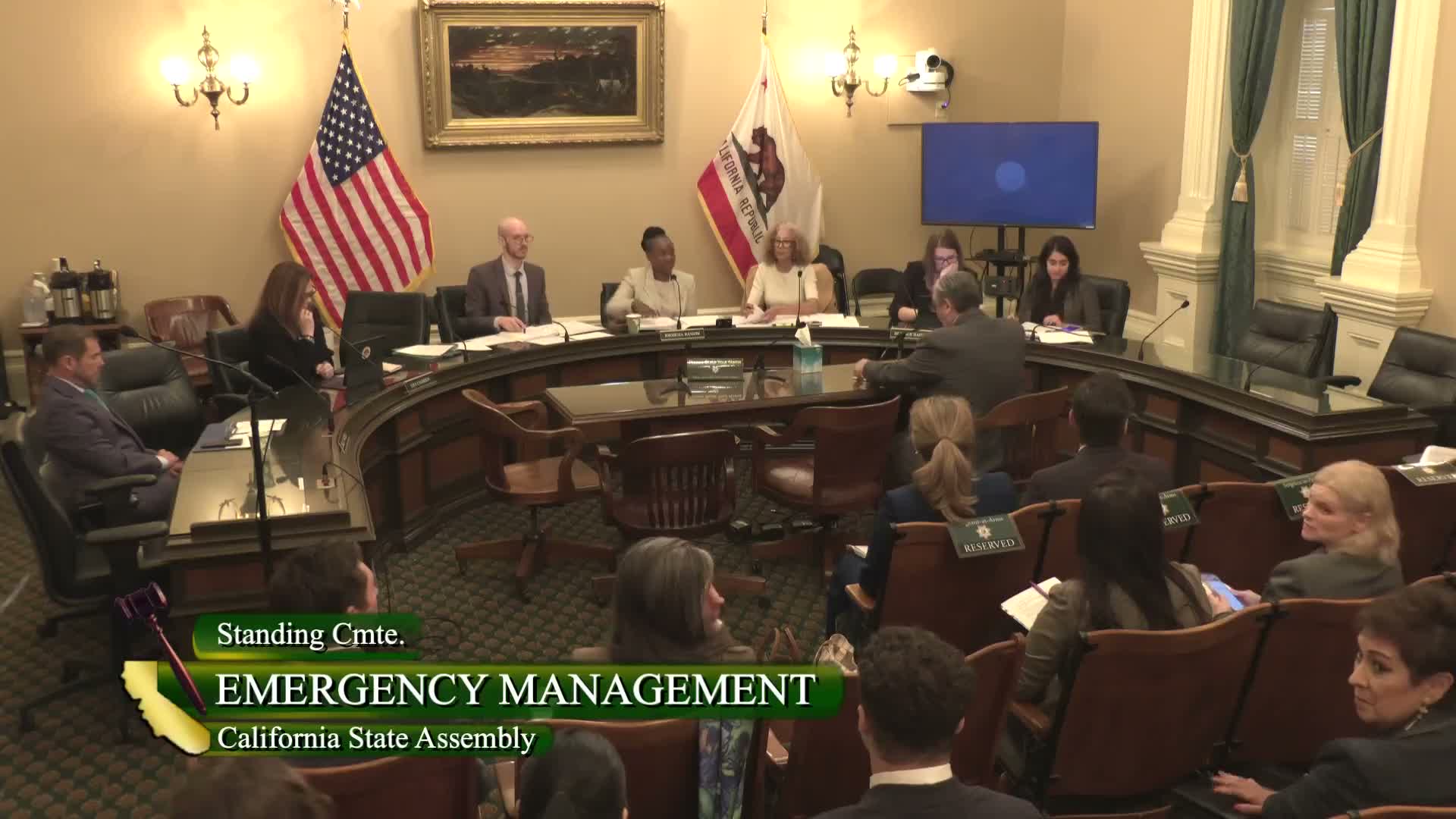
Subcommittee backs updated training for 911 dispatchers to deliver pre‑arrival medical instructions
Summary
AB 2041 would expand requirements for emergency dispatch centers to provide evidence‑based pre‑arrival medical instructions. Dispatch professionals described multiple cases where such instructions doubled survival odds in cardiac arrest. The subcommittee moved the bill to appropriations after amendments negotiated with opponents.
Assemblymember Carrillo asked the subcommittee to expand on last year’s work by requiring public‑safety agencies to ensure 911 dispatchers can give pre‑arrival medical instructions on choking, CPR, childbirth, bleeding control and other emergencies.
Katharina McNulty, who said she has worked in emergency dispatch for 23 years, described three separate calls in which pre‑arrival instructions converted bystanders into lifesaving first responders. "In those moments, there's no room for guesswork," she said, describing structured, evidence‑based protocols that guide callers through CPR, hemorrhage control and childbirth.
Jason Chanda, RN and a former emergency medical dispatcher, said the American Heart Association study of 230,000 patients found pre‑arrival instructions more than doubled survival in cardiac arrest. He and other witnesses recounted a case where dispatcher coaching helped save a 47‑year‑old man.
The author reported an agreement with opponents to amend the bill so that agencies not in compliance at the start of the year would report status to local EMS agencies by Jan. 31, 2027; the committee accepted those committee amendments and gave the bill a do‑pass recommendation to Appropriations.
Supporters and some local officials emphasized the measure would bridge the gap between a 911 call and EMS arrival, particularly in rural areas where transport times can be 15 to 45 minutes or longer. No registered primary witness in opposition testified against the amended language in committee; some groups said they would remove opposition once amendments are printed.
Next steps: The bill advances to the Appropriations Committee, where compliance timelines and reporting requirements will be reviewed.