Get Full Government Meeting Transcripts, Videos, & Alerts Forever!
Get email alerts on the Public Safety topic
No spam. Unsubscribe anytime.
Assembly subcommittee advances bill to speed fire‑station construction while opponents warn of costs to small contractors
Summary
AB 2152 would streamline judicial review and set presumptive negative CEQA findings for new fire stations; firefighter groups backed the measure as critical to community safety, while electrical contractors said project‑labor‑agreement requirements and a $50,000 PLA threshold would exclude small firms and slow projects in underserved areas.
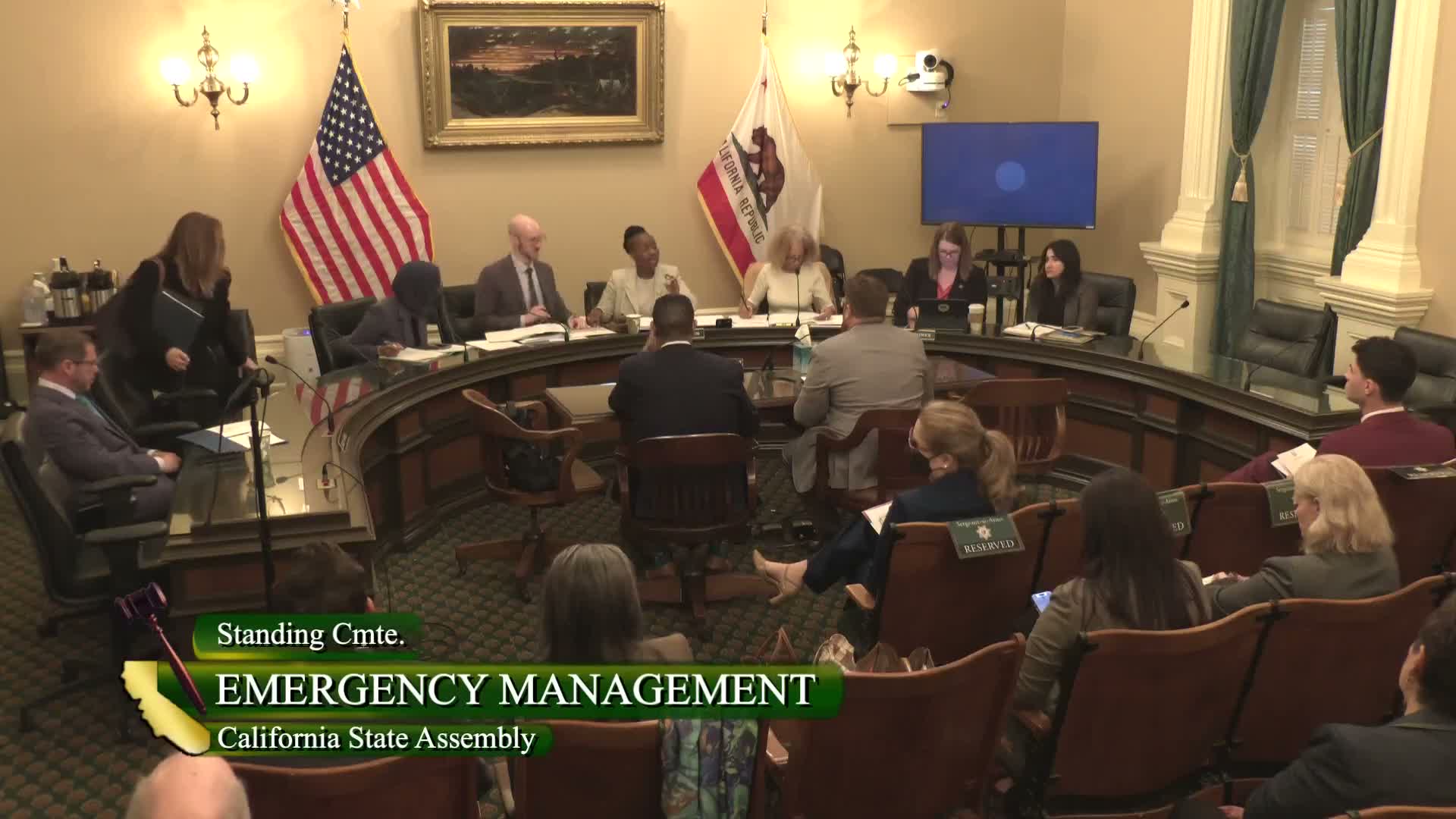
AB 2152, introduced by Assemblymember Mark Gonzales, advanced to the Committee on Appropriations after a subcommittee hearing that split testimony between firefighting groups and construction interests.
Gonzales said the bill is intended to "balance the scales," speeding construction of central fire stations while protecting the environment; it would streamline judicial review so that a court challenge to a new station could be resolved within one year and would craft best‑practice job‑site standards to reduce litigation risk.
Doug Subers, representing the California Professional Firefighters, testified in support and asked members to "respectfully ask for the IFA," saying modern stations improve community and firefighter safety and can house equipment such as extractors and better storage for personal protective equipment.
Opponents told the committee the bill could have the opposite effect in some communities. Richard Markerson of the Western Electrical Contractors Association argued the bill conditions streamlining on a project‑labor agreement (PLA), adding "cost, complexity, and delay" for rural and underserved areas. He said the measure’s $50,000 PLA threshold would sweep in small maintenance and repair work, shutting out small, disabled‑veteran and emerging contractors who rely on those entry‑level public contracts.
"AB 21 52 will increase costs, reduce participation and slow the essential delivery of these projects," Markerson said.
Gonzales and supporters pressed that call volumes and aging infrastructure require faster station builds. The subcommittee recorded a motion to pass the bill to the Committee on Appropriations and several members voted aye; the clerk called the vote and the measure moved forward.
Next steps: AB 2152 will go to the Appropriations Committee, where fiscal and implementation details—including the PLA threshold and how local governments would apply it—are expected to be examined further.