Get AI Briefings, Transcripts & Alerts on Local & National Government Meetings — Forever.
Care‑home workers tell Assembly SB 588 tools fall short when owners shift assets
Summary
Residential care workers and advocates testified that, despite SB 588’s collection tools, long‑term care employers routinely transfer ownership or assets before judgments are entered, leaving caregivers unpaid; witnesses urged expanding prejudgment liens, mandatory license denials, and more Judgment Enforcement Unit staff.
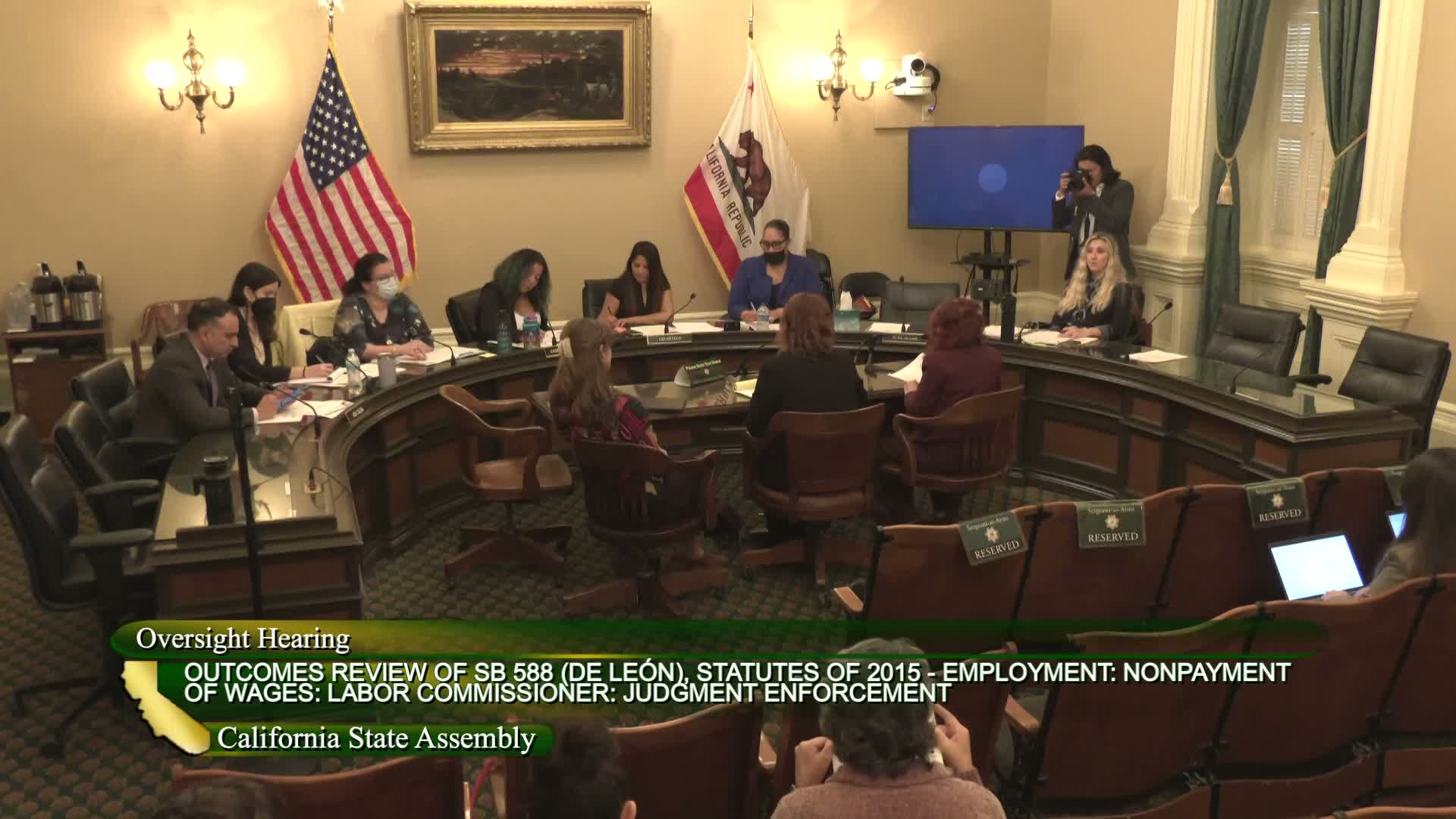
Residential care workers and their advocates told the Assembly Committee on Labor and Employment that SB 588’s enforcement options have improved recoveries in many industries, but they are often ineffective in long‑term care because owners transfer assets or change business names before judgments can be recorded.
Caregiver testimony: Tess Briante, a seven‑year residential care caregiver, said she frequently worked unpaid hours and described routine unpaid night checks and missed meal breaks. “Even when caregivers win their cases and receive judgment, the struggle is not over,” she told the committee, adding that fear of retaliation deters many caregivers from filing claims.
Case details: Worker advocates described multi‑million‑dollar judgments against residential care operators that became difficult to enforce after the business transferred its real estate or closed. Marta Lepe Martinez said she was awarded more than $350,000 in 2019 but has received no payment because the debtor closed bank accounts and has limited recoverable assets.
Why current law falls short: Ruth Silbertaup, supervising attorney at the Alexander Community Law Center, explained the statutory limit that prejudgment liens are only available when an employer already has an unpaid judgment undermines early asset preservation. She and other witnesses recommended removing that requirement, expanding liability to property owners who lease facilities to care operators, and making license denials or suspensions mandatory for judgment debtors in licensed care settings.
What advocates want: The panel heard an eight‑point plan from Ruth that included removing the prerequisite of an existing unpaid judgment for certain prejudgment liens, funding additional Judgment Enforcement Unit positions in local labor offices, extending upstream liability to more industries, and prioritizing workers’ claims in any forced sale of licenses or assets.
Agency response: Labor Commissioner Lilia Garcia Brower acknowledged the limits and said the JEU has used stop‑work orders, levies and successor‑liability claims to recover wages in some care‑home cases, but these actions are resource‑intensive and often require probate or civil litigation when assets are moved. She said the administration has a budget request to add JEU staff.
Next steps: Witnesses urged the Legislature to consider statutory changes—particularly prejudgment lien authority and mandatory license consequences for licensed care providers—and to fund the staff and investigative resources needed to pursue complex successor‑liability and probate actions so workers receive timely payment.