Get Full Government Meeting Transcripts, Videos, & Alerts Forever!
Get email alerts on the School Discipline topic
No spam. Unsubscribe anytime.
Experts tell Assembly select committee 'suspensions have dropped but disparities persist'
Summary
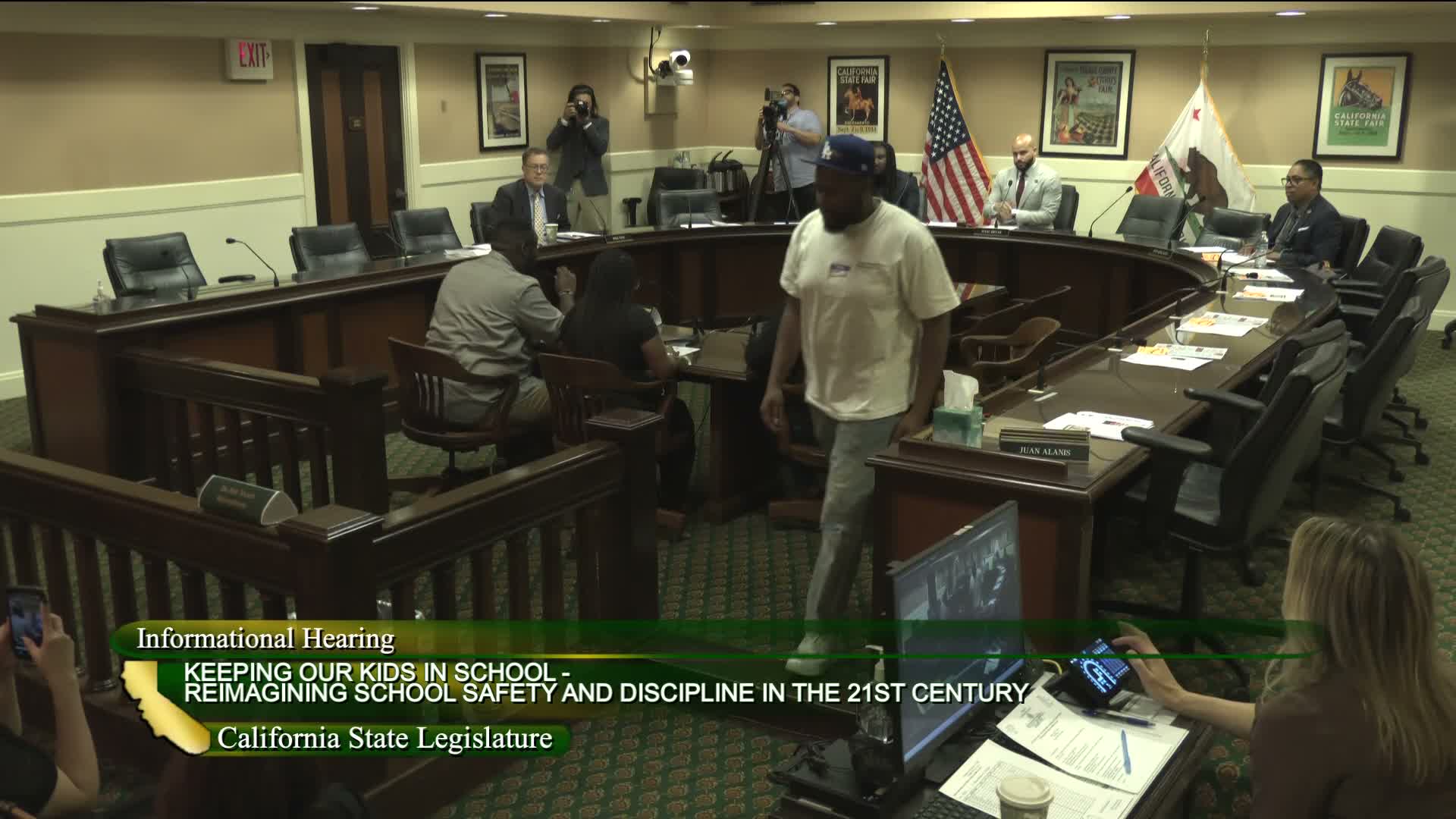
Researchers and community advocates told the Assembly select committee that statewide suspension rates have declined after policy changes, but Black and Native boys remain disproportionately suspended and districts still use informal 'ghost' suspensions that are not tracked.
Researchers and community advocates told the California State Assembly select committee that although overall school suspension rates have fallen, racial disparities in exclusionary discipline persist and informal or 'silent' suspension practices continue to push boys of color out of class.
Dr. David C. Tanner, senior adviser at the Alliance of Boys and Men of Color and faculty director of the Million Dollar Hoods Project at UCLA, said that in 2012 more than 500,000 male students were suspended and that by the 2024–25 year the number had fallen by over 63%, a reduction he described as more than 200,000 suspensions. "Black boys in particular were still three times as likely to be suspended compared to white students," Tanner said.
Tanner and other witnesses credited a series of state laws eliminating willful‑defiance suspensions (cited in testimony as AB420, SB419 and a later bill described as SB274) and local interventions such as MTSS (multi‑tiered systems of support) and restorative practices for contributing to the decline. At the same time, witnesses highlighted informal practices that can replicate suspension effects: Brandy Bowen Grama (policy director, Coleman Advocates) described students being sent out of classrooms into referral or restorative rooms that act as de facto in‑school suspensions and urged better tracking (she cited SB275 as a measure to close those loopholes).
Witnesses urged fidelity and accountability. Dr. Cory Jackson and others warned that some districts treat MTSS or restorative roles as checkbox positions without monitoring, reducing program effectiveness. Panelists recommended rigorous implementation monitoring and stronger community input through local school leadership councils.
What the committee heard: Testimony combined quantitative claims (declines in suspension counts) with policy history (successive bills narrowing grounds for suspension) and programmatic recommendations (community schools, restorative practice fidelity, tracking of informal discipline). The committee ended the hearing without legislative action; several witnesses asked lawmakers to support investments and policy changes to ensure reforms are sustained.