Get Full Government Meeting Transcripts, Videos, & Alerts Forever!
Get email alerts on the Community Schools topic
No spam. Unsubscribe anytime.
Advocates urge Assembly select committee to back $1 billion annual community‑schools investment
Summary
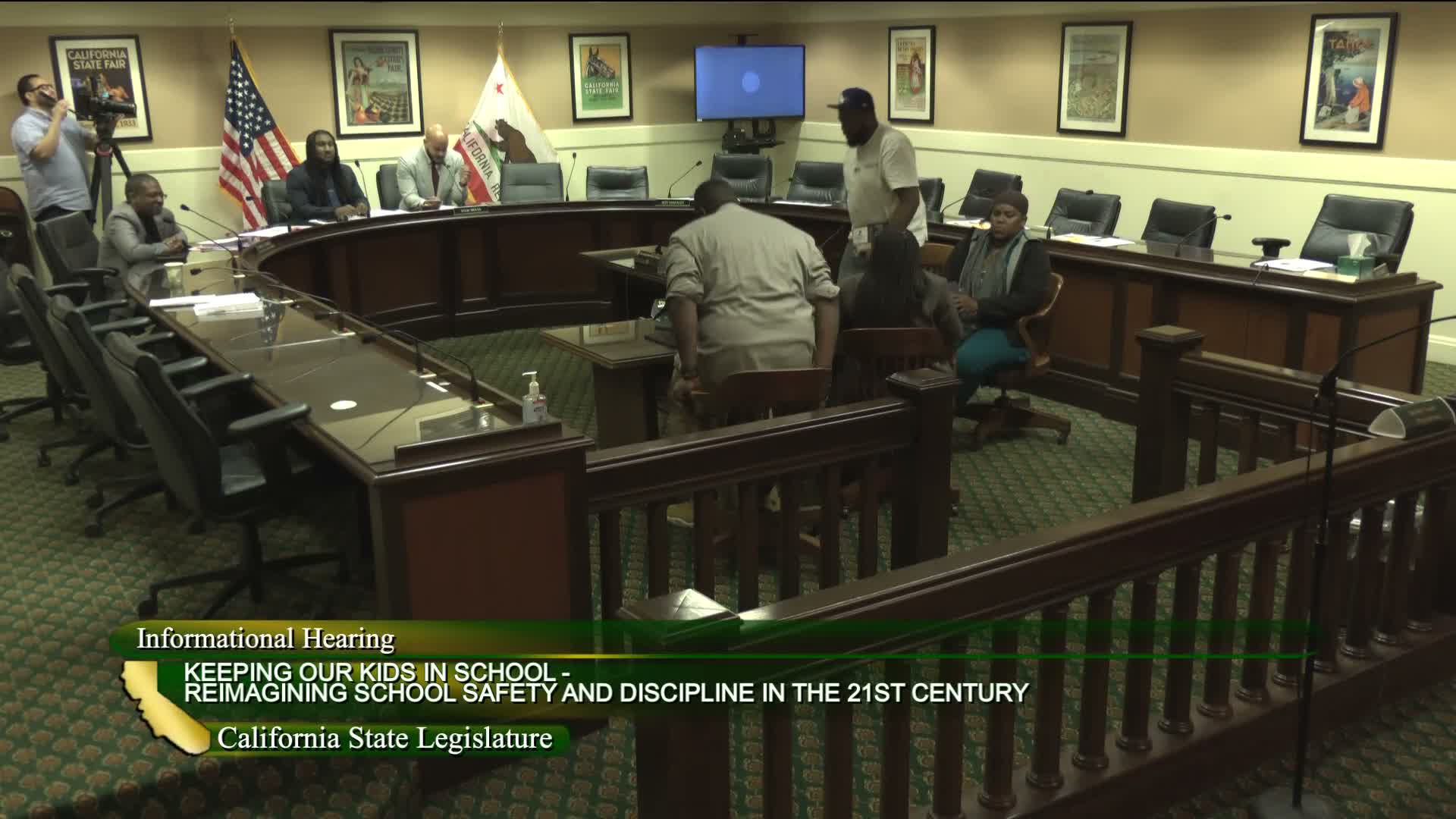
At a California State Assembly select‑committee hearing, community‑school advocates and parents urged lawmakers to adopt the governor's proposal for $1 billion in ongoing annual funding to expand community schools statewide, arguing the model reduces suspensions, improves attendance and yields strong academic gains.
At a California State Assembly select‑committee hearing in Sacramento, community‑school advocates urged lawmakers to approve the governor's proposed $1 billion in ongoing yearly funding for the California Community Schools Partnership Act, saying the model reduces exclusionary discipline and boosts student outcomes.
Clara Medina, senior manager of policy and partnerships at Californians for Justice, told the select committee that the community‑school strategy is ‘‘relationship‑centered’’ and ‘‘racially just’’ and that a Learning Policy Institute analysis of an initial implementation cohort showed a 15% drop in suspensions and improvements in academic outcomes. "The proposed investment would make these conditions a reality for an additional 3,700 schools," Medina said.
Why it matters: Panelists said community schools coordinate school and community resources, expand family and student voice, and provide wraparound supports that keep students in class. Eric White, an organizer with Reclaim Our Schools LA and a parent at a community school, described a case in which parent participation on a local school leadership council reduced the use of school police against a student's family and kept the children enrolled.
Panelists and public commenters repeatedly framed the $1 billion proposal as an equity investment. George Via, a policy and program manager who works in Salinas, said community schools help districts with high rates of homelessness and other concentrated needs by connecting students to local services and hiring staff with lived experience.
State budget context: Chair Isaac Bridal noted the state faces a multibillion‑dollar deficit and asked why the legislature should increase funding now. Advocates responded with cost‑benefit arguments: Medina cited research she said shows each dollar invested can yield many dollars in returns to the state and stressed that initial investments already produced measurable reductions in chronic absenteeism and suspensions.
What comes next: The committee did not vote on funding at the hearing. Committee members heard public comments in support of the model and multiple organizations pledged to work with legislators on budget and implementation details.