Get Full Government Meeting Transcripts, Videos, & Alerts Forever!
Get email alerts on the Federal Enforcement Policy topic
No spam. Unsubscribe anytime.
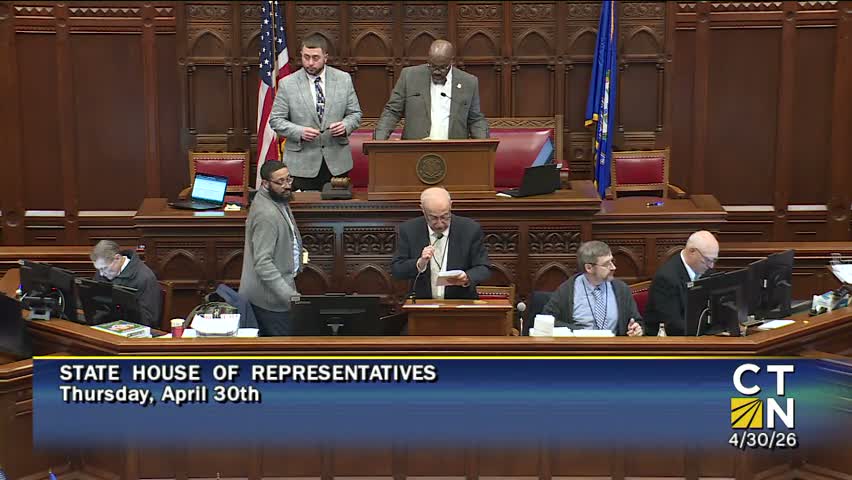
House debate grows heated on bill that would let Connecticut sue federal actors and limit enforcement in protected places
Summary
Lawmakers spent hours debating Senate Bill 397, which would create a state civil remedy against federal officers in specified cases, expand Inspector General oversight of federal use-of-force incidents, set minimum training and identification rules for peace officers, and restrict certain enforcement in sensitive locations; opponents warned of constitutional and enforcement conflicts.
The Connecticut House held an extended, often contentious floor debate on Senate Bill 397 on April 30, a measure its sponsors described as a response to recent federal enforcement tactics and their effects on local communities. Representative Stasstrom, the bill’s House proponent, said the bill would fill a gap in remedies by allowing a state civil action modeled on the federal 42 U.S.C. § 1983 framework to reach federal actors in some circumstances, expand the state Inspector General’s authority to investigate use‑of‑force deaths involving federal officers and limit civil immigration arrests in designated sensitive locations such as schools, hospitals and houses of worship unless officers present a judicial warrant.
Stasstrom opened debate framing the legislation as constitutional and necessary to protect community trust: “A parent should not have to choose between taking a sick child to the doctor and risking deportation,” he said. He also listed changes that would require law‑enforcement officers to display identifying badge or tag numbers while conducting enforcement and would prohibit masked operations absent clear identification, while creating a minimum baseline of training (a 480‑hour floor was discussed) for officers to serve in Connecticut.
Representative Fishbein and other opponents said several sections raised immediate constitutional and federal‑preemption concerns. Fishbein said portions of the bill were likely to be struck down in court and warned of litigation and potential loss of federal cooperation: “Various points are, I’m gonna say, unconstitutional,” he said, urging caution about creating remedies that may conflict with federal supremacy and immunity doctrines. He and others highlighted the risk that the state could be sued by the U.S. Department of Justice and questioned whether the measure would jeopardize federal funding or cooperation.
A major line‑by‑line exchange focused on the bill’s enforcement mechanics. Lawmakers argued over whether the text made the state powerless to challenge federal conduct, how the state’s inspector general could investigate a federal agent’s use of force, and whether police required the same identification rules as federal agents. Representative Fishbein and others pressed for added mens‑rea language in sections that would create civil liability for officers who interfere with photography or recordings; he proposed adding “intentionally” to clarify that the loss of immunity should apply only where officers intentionally interfered with recordings. That amendment failed on a roll call.
Other amendments were debated and rejected or withdrawn. Representatives proposed carveouts to exclude state and local certified officers from some of the bill’s restrictions, to preserve routine policing and early‑voting access for officers near polling places, and to protect lateral recruits (for example, military police or experienced officers transferring from other jurisdictions) from onerous retraining requirements. Several amendments aimed at narrowing the bill’s scope to federal immigration authorities only, or at preserving qualified‑immunity interlocutory appeals for officers, failed to pass.
The bill drew sharp partisan and policy divides on the House floor: proponents described it as a necessary check on federal enforcement that would protect communities and civil liberties, while opponents warned it would hamper public safety, lead to litigation and undercut cooperation with federal law‑enforcement partners. With numerous amendments offered and defeated, the House carried the bill over at the end of the day to be taken up again; some sponsors signaled further refinements would be pursued in subsequent floor sessions.
The debate included dozens of specific proposals and recorded roll‑call votes on amendments. Lawmakers repeatedly returned to the balance between protecting vulnerable community members and preserving law‑enforcement capacity, flagging potential consequences for local policing, recruitment and retention, and for state‑federal relations.
Next steps: Sponsors and critics said they expect continued negotiations and likely litigation over the constitutionality and enforceability of some provisions; the transcript shows the measure remained on the calendar for additional action.