Get Full Government Meeting Transcripts, Videos, & Alerts Forever!
Get email alerts on the Care Court topic
No spam. Unsubscribe anytime.
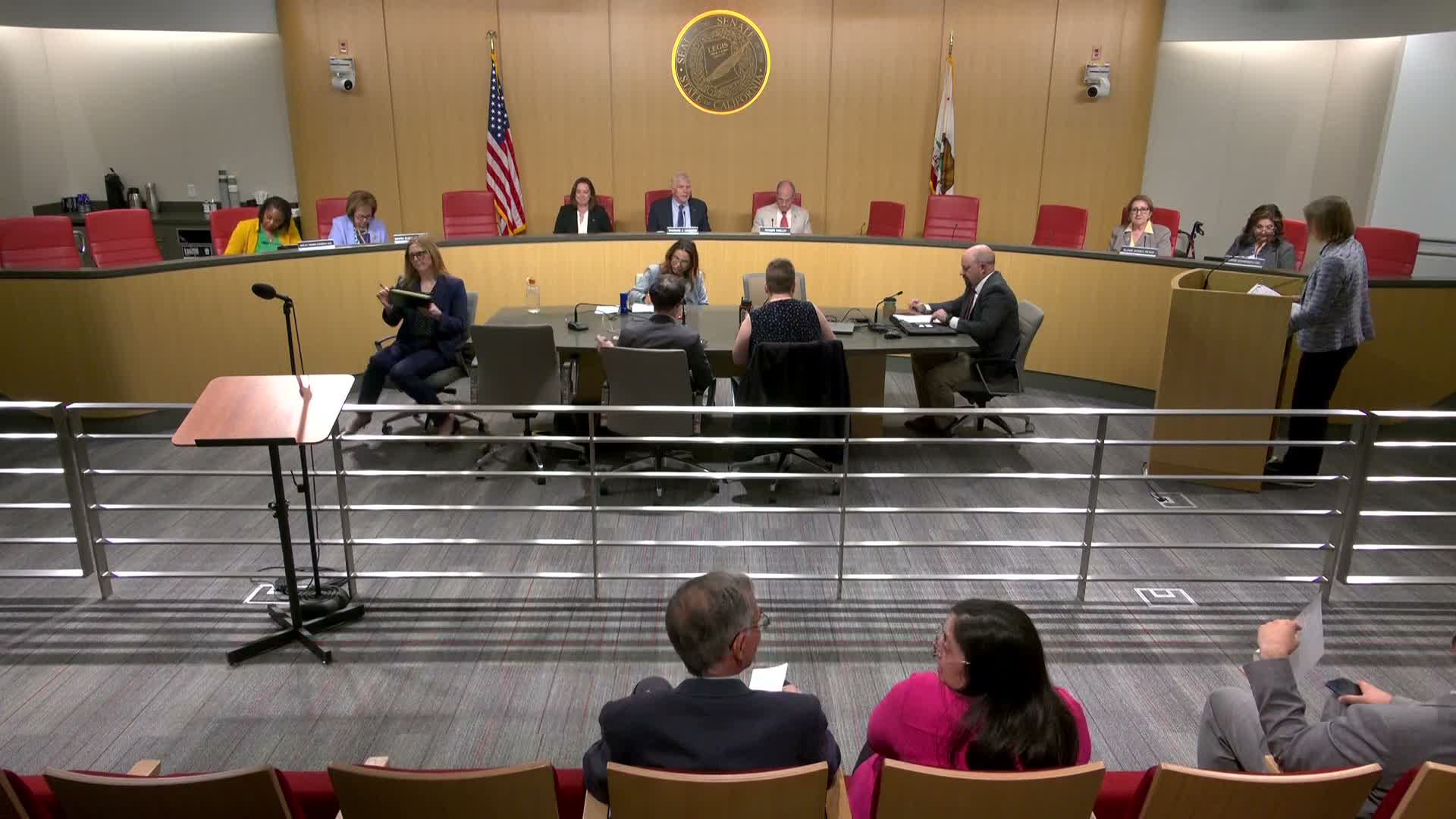
Senate committee advances bill to let family petitioners stay involved in Care Court
Summary
A Senate Judiciary subcommittee voted to move SB 1242 to the floor after proponents said allowing original family petitioners to provide ongoing care-coordination information will plug gaps in treatment; Disability Rights California and some senators warned the bill removes a respondent consent step and could harm those with abusive families.
Senator Choi introduced SB 1242 to allow family members who filed initial Care Court petitions to continue participating in care coordination and to provide relevant information to the court and care team, while reserving judicial discretion to limit or exclude participation if it is harmful.
The bill’s sponsor, Suzanne Fiddler of the Conference of California Bar Associations, told the committee that family petitioners are often the first to recognize deterioration and provide real-time information and that current law can exclude them from ongoing proceedings unless the respondent consents. “This bill does improve care coordination and prevents unnecessary isolation of respondents from family support,” Fiddler said.
Keanu Hopper and other family petitioners gave personal testimony describing cases where exclusion of families coincided with repeated hospitalizations and homelessness for people with severe mental illness. Hopper said family involvement can be lifesaving when a loved one lacks insight into their condition.
Samuel Jahn of Disability Rights California opposed the bill, arguing it removes the respondent’s consent requirement and risks coercive family involvement. “Allowing a family member to participate in care proceedings against the wishes of a respondent is at best coercive and trust-eroding, and at worst severely damaging to their mental and emotional health,” Jahn said. He noted not all families are supportive and that courts may not reliably identify harmful involvement.
Committee members asked how the change would operate in practice. Senator Weber Pearson asked whether the bill effectively transfers consent from the respondent to judicial determination; the sponsor answered that the bill preserves judicial discretion to exclude family members when participation would harm the respondent’s treatment or well-being and emphasized that the change is meant to facilitate care coordination when respondents lack capacity to give meaningful consent.
Senator Reyes and others pressed for procedural safeguards, including timing and the process for a respondent to petition to remove a family member. Senators expressed sympathetic concern for families seeking help but also unease about shifting burdens onto respondents to document family harms.
Senator Nielo moved the measure; the committee recorded its vote to advance SB 1242 and placed the item on call for final disposition. The committee’s action moves the bill to the Senate floor with a committee recommendation to pass as amended.