Get Full Government Meeting Transcripts, Videos, & Alerts Forever!
Get email alerts on the Drug Pricing topic
No spam. Unsubscribe anytime.
Committee backs SB 1094 to promote biosimilars amid safety and notification debate
Summary
SB 10 94 would encourage biosimilar and generic substitution to lower drug costs by allowing insurers to require trial of lower-cost alternatives and permitting pharmacists to substitute biosimilars unless a prescriber marks 'do not substitute.' Supporters cited large potential savings; some medical and biotech groups warned about pharmacist substitution procedures and the need for pharmacist-prescriber alignment.
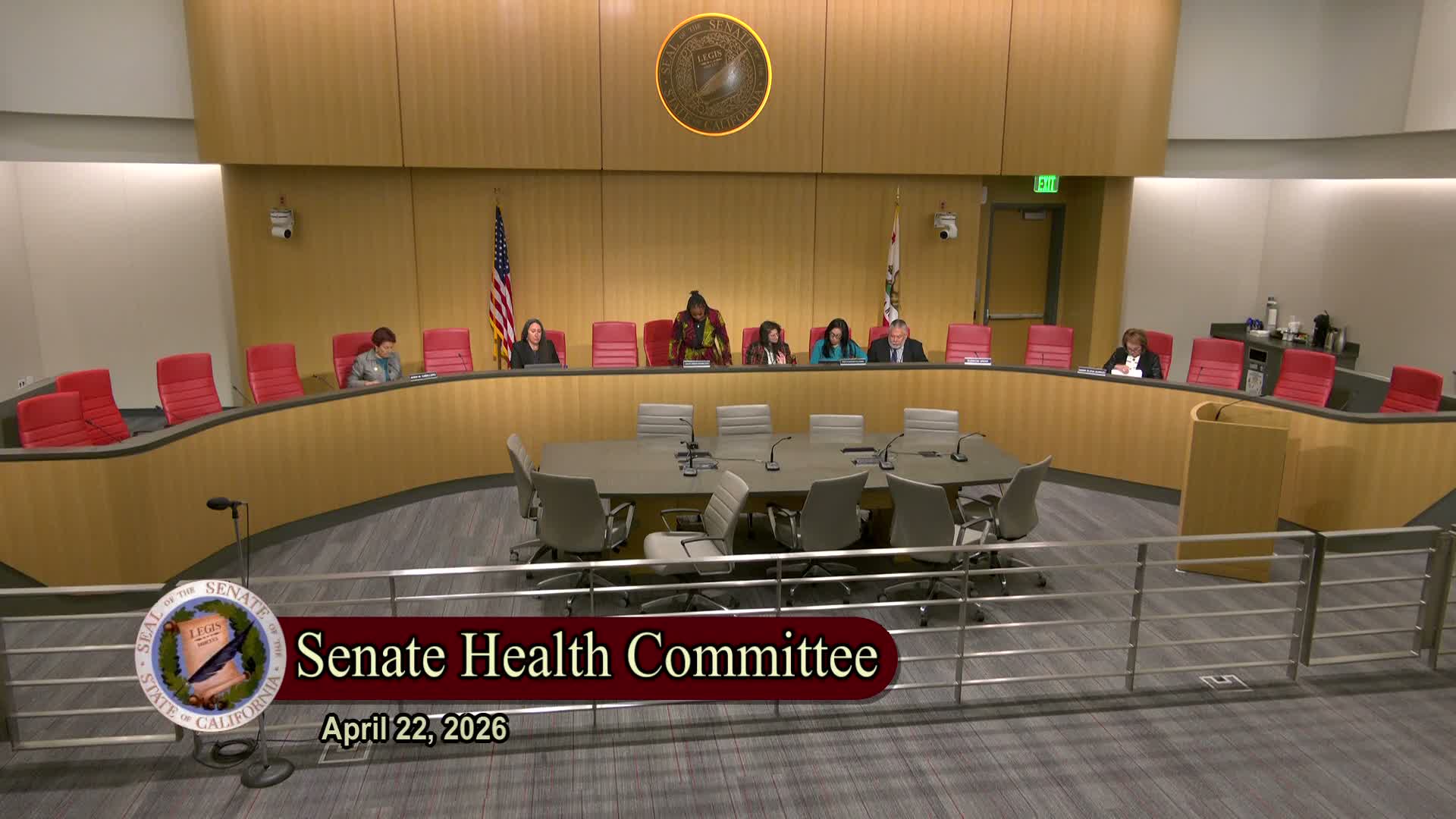
Sen. Weber Pearson presented SB 10 94 as a measure to increase biosimilar use and reduce prescription-drug spending. The bill allows health plans to require enrollees to try a generic or biosimilar when available at equal or lower cost, and authorizes pharmacists to substitute biosimilars for reference biologics unless a prescriber indicates "do not substitute." The author said the measure follows Medicare policy and would inject competition into biologic drug markets to bring down prices.
Advocates described expected savings: the sponsor cited model estimates of several million dollars in cost-share savings for patients and larger premium reductions. Nick Luisos of the California Association of Health Plans, the bill sponsor in committee, said independent analysis shows both premium and out-of-pocket savings.
Opponents, including the Biotechnology Innovation Organization and medical specialty groups, raised safety and process concerns about pharmacy-level substitution for biosimilars that have not received an FDA "interchangeable" designation. "Allowing pharmacy-level substitution of products that have not demonstrated interchangeability eliminates the ability of the FDA to say which products can be substituted safely," said Brian Warren of BIO.
Rheumatology groups and clinicians warned about multiple switching and the difficulty of tracking patient history across switches; they urged stronger notification and physician involvement. The author and supporters noted that current law requires pharmacists to notify prescribers within five days and that amendments require health plans to give prescribers 30 days' notice of plan changes.
After extended questioning, the committee moved the bill to appropriations; recorded roll-call notes in the hearing indicated a favorable committee vote to re-refer the measure with amendments.