Get Full Government Meeting Transcripts, Videos, & Alerts Forever!
Get email alerts on the Cancer Registry Notice topic
No spam. Unsubscribe anytime.
Sen. Jones pushes bill to require patient notice when cancer cases are reported to state registry
Summary
SB 11 50 would require clear, accessible notice at the point of care so patients know their cancer diagnosis has been reported to the California Cancer Registry; proponents described inconsistent current practice and patient surprise when contacted by third-party researchers.
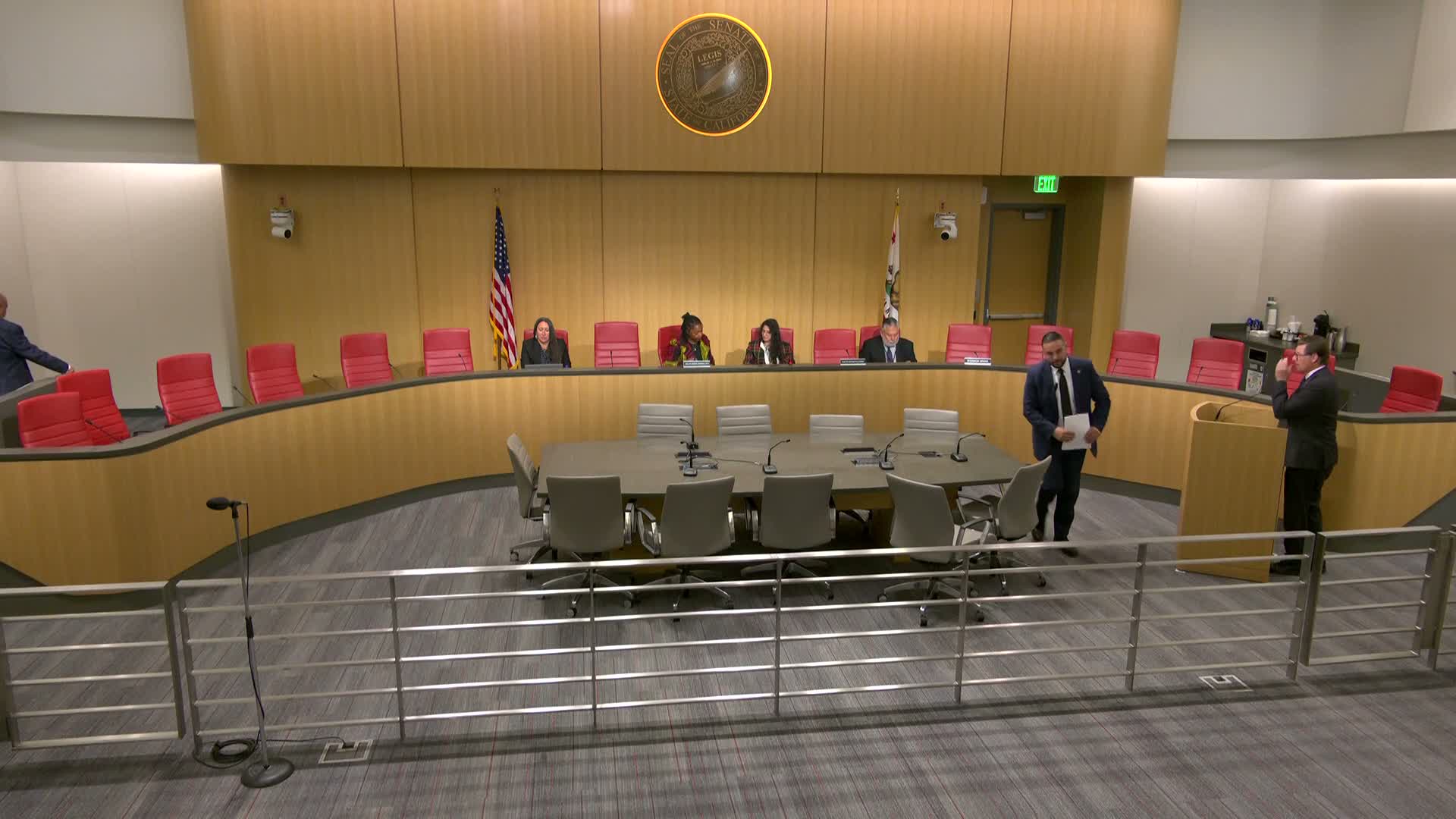
Sen. Jones told the Senate Committee on Health that SB 11 50 addresses inconsistent notification practices around the California Cancer Registry by requiring clear, accessible notice at the point of care. "While a notification requirement exists in regulation, it is not being consistently followed in practice," he said, adding that many patients learn their information has been reported only after contact from third-party researchers.
Public-health and registry representatives thanked the author for working through language and said they would continue technical conversations. "We appreciate the amendments and look to work with you as the bill moves," said a representative of the Public Health Institute, noting additional review is needed with registry partners. John LeClan of Keck USC School of Medicine and an assistant from the University of California said they had concerns with the bill in print but were prepared to continue negotiations.
Committee members, including the chair, noted that current rules already require facilities to inform patients that certain diagnoses are reportable; the bill aims to make that notice routine and consistent. The chair emphasized that this is not a bill to eliminate the registry; rather, it seeks to improve patient awareness of data reporting.
No final vote was taken in the hearing; committee discussion included the scope of the rule (which currently covers cancer in situ) and the education burden on non-oncology providers."I thought we can just give them the pamphlet at the oncology department. And then I realized ... every single provider would have to be educated," one member said, underscoring practical implementation issues.
The author said he would accept committee amendments and work with stakeholders on language and operational details.