Get Full Government Meeting Transcripts, Videos, & Alerts Forever!
Get email alerts on the Education Policy topic
No spam. Unsubscribe anytime.
Micro‑school bill advances after lengthy debate on definition and oversight
Summary
SB 10 86 would direct the Office of Land Use to develop model ordinances and statutory definitions for micro schools to reduce ad hoc local zoning decisions; founders urged clarity, while some members said the concept needs more study before statutory definition.
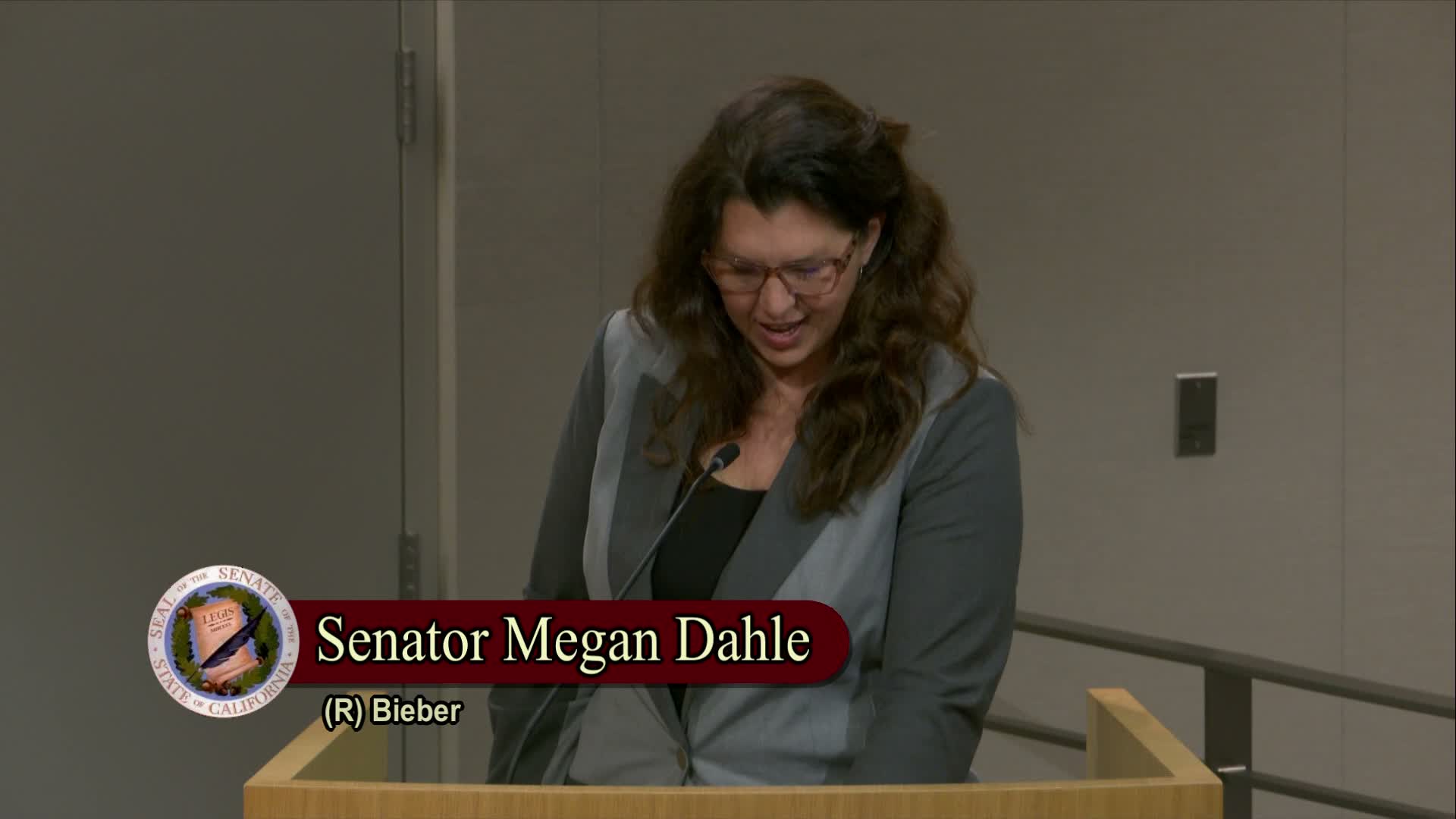
Sen. Dally presented SB 10 86 to create statutory definitions and direct the Office of Land Use to develop model ordinances for micro schools, which proponents said would regularize an array of small, community‑based learning settings now navigating inconsistent local zoning.
Founders and operators described micro schools as small, relationship‑based learning communities tailored for students who need individualized instruction, and they urged predictable local rules so micro schools are not treated like large institutions. Testimony from Lizette Vaez and Melody Fowler explained how micro schools serve diverse families, including rural and urban communities, and asked the committee to support a clear pathway while preserving local health and safety oversight.
Some committee members, including Senator Cabaldon, expressed concern that the Legislature lacks sufficient research and practical experience to define micro schools in statute, and they asked for more information on fire and life‑safety standards, parking and traffic, and distinctions between private school affidavits and micro‑school models. Sponsors said the bill had been amended to remove preemption and ministerial approval provisions and that it aimed to provide model guidance, not force local governments to accept any particular model.
The committee recorded a motion to send the bill to the Senate Appropriations Committee and placed it on call; members urged additional stakeholder work on definitions and safety guidance before the bill advances.