Get Full Government Meeting Transcripts, Videos, & Alerts Forever!
Get email alerts on the Education Assessment topic
No spam. Unsubscribe anytime.
Senate bill would require K–2 math screeners to identify students early
Summary
Sen. Akilah Weber introduced SB 10 67 to require annual early math screeners for kindergarten through second grade beginning in 2028–29, aiming to identify students who need evidence‑based interventions and reduce long‑term achievement gaps, while educators urged care on instructional impacts.
Sen. Akilah Weber introduced SB 10 67, saying the bill would require annual early math screeners for kindergarten, first and second grades beginning in the 2028–29 school year to identify students with math difficulties and connect them to evidence‑based interventions.
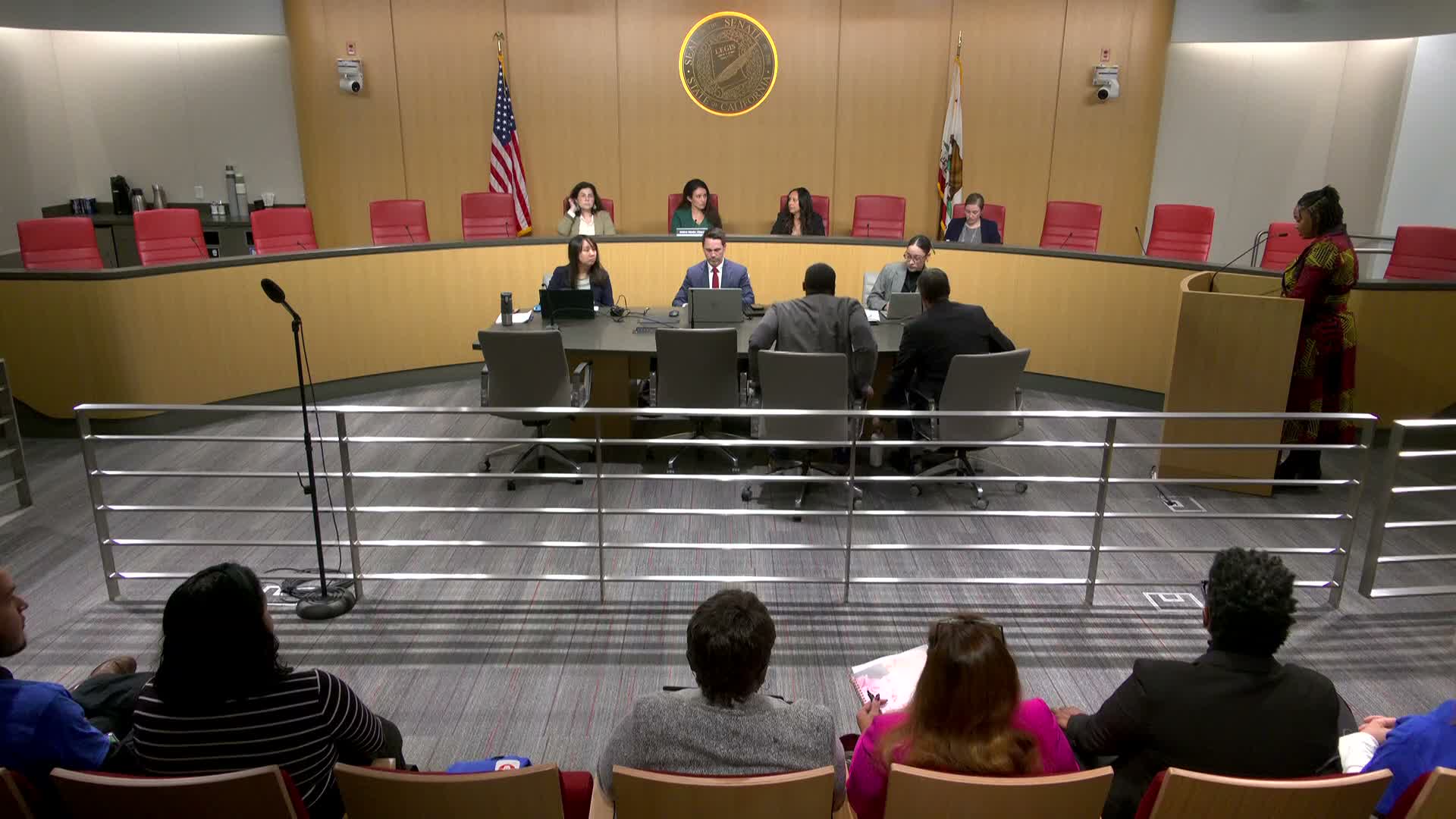
Weber told the Senate Education Committee that just 37% of California students currently perform at grade level in math and that gaps are far wider for low‑income, Black and Latino students. She said the screeners would be quick, developmentally appropriate checks to guide early supports and would not replace curriculum or educator judgment.
Marshall Tuck, CEO of EdVoice, testified in support on behalf of 38 organizations, arguing that early identification and timely tutoring or small‑group instruction can prevent small gaps from becoming long‑term barriers. Dr. Charles Wilkes, assistant professor of mathematics education at UC Davis, described research that links early math foundations to later achievement and urged culturally responsive screeners and supports.
Opponents, including Dr. Scott McDowell, director of curriculum for Torrance Unified, and Kathleen Latimer of the California Mathematics Council, warned that mandating screeners risks narrowing instruction toward discrete procedural skills and may steer classrooms away from the deeper reasoning emphasized in the California Mathematics Framework. They also noted that screening without matched investments in teacher professional learning and classroom‑embedded supports could be counterproductive.
Committee members questioned which tools the bill would require and how schools would distinguish between lack of exposure and underlying disability; supporters said the bill creates an expert panel to select validated screeners and that the delayed rollout provides time to align implementation and funding discussions.
The author said she has requested a budget ask to support implementation. The committee placed the measure on call for a later vote so staff can resolve outstanding implementation and funding questions.