Get Full Government Meeting Transcripts, Videos, & Alerts Forever!
Get email alerts on the Sibtf Reform topic
No spam. Unsubscribe anytime.
DIR and LAO push SIBTF trailer bill to curb liabilities; advocates warn retroactive harm to injured workers
Summary
Labor Agency and the Department of Industrial Relations presented trailer bill language to reform the Subsequent Injury Benefits Trust Fund, saying reforms are needed to curb a projected $30 billion liability by 2029–30; advocates and some legislators warned that applying changes to open cases could strip benefits and urged that reforms go through the regular legislative process.
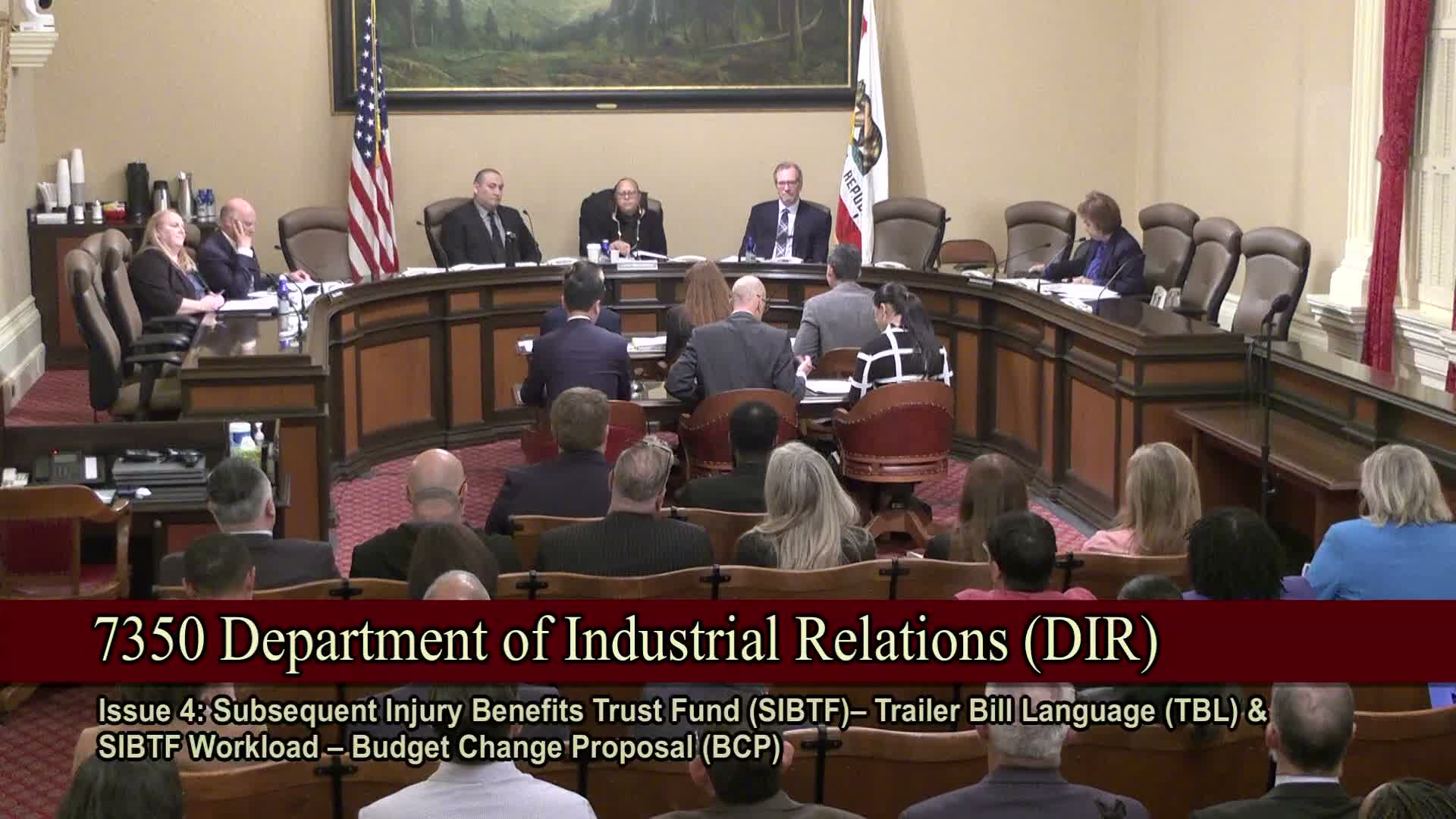
The Department of Industrial Relations and the Labor Agency presented comprehensive trailer‑bill language on April 21 to reform the Subsequent Injury Benefits Trust Fund (SIBTF), a program DIR and LAO described as carrying rapidly growing liabilities and mounting operational backlogs.
Jazzy Grewal of the Labor Agency told the subcommittee the program has seen a steep rise in annual applications — from about 800 per year a decade ago to over 5,000 last fiscal year — producing a backlog that DIR estimates could exceed 30,000 open claims by July. Labor Agency materials projected SIBTF liabilities across employers could reach about $30 billion by FY 2029–30 without statutory changes.
The administration’s trailer‑bill package would tighten eligibility standards intended to refocus the program on its original purpose: benefits for workers with severe pre‑existing disabling conditions compounded by a work injury. LAO analyst Chaz Alamo said the administration’s language aligns largely with LAO recommendations to restore historical eligibility and would be a “meaningful step” toward curbing fiscal risk.
DIR and the agency argued applying reforms to open applications will materially reduce projected liabilities and bring the program back toward historic levels. The Labor Agency estimated a $3 billion liability reduction for public employers (with $500 million for the state share) if reforms are applied to the backlog, versus an estimated $15 billion increase across employers by 2031 if reforms are not applied retroactively.
But multiple senators and claimant advocates pressed the administration on the effects of retroactivity. Labor Agency staff said applying the reforms would not "eliminate any benefits for an applicant who is currently receiving an award" and would not require applicants to start over; they acknowledged, however, that manual case review is required and that they cannot yet quantify how many pending cases would lose eligibility under the new labor‑disabling standard.
Claimants, physicians, advocacy groups and public entities offered sharply divided testimony during public comment. Several disabled claimants and attorneys said retroactive changes would strip benefits for workers who have waited years for adjudication; medical evaluators and advocates urged legislative action rather than an expedited budget trailer change. Local governments and business groups supported the administration’s approach, arguing the fund’s rapid growth threatens public and private budgets.
DIR said it is requesting additional staffing and resources in a Budget Change Proposal to reduce examiner caseloads (from current averages near 1,100 per examiner toward an industry standard near 500) and accelerate case resolution timelines if the trailer bill is adopted. LAO said it would work with the administration during the implementation to assess workload and staffing needs.
Next steps: The committee did not take a vote. Legislators asked for more technical clarifications and for DIR to provide case‑level modeling where feasible; advocates urged moving the issue through policy committees where lawmakers can deliberate the program changes and potential hardship protections for claimants.