Get Full Government Meeting Transcripts, Videos, & Alerts Forever!
Get email alerts on the Edd Next topic
No spam. Unsubscribe anytime.
EDD says multi‑year ICMS rollout will prioritize paid family leave and disability first, with UI later
Summary
EDD officials told the Senate Budget Subcommittee No. 5 that the Integrated Claims Management System will be phased—disability and paid family leave first, unemployment insurance later—aiming for a 2031 completion and saying the $1.2 billion contract remains intact; LAO urged elevated legislative oversight as the project enters its most costly phase.
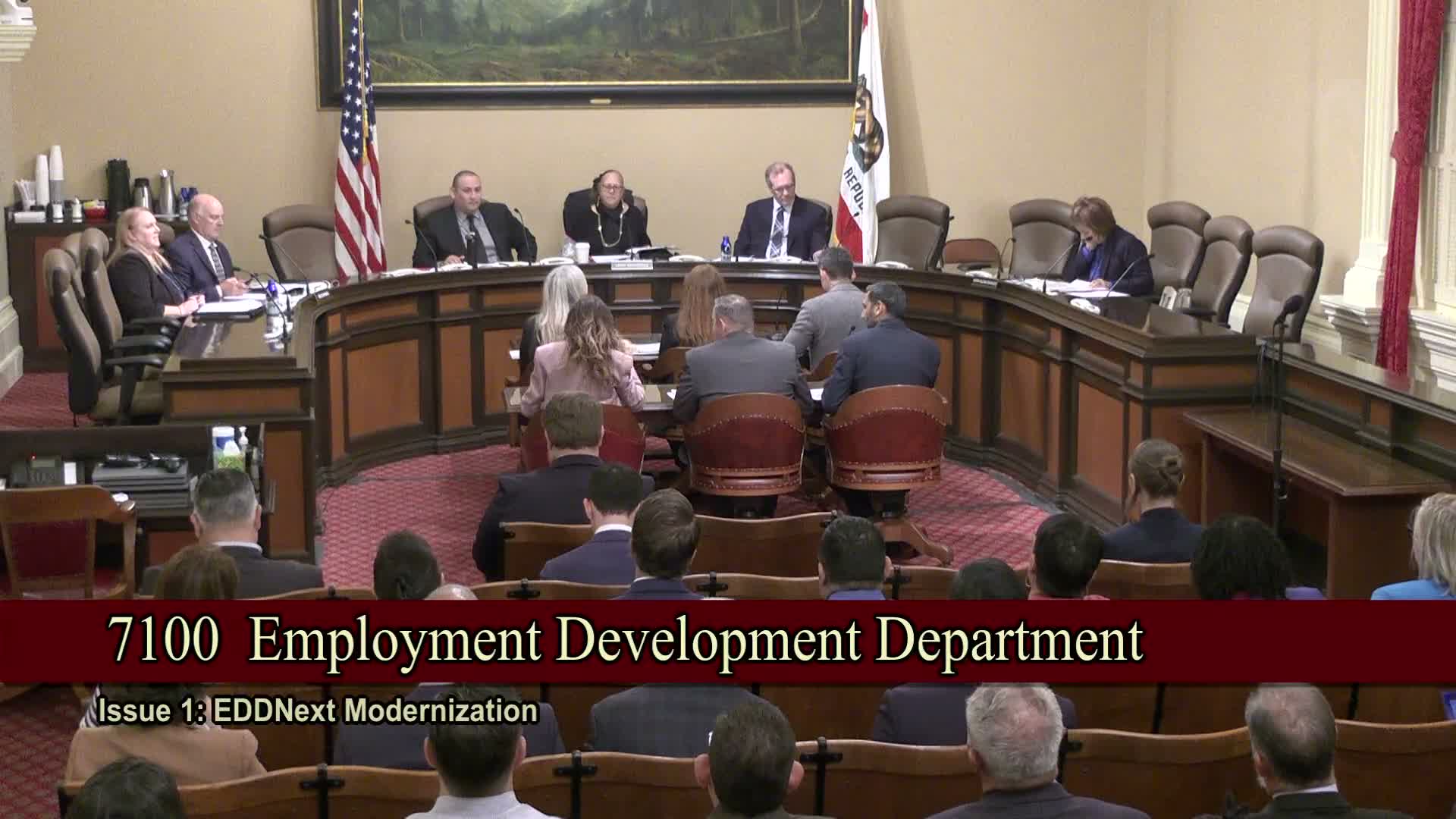
The California Employment Development Department told a Senate budget subcommittee on April 21 that its multiyear modernization effort, known as EDD Next, will deliver the Integrated Claims Management System (ICMS) in two phases, with disability insurance (DI) and paid family leave (PFL) implemented first and unemployment insurance (UI) added on afterward.
EDD Director Nancy Farrias summarized progress on customer‑facing changes — improved online filing, call‑center upgrades, new language access tools and fraud‑prevention enhancements — before turning to the larger ICMS project. “This preparedness is at the core of EDD Next,” Farrias said, adding that customer satisfaction has increased for disability and paid family leave services.
Why phase the project? The department and its CIO, Ajit Turin, told senators that vendor feedback during procurement showed the complexity of integrating all three programs at once. Turin said the awarded contract and market analysis support a smaller, two‑year initial phase for DI and PFL followed by a three‑year UI phase, with a total program duration of five years. “Phase 1 is focusing on DI and PFL, which will be done in two years,” Turin said. “The second phase focuses on unemployment insurance and will be done in three years.”
Caleb Orell, EDD’s administrative deputy, told the panel the agency does not have a new overall contract price above the roughly $1.2 billion figure the department cited; he said change requests to projects to date have been handled without increasing the total contractual amount. LAO analyst Chaz Alamo said that ICMS remains the project’s single most challenging and costly outstanding item and recommended the Legislature elevate oversight now that the project is entering its final phase.
Senators pressed EDD on schedule assurances, procurement timelines, transparency around change orders and whether the department will publish change‑request details. Turin and Orell said change requests tied to Budget Change Proposals (BCPs) are public documents; smaller change requests within departmental delegation can be obtained through public records requests but are not routinely posted. Orell offered to follow up with a fuller accounting of change requests and any dollar impacts.
The committee also asked about fraud controls and data sources. Farrias said criminal‑fraud tied to pandemic PUA programs has been eliminated in the current UI program and described identity‑proofing measures, fraud‑detection vendors and employer checks. On wage data, Farrias said EDD relies on employer quarterly wage reporting and is engaged in interagency work groups to adapt to possible federal monthly reporting requirements.
What’s next: EDD committed to follow up with the committee on public reporting of change requests and specified timelines for SB 1090 (allowing advance applications for PFL/DI), which EDD staff said is targeted for a 2028 go‑live as part of the ICMS rollout. The LAO urged the Legislature to expand oversight as ICMS moves into its most costly integration steps.
The hearing segment concluded without a formal vote; staff agreed to provide follow‑up budget documentation and itemized change‑request details to the committee.