Get AI Briefings, Transcripts & Alerts on Local & National Government Meetings — Forever.
Lake County committee debates streamlining small grant changes, vacant‑position rules and pay table guidance ahead of FY27 budget
Summary
County finance staff proposed a package of FY27 budget policy changes — a countywide small‑grant amendment cap, tighter rules for long‑vacant positions, and guidance on grade‑table adjustments — prompting detailed committee debate and instruction to refine language for next week’s meeting.
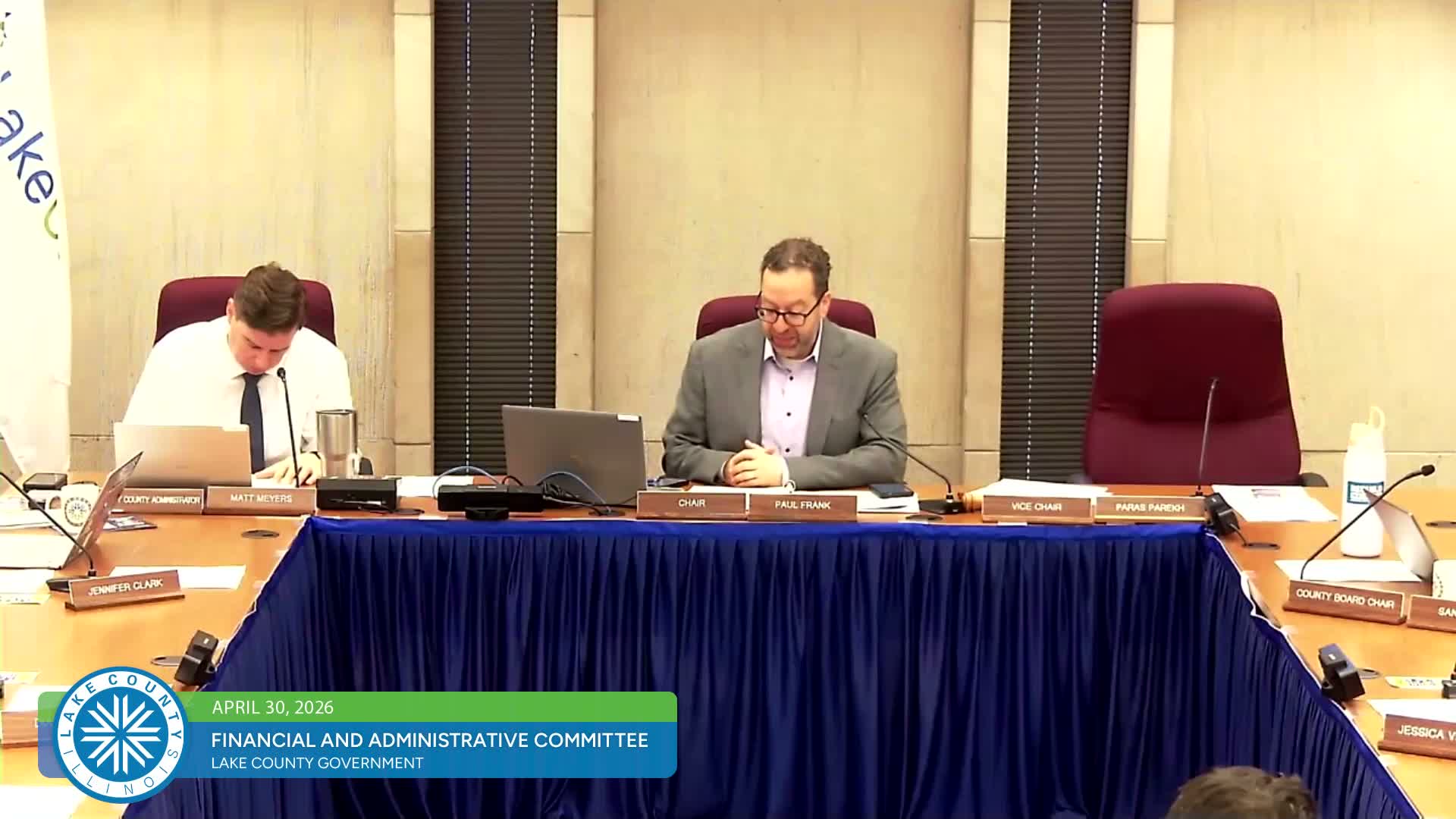
County financial staff and the county administrator presented proposed changes to Lake County’s FY27 budget development policies at the Finance & Administrative Committee on April 30, seeking guidance before forwarding revised language to the County Board.
Speaking for administration, Regina Tuzak, the county’s chief financial officer, said the proposals were collected during a policy review and a closed comment period. One Health Department request would let departments process small dollar grant amendments administratively; staff proposed instead a countywide budget line of $125,000 to cover such amendments, each under $20,000, to reduce routine committee appearances while preserving transparency.
Patrice Sutton, the county administrator, told the committee the change would reduce staff and board time spent on ministerial items while maintaining oversight. “We could place small amendments on the consent agenda or allow a centralized administrative process,” Sutton said. Several members signaled broad support for a countywide approach but asked staff to clarify thresholds and reporting procedures.
A second, more contentious proposal would automatically eliminate positions that have been vacant for more than 12 months unless departments provide justification. Sutton and staff said the policy aims to improve budget accuracy and encourage departments to reassess headcount needs. “If departments can show active recruitment or operational need, they can request retention,” Sutton said.
Members pressed for clearer safeguards. Member Vlitzig and Member Maine urged an exemption for bona fide active recruitments and suggested shortening the review threshold to six or nine months so departments are not penalized for long hiring processes. Staff agreed to add HR check‑ins and a narrowly drawn definition of “active recruitment” to reduce gaming of the exemption and return refined language.
Committee members also debated how to move grade tables and balance COLA and merit increases. Tuzak said the consultant recommended grade‑table movement not mirror merit increases exactly; departments asked for a separate COLA and merit pool to better reward high performers. Staff said they would explore options to balance recruitment pressures and fiscal constraints and report back with concrete numbers.
Several members asked staff to fold the health department’s capital needs and Medicaid‑match uses into the county’s consolidated capital improvement plan to ensure consistent prioritization across departments. Staff agreed to provide additional analysis on levy and statutory constraints.
The committee did not take a final vote on policy language but directed staff to draft clarified instructions, including definitions for active recruitment exemptions and reporting on small‑dollar amendments, for consideration at the next meeting.