Get Full Government Meeting Transcripts, Videos, & Alerts Forever!
Get email alerts on the State Hospital Infrastructure topic
No spam. Unsubscribe anytime.
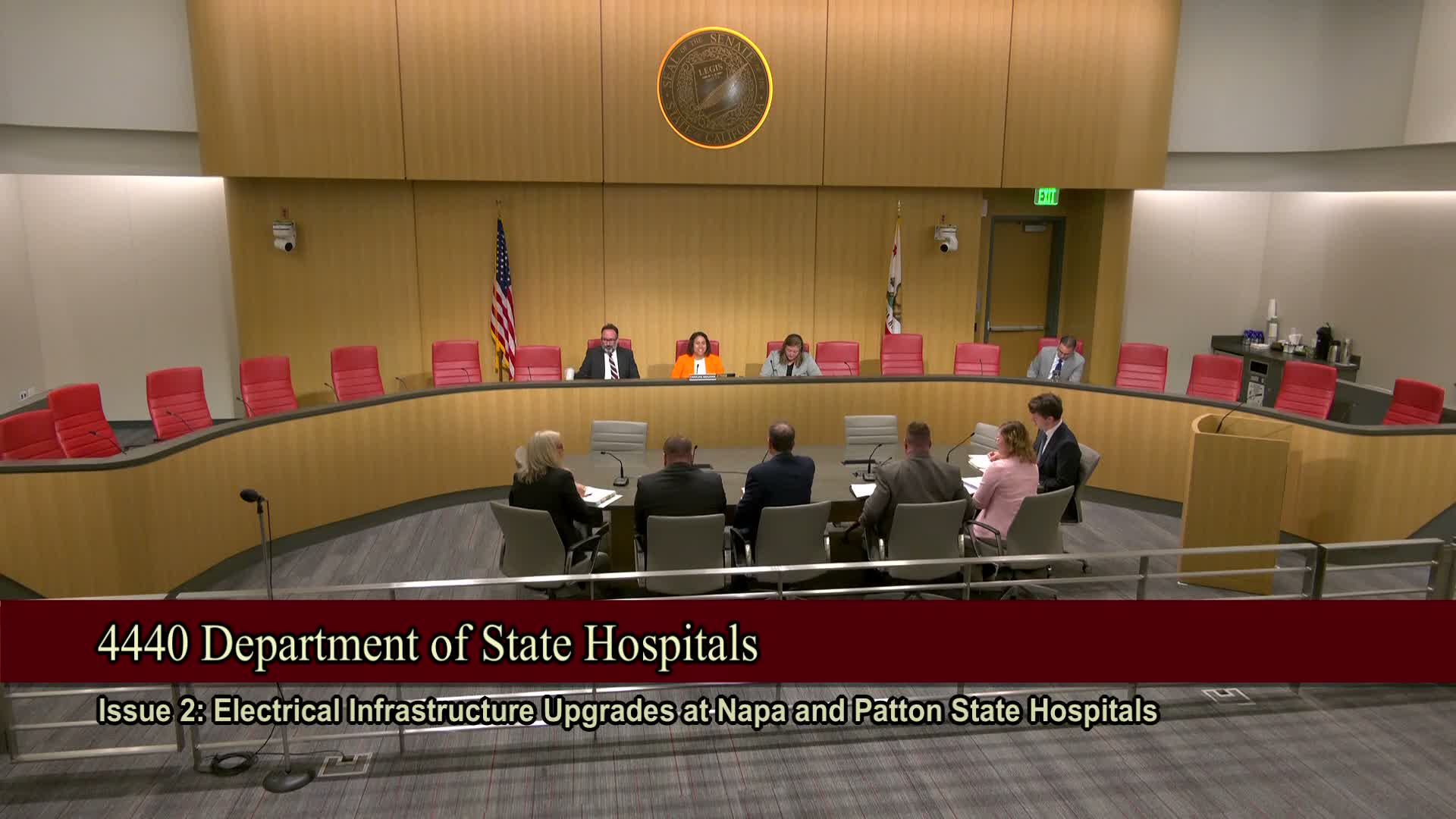
State seeks millions to modernize aging electrical systems at Napa and Patton hospitals
Summary
Department of State Hospitals requested working‑drawings and preliminary plan funding for multi‑year electrical upgrades at Napa and Patton hospitals, citing systems installed in the 1970s and a seven‑year project timeline to avoid outages that could threaten patient and staff safety.
State hospital operations officials told the subcommittee that critical electrical distribution systems at several hospitals were installed in the 1970s and now require multi‑phase replacement to protect HVAC, alarms, medical equipment and patient safety.
"These projects really are critical to ensuring that these hospitals can continue to operate and to protect the health and safety of our team members and our patients," said Mark Beckley, Chief Deputy Director for Operations at the Department of State Hospitals, describing a proposal that includes $7.27 million in general fund for Napa working drawings and $1.76 million for Patton preliminary plans.
What the request covers: the work includes upgrading distribution from 2.4kV to 12kV, replacing transformers and switchgear, installing new generators and low‑voltage upgrades to building panels and wiring. Department officials said projects are typically implemented in phases (preliminary plans, working drawings, construction) and can take up to seven years.
Committee concerns: legislators queried why the requests are characterized as one‑time when they form part of a multi‑year program totaling roughly $95.1 million for Napa; the Department of Finance and DGS explained the practice of seeking funding by phase and that appropriations align with the phase scheduled in each budget year. DSH operations staff acknowledged that some preliminary plan work was only about 10% complete and that contracting timelines may push utilization of requested funds into the next fiscal year.
Why it matters: aging infrastructure risks unplanned outages or emergency workarounds that could disrupt clinical operations. Lawmakers asked whether halting a phased project midstream would be feasible; DSH and contractors said the technical and scheduling realities make consistent, phased funding preferable to piecemeal emergency replacements.
Next steps: the subcommittee held the item open pending continued review of schedule, contracting milestones and the multi‑year budget implications.