Get Full Government Meeting Transcripts, Videos, & Alerts Forever!
Get email alerts on the Farm To School Program topic
No spam. Unsubscribe anytime.
Farm to School program expands but faces funding and kitchen‑infrastructure gaps, CDFA says
Summary
CDFA told a budget subcommittee recent Farm to School grants now reach roughly 199 school districts covering about 36–37% of students, but members and CDFA warned that many districts lack food‑preparation kitchens and federal/local complementary funds have been cut, weakening procurement demand for local farmers.
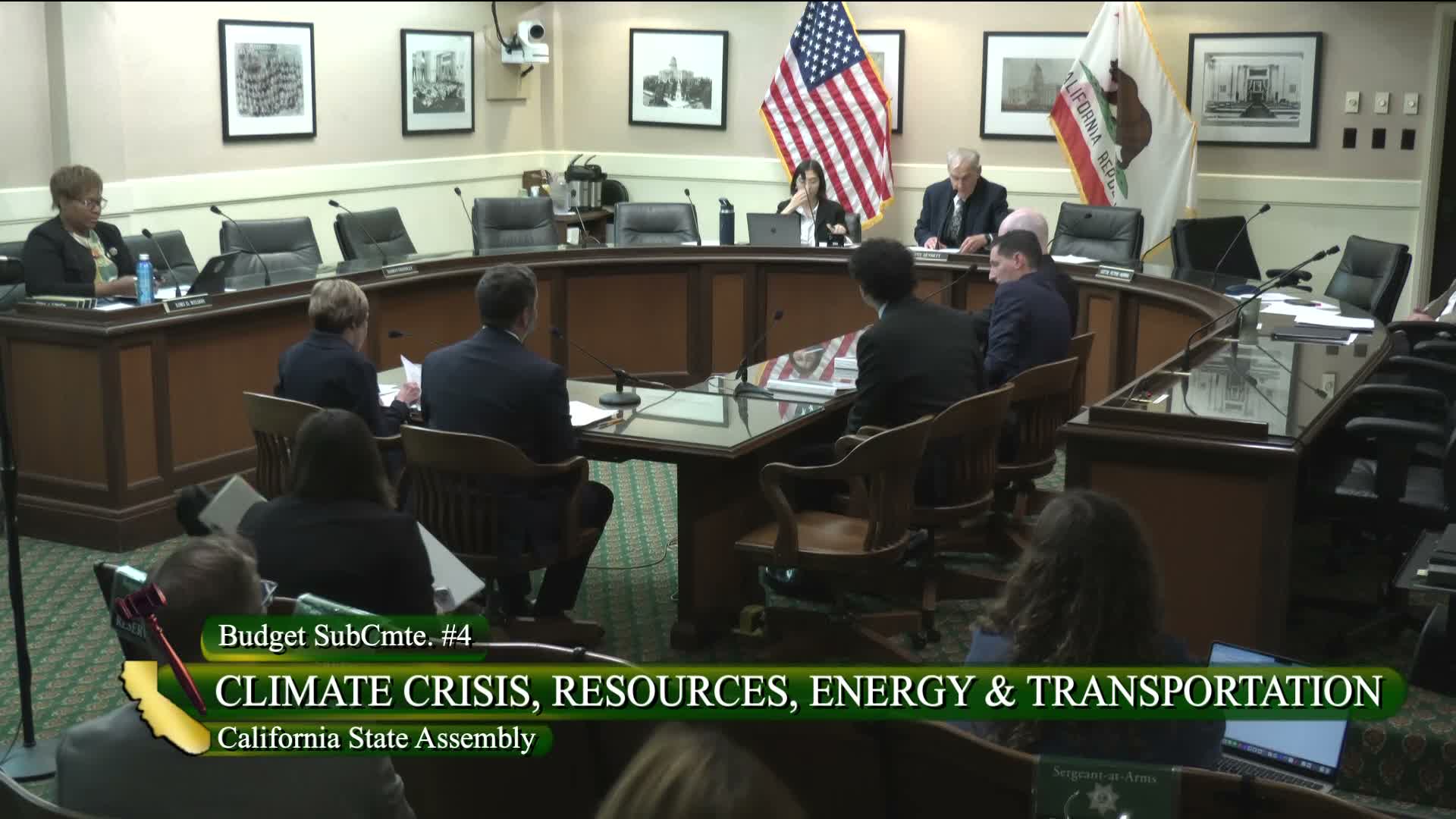
CDFA and committee members used a subcommittee hearing to assess how Farm to School investments translate into steady markets for local farmers and whether existing infrastructure supports broader scale‑up.
Nick Anasich, Farm to School program manager, said the most recent grant cohort included about 199 school districts and school entities covering roughly 36–37% of California students. He described Rio Vista and other districts as models that used grant funding to establish farm production sites and then expanded classroom integration and school meal procurement.
Anasich and Secretary Ross emphasized that three main obstacles limit scaling: school staff capacity and procurement processes, kitchen and food‑preparation infrastructure, and reliable supplier connections. Ross highlighted collaboration with the Department of Education on kitchen investments and with workforce programs on culinary training; she noted the state Department of Education has invested in kitchen infrastructure through a separate program (she cited approximately $900 million in school kitchen investments broadly).
Committee members asked how much federal support remains. CDFA staff said the national USDA Patrick Leahy Farm to School competitive program totals about $14 million for the entire country and that only a small share reached California in the most recent federal round (roughly $862,000 across three California projects). State staff also said some previously available state and federal programs (Local Foods for Schools, other one‑time funds) have ended or been reduced, creating a funding gap.
Members discussed options including pairing Farm to School grants with other procurement incentives, exploring whether segments could be supported by Prop 98 education funds in part, and using food hub and LFPA investments to build reliable demand for small and mid‑sized farmers. CDFA staff committed to supply detailed data on which grantees have prep kitchens within 1–2 weeks to help the committee evaluate how to target infrastructure funding.
Why it matters: Farm to School programs can create predictable institutional markets for farmers but rely on school capacity, kitchen infrastructure and complementary funding streams; the hearing underscored the fragility of progress if federal or one‑time support disappears.
What's next: CDFA will provide the committee with kitchen‑infrastructure breakdowns and program maps; members signaled interest in combining procurement incentives, food hub investments and targeted training to scale demand.