Get Full Government Meeting Transcripts, Videos, & Alerts Forever!
Get email alerts on the Farm To School topic
No spam. Unsubscribe anytime.
Secretary Karen Ross urges continued Farm to School funding as USDA cuts and pest threats mount
Summary
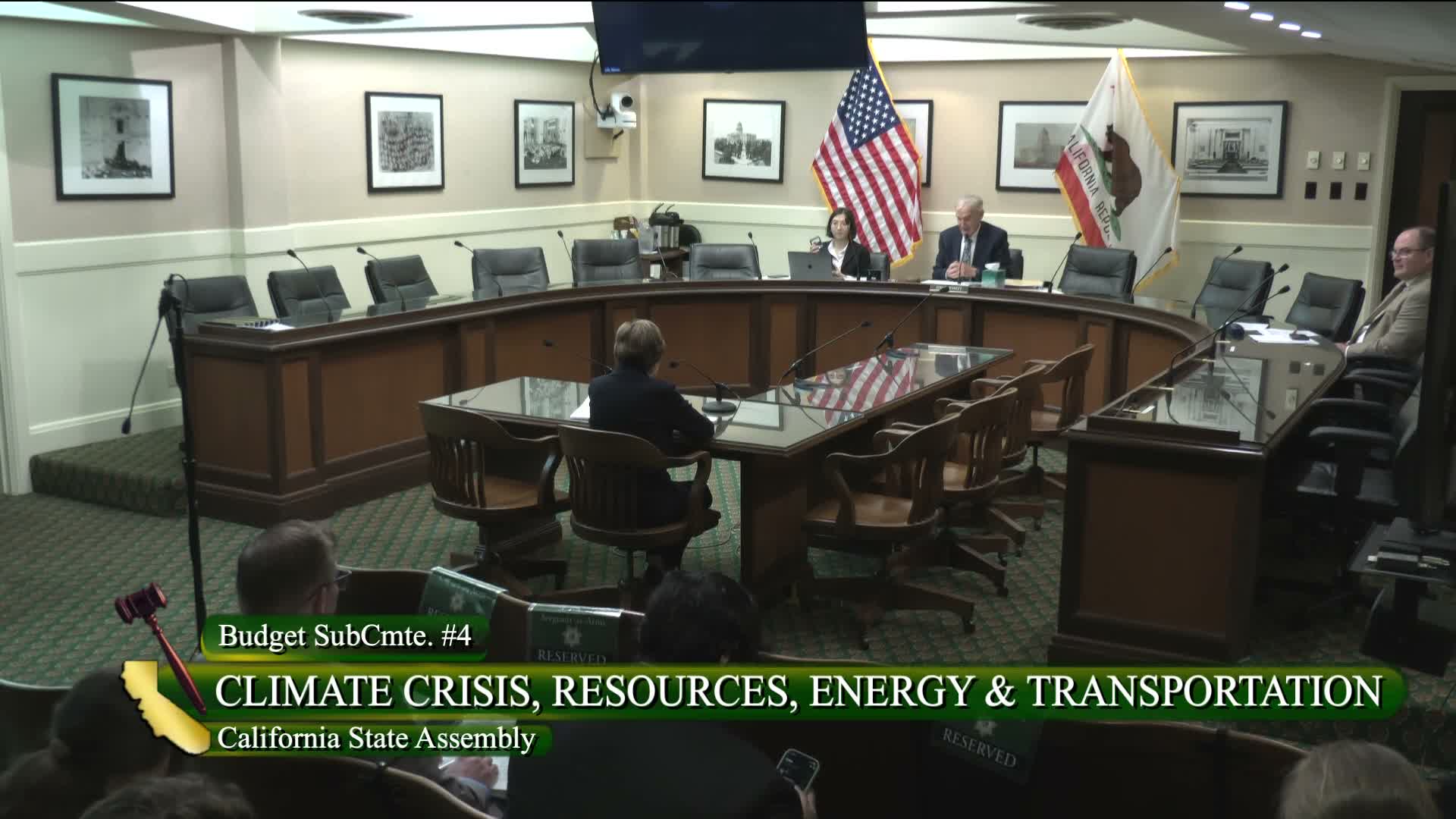
At a California State Assembly budget subcommittee hearing, CDFA Secretary Karen Ross outlined the department's budget mix and urged steady support for Farm to School and local food infrastructure while warning about federal cuts to USDA programs and ongoing invasive‑pest and zoonotic disease risks.
Secretary Karen Ross, head of the California Department of Food and Agriculture, told a legislative budget subcommittee that California remains the nation's largest agricultural state and urged continued state investment in local food systems and Farm to School programs.
"We continue to be the number 1 agricultural state," Ross said, noting that 2024 agricultural output was "over $61,000,000,000," and cautioned legislators that those gross figures do not reflect production costs or narrow margins for many crops. Ross outlined the department's proposed staffing and funding mix and identified priorities including climate‑smart agriculture, food safety and local procurement.
Ross described the department's proposed personnel and fund breakdown, saying the department accounts for about 2,059.1 personnel years and lists budgeted amounts from general fund, industry funds, federal funds, bond funding (primarily Proposition 4) and special funds. She said the governor's budget proposes "continuous funding of almost $25,000,000 for the Farm to School program," coupled with regional navigators who match farms to school districts and help build local procurement capacity.
The secretary warned that federal cuts to USDA programs could harm cooperation and field programs: "we have been told that there's about $7,500,000 less" in federal support for certain pest prevention activities, and she flagged a proposed top‑line reduction at USDA of roughly 28 percent. Ross also highlighted public‑health risks, saying California experienced an unprecedented avian influenza crossover that reached dairy herds and required a coordinated response; she said more than 700 herds had some level of infestation and that the state is now "out of that situation," due in part to state investments.
On invasive pests, Ross said CDFA expects to release a 3½‑year study examining pathways for pests — including new pathways such as e‑commerce packaging — and emphasized the value of early detection and rapid eradication. She described a forthcoming animal health laboratory near Modesto that she said will improve diagnostic speed and outbreak response.
Why it matters: Ross framed Farm to School and related investments not only as education and health measures but as economic development for small and mid‑sized farmers, giving them reliable local markets and rewarding climate‑smart practices. She told members the program has reached districts covering roughly one‑third to two‑fifths of California students and that the department aims to scale processing, procurement and culinary training to convert one‑time grants into sustained institutional purchasing.
What's next: Ross answered members' questions about program reach and declined to promise additional state general fund support beyond the administration's proposal; she said CDFA will continue to partner with the Department of Education and local food hubs on infrastructure and training. Committee members asked for follow‑up details on program maps, kitchen infrastructure and the precise federal funding cuts Ross mentioned.