Get Full Government Meeting Transcripts, Videos, & Alerts Forever!
Get email alerts on the Product Stewardship topic
No spam. Unsubscribe anytime.
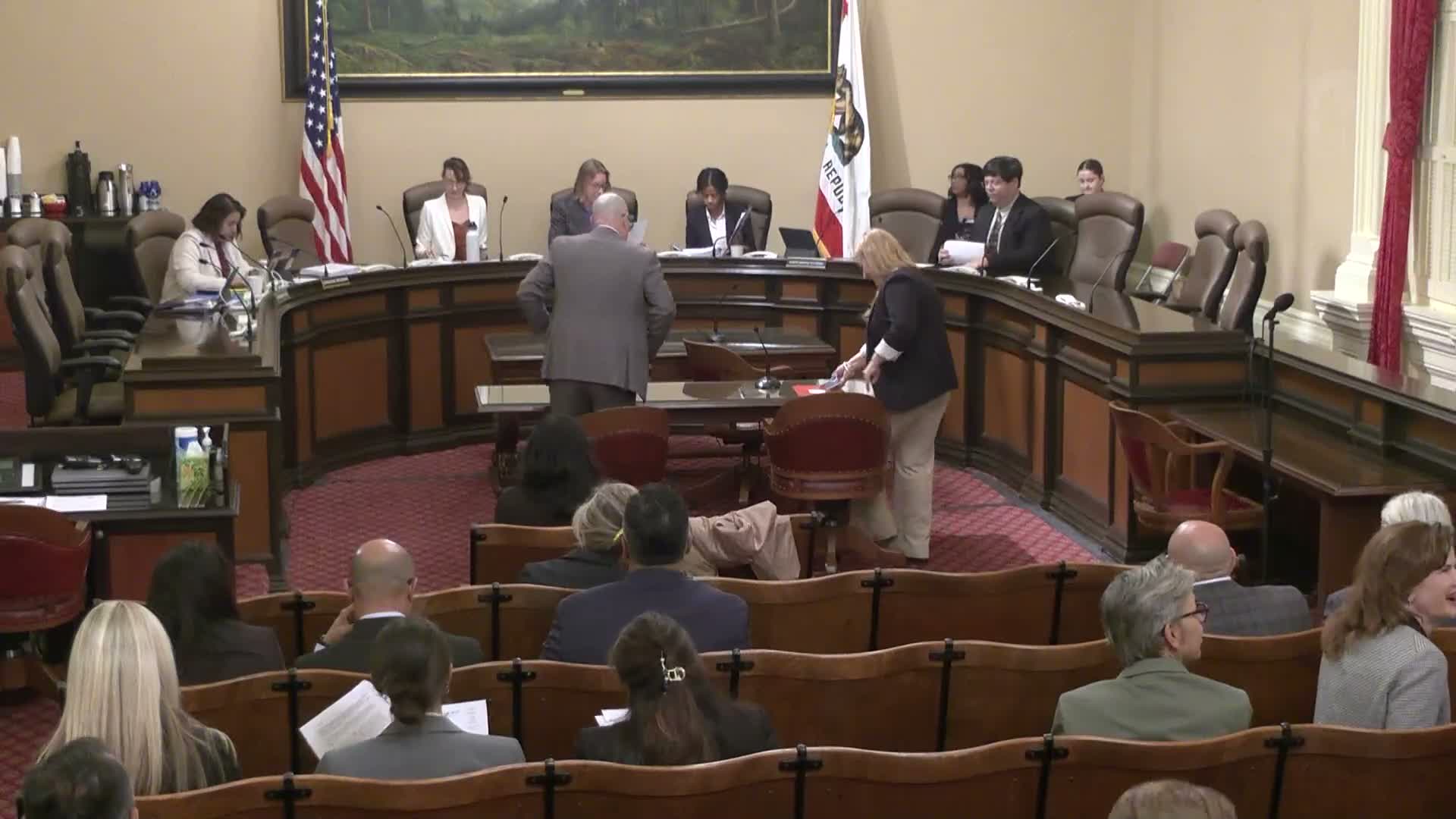
Panel advances bill to create manufacturer‑funded refrigerant recovery program amid industry questions
Summary
SB 10 10 would require manufacturers to fund and operate statewide collection and responsible end‑of‑life management of refrigerant‑containing appliances under an extended producer responsibility model; proponents called it climate‑and‑public‑health protective, opponents said existing federal/state rules and market incentives already address many risks.
Senator Ashby presented SB 10 10, framing it as an effort to ensure refrigerants — among the most potent greenhouse gases — are recovered and properly managed at end of life. Ashby said a statewide, manufacturer‑funded system would reduce local government costs, expand collection options and help meet climate goals by stopping refrigerants from leaking into the atmosphere.
Jason Schmelzer of the California Product Stewardship Council described the program as a standard EPR construct that would centralize collection and ensure consistent end‑of‑life management. He told the committee that inconsistent local programs and illegal dumping remain problems that justify a producer‑funded scheme.
Industry representatives, including the Association of Home Appliance Manufacturers and recycling‑sector groups, opposed the measure as drafted. They argued the sector has already transitioned to lower‑GWP refrigerants, that existing federal (Clean Air Act Section 608) and state programs require refrigerant recovery, and that a new EPR could harm recycling economics and raise consumer costs. They said targeted enforcement of noncompliance and improved implementation are preferable to a wholesale new program.
The author and witnesses said they would continue working with opponents on implementation details. The subcommittee recorded a motion to pass the bill to Appropriations and kept it on call.