Get Full Government Meeting Transcripts, Videos, & Alerts Forever!
Get email alerts on the School Staffing And Benefits topic
No spam. Unsubscribe anytime.
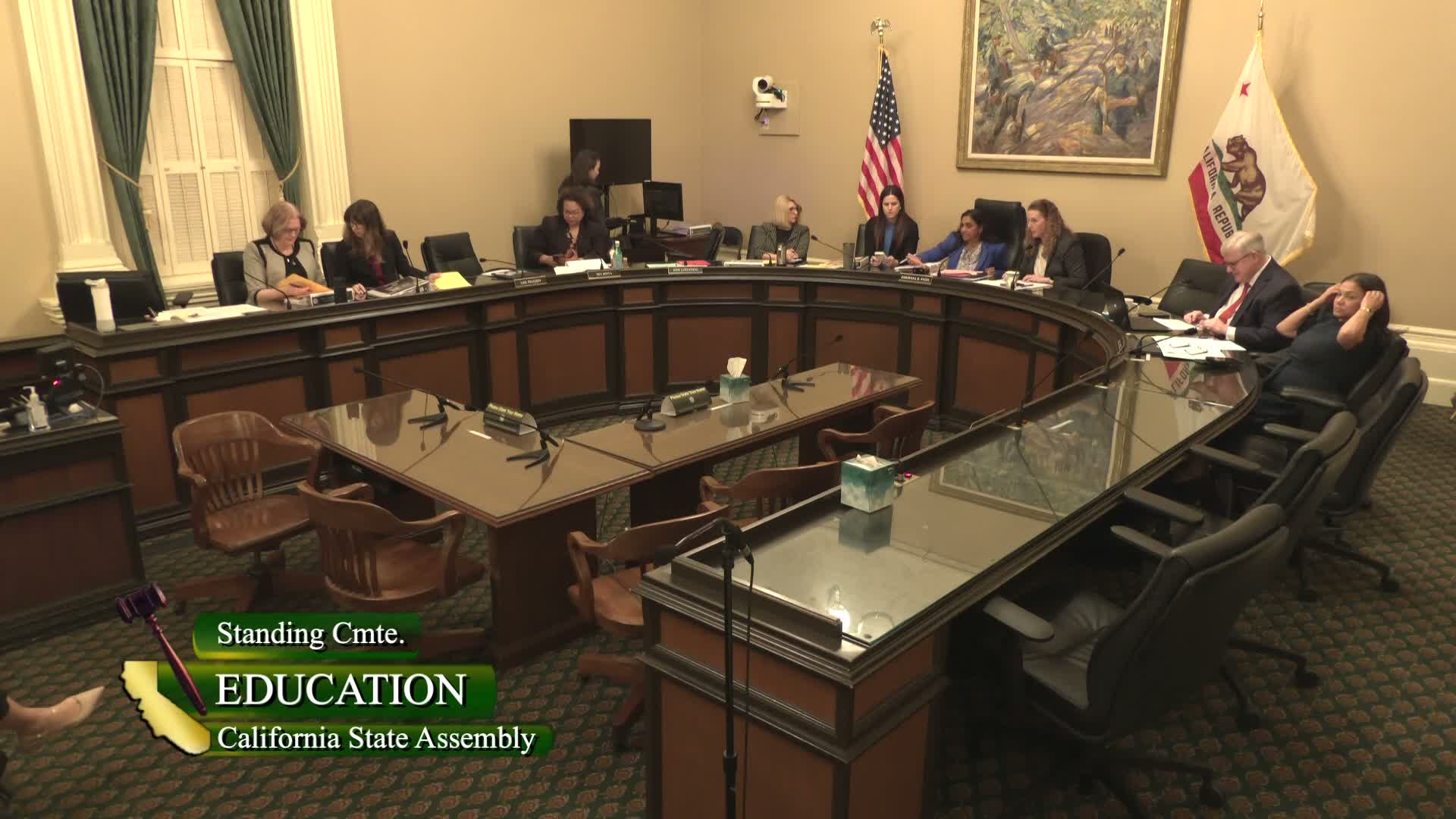
Committee advances AB 17 50 to extend paid leave for school employees after emotional testimony
Summary
AB 17 50 would let certified and classified school employees continue to receive full salary for up to five additional months after exhausting sick leave. Supporters gave personal accounts of financial hardship; administrators cautioned on staffing and potential costs. The committee sent the bill to appropriations.
Assemblymember Klosa introduced AB 17 50 as a paid‑leave measure intended to protect educators who face long illnesses or recovery periods from financial ruin. "Providing a full salary for up to five additional months offers a critical bridge during some of life's most challenging circumstances," the author said.
Multiple witnesses from the California Teachers Association and employees offered emotional testimony. Raul Gonzales, a transitional kindergarten teacher, described a relative’s cancer ordeal and said, "No person should have to be penalized for being too sick to return to work." Union representatives urged the committee to adopt short‑term disability for educators.
Opponents — including the Association of California School Administrators and county business officials — warned that extending paid compensation could exacerbate staffing shortages and shift costs to Proposition 98 education dollars. An ACSA witness estimated that a prior similar proposal would cost roughly $500 million annually and argued the bill should account for leave interactions, return rights, and rehire practices.
Committee members acknowledged the author’s aims and speakers’ stories while noting financial and operational questions. After discussion the committee voted to move the bill to appropriations where funding and staffing implications will be examined.