Get Full Government Meeting Transcripts, Videos, & Alerts Forever!
Get email alerts on the Utility Rates topic
No spam. Unsubscribe anytime.
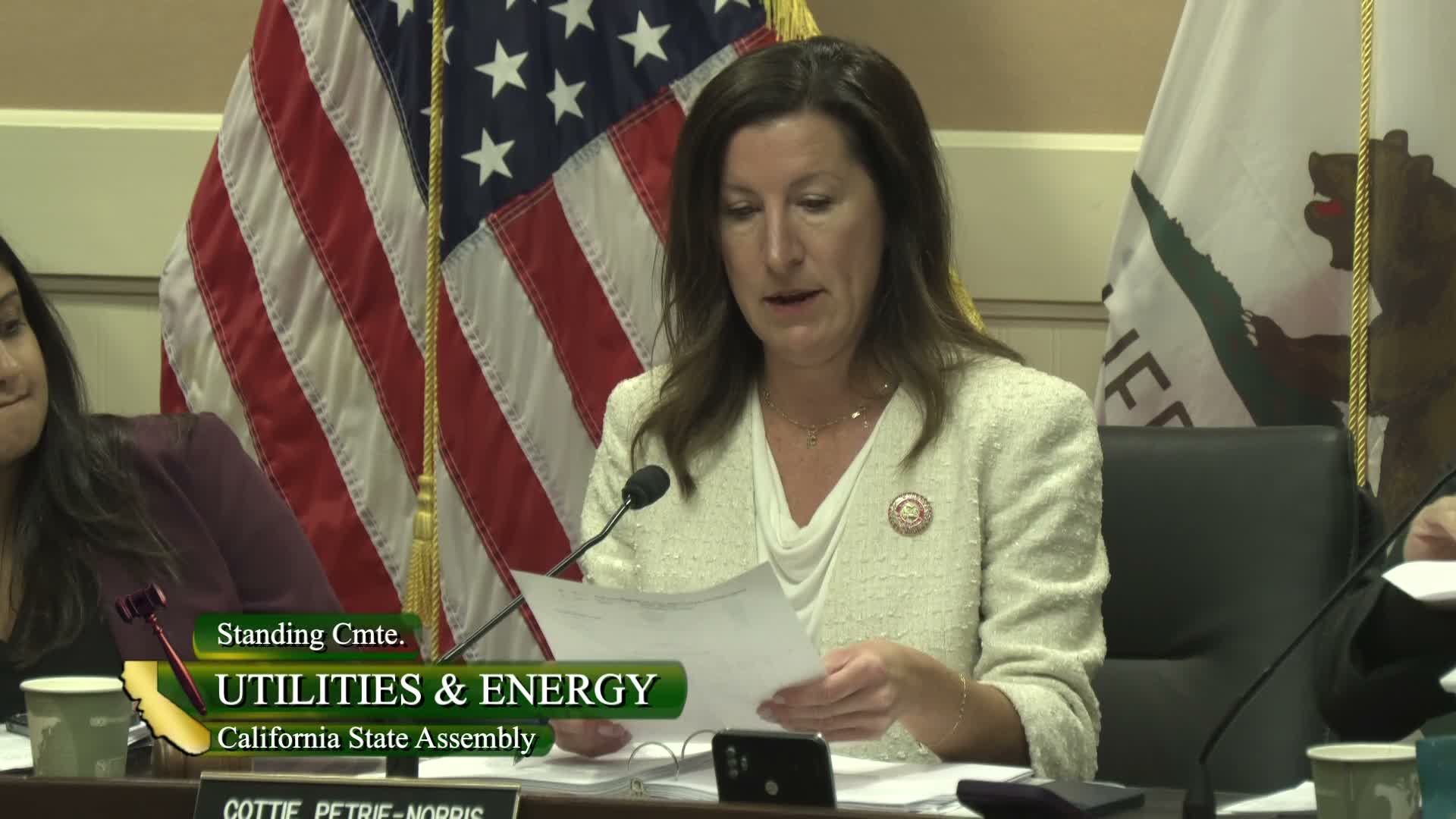
Assembly committee debates bill to force 'inflation‑constrained' rate scenario and higher evidentiary standard for utility spending
Summary
AB 23 38 would require utilities to present an inflation‑constrained spending scenario in general rate cases and raise the evidentiary standard for approvals above inflation; proponents framed it as transparency and consumer protection, while utilities, labor and business groups warned of unintended bargaining and reliability consequences.
Assemblymember (author) presented AB 23 38 (Fair Utility Rate Act) to require each utility to offer, as part of its general rate case, an inflation‑constrained spending scenario (anchored to a CPI measure used for Social Security COLA) and to require heightened scrutiny and a "clear and convincing" evidentiary standard for approvals above that scenario.
Proponents: AARP and the Utility Reform Network said the measure would increase transparency and force utilities to prioritize spending, arguing that ratepayers deserve a clearer accounting of what is essential spending versus discretionary items. "This would require cumulative consideration of all pending rate increases," a supporter said, and would not prohibit above‑inflation approvals but would raise the burden.
Opponents: Labor (California Coalition of Utility Employees) and IOUs warned the proposal could constrain bargaining outcomes, harm workers, and lead to deferred maintenance. The California Chamber of Commerce argued anchoring spending to a Social Security COLA proxy oversimplifies utility cost drivers—wildfire mitigation, grid hardening, and state mandates do not track general CPI. Labor also warned the measure could be used in bargaining to limit wage increases tied to known legislated constraints.
Committee exchange and clarifications: The author and bill proponents said the intent is transparency and prioritization, not a mandatory cap; the inflation‑constrained scenario is an alternative benchmark for the PUC and parties to litigate. Supporters said utilities retain discretion to justify needs and the PUC can still approve higher spending if clear and convincing evidence is provided. Critics pressed for concrete examples of what an inflation‑constrained scenario would omit and how the change might interact with wage negotiations and state mandates.
Outcome: The committee recorded a motion to pass the bill as amended to appropriations and held extended questioning; the author committed to continue discussions with labor and utilities on language.
Ending: The bill raises institutional questions about the balance between consumer affordability and ensuring funding for wildfire resilience, grid modernization, and other mandates. Appropriations will review fiscal and statutory implications.