Get Full Government Meeting Transcripts, Videos, & Alerts Forever!
Get email alerts on the Electrification Policy topic
No spam. Unsubscribe anytime.
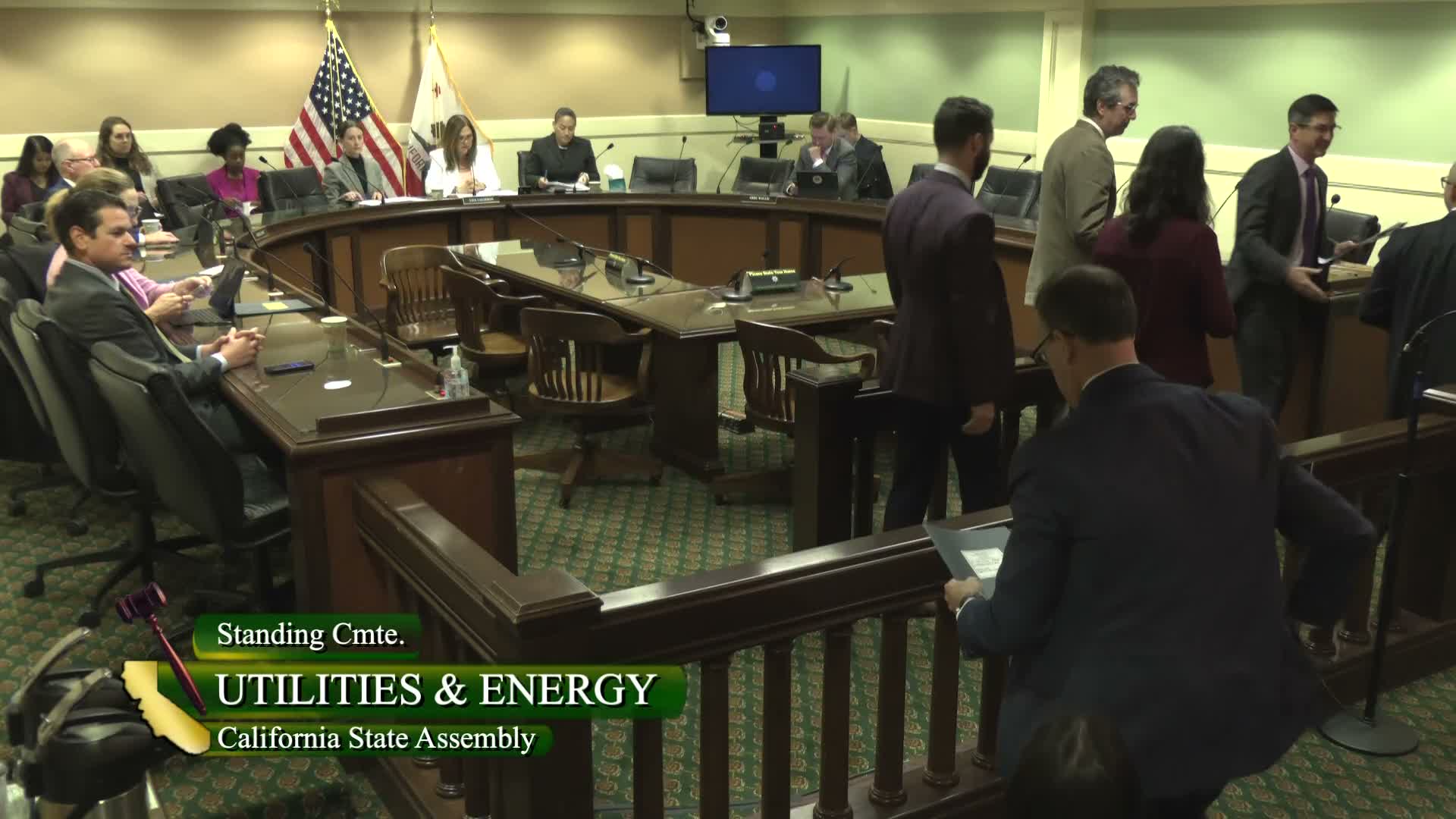
Gas replacement fund debate: supporters say incentives speed electrification; utilities warn of safety‑fund risks
Summary
AB 23 13 (Home Energy Choice Act) would let homeowners offered service‑line replacement opt for electrification using a portion of replacement funds; proponents say incentives lower long‑term costs while utilities warn the change could deplete a fund intended for safety work and shift costs to remaining customers.
Assemblymember Lehi presented AB 23 13 as a voluntary pathway allowing customers facing gas service‑line replacement to choose electrification instead, using a portion of replacement funds to cover electrification incentives.
Supporters: Marian Borgeson (NRDC) and Matt Vespa (Earthjustice) said the bill would avoid locking in expensive gas infrastructure, speed electrification, and reduce long‑term costs. Vespa cited an avoided‑cost calculation and a $15,000 incentive level used in examples, saying such incentives "will lower costs for all gas customers" by avoiding more costly pipeline replacements.
Opponents: Representatives of investor‑owned utilities (PG&E, SDG&E, SoCal Gas) and the Pipe Trades Council urged caution. Utility witnesses said the repair and replacement fund is already underfunded for safety‑critical replacements and that using it to subsidize appliances or electrification could delay safety work and create cost shifts. One witness said, "Don't take it out of the fund that is there to replace the highest priority pipelines that need to be repaired or replaced." The unions echoed safety concerns and highlighted the fund’s limited annual dollars relative to identified needs.
Author response and implementation guardrails: The author said committee amendments require that any incentive level be less than the average lifetime cost of the service‑line replacement, include an emergency exemption for imminent safety work, and direct the PUC to set implementation details such as notice and response deadlines to avoid delays. The author committed to continued negotiations with utilities and labor on guardrails and funding sources.
What was not decided: The committee did not finalize a funding source beyond utility repair/replacement funds; opposition asked for alternative funding options and additional safeguards. The committee recorded a motion on the measure and left roll calls open for absent members; the bill was advanced to appropriations or placed on call per the clerk’s notation.
Ending and next steps: The author and supporters framed the bill as a practical and equitable step to expand electrification choices; opponents asked for more time to review committee amendments and urged stronger safeguards for pipeline safety funding. The bill will proceed to appropriations for fiscal review and further negotiations on implementation details.