Get Full Government Meeting Transcripts, Videos, & Alerts Forever!
Get email alerts on the Water Data Centers topic
No spam. Unsubscribe anytime.
Committee hears dueling views on bills to require water assessments and reporting for data centers
Summary
Two related bills — AB 24 69 (pre-entitlement water supply assessments) and AB 26 19 (ongoing reporting) — were presented and advanced after testimony from environmental groups and water agencies supporting local planning, and from data center and industry groups opposing burdensome, asymmetric reporting and confidentiality gaps.
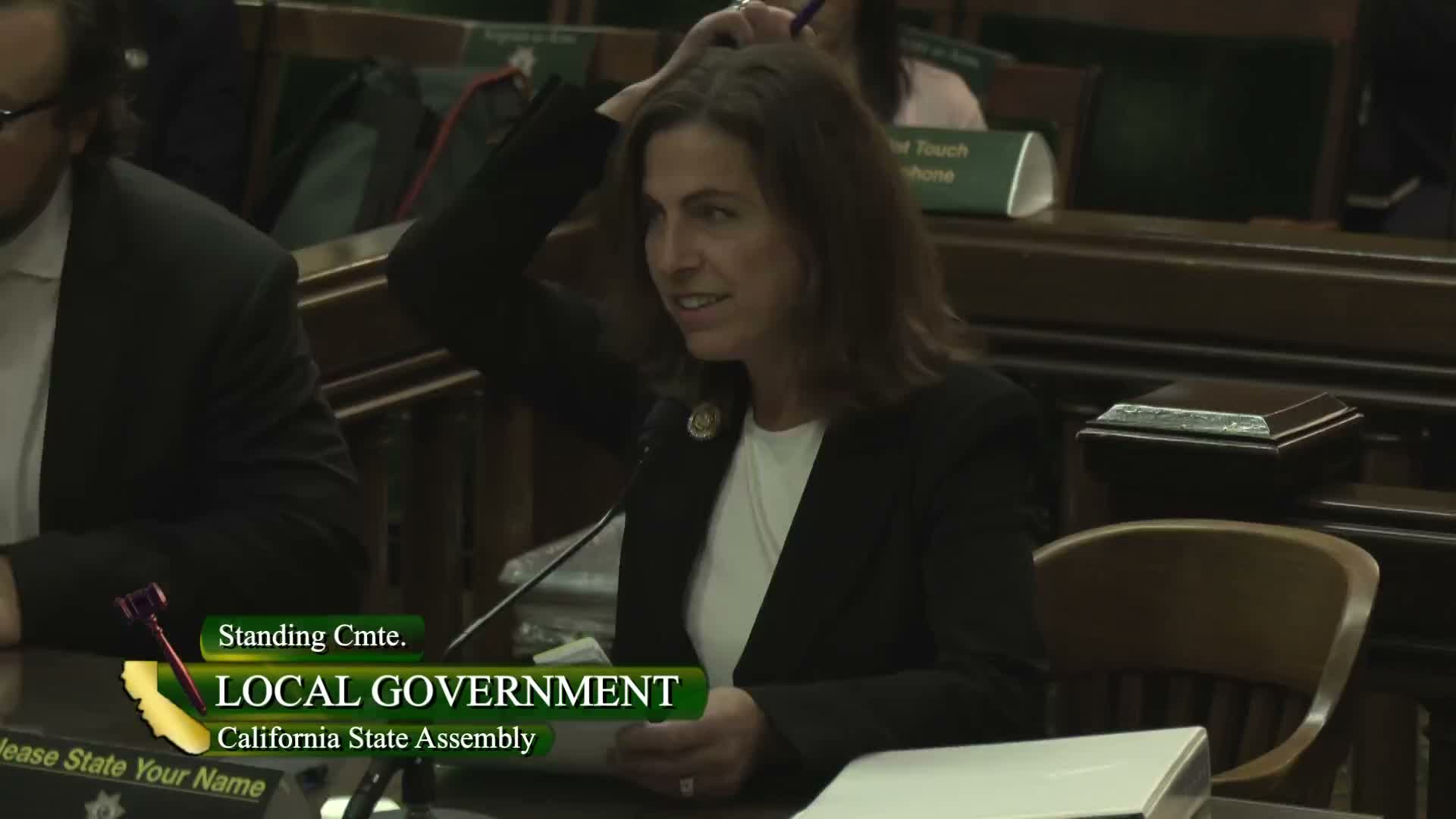
Assemblymember Papen presented a pair of bills aimed at giving local governments reliable information about data-center water demand before and after projects are approved.
AB 24 69 would require a water supply assessment for any proposed data center before a local government approves siting or entitlements, restrict approvals in critically overdrafted basins unless sufficiently justified, and make projects pay for necessary infrastructure upgrades triggered by their demand. Proponents including Sean Bothwell of the California Coastkeeper Alliance and local water districts argued the bills address gaps in local planning and protect ratepayers in small systems. They emphasized that data centers can be large, continuous water users whose peak demands align with drought-constrained periods.
AB 26 19 would require ongoing reporting of actual water use — annual estimates and measured use tied to business license renewals — and direct the Department of Water Resources to develop best practices and guidance to help local agencies incorporate data-center demand into urban water management plans.
Industry opposition: The California Chamber of Commerce, Data Center Coalition, TechNet and other industry groups registered respectful opposition on the record, arguing the bills (as drafted) single out data centers with burdensome reporting requirements and could conflict with the Mitigation Fee Act, Proposition 26, or create security vulnerabilities if granular operational data were publicly disclosed. Opponents requested parity with other large commercial and industrial (CII) users, stronger confidentiality protections, aggregation/anonymization of public data, and targeted, technology-neutral metrics rather than daily operational disclosures.
Committee response and path forward: Authors said AB 24 69 is an information-first measure that does not automatically forbid permits and that legal counsel reviewed mitigation-fee concerns; they emphasized nexus requirements for infrastructure costs. Members asked about recycled water use, sunset possibilities for mandates, and confidentiality protections; authors indicated a willingness to work with opponents on those issues. Both bills were advanced to the next fiscal referral.
Next steps: AB 24 69 and AB 26 19 were re-referred to Appropriations for fiscal vetting. The author committed to engage with industry and water agencies on confidentiality, scope, and legal mechanics.