Get Full Government Meeting Transcripts, Videos, & Alerts Forever!
Get email alerts on the Housing Townhomes topic
No spam. Unsubscribe anytime.
Assembly committee advances townhome bill that pairs ministerial approvals with a $28 construction wage floor
Summary
The Assembly Local Government Committee advanced AB 17 51, which would allow ministerial approval for qualifying townhome projects and establish a $28-an-hour minimum for construction workers on covered private townhome projects; supporters said it expands ownership and raises pay for nonunion workers, while labor groups warned it could undermine prevailing-wage standards.
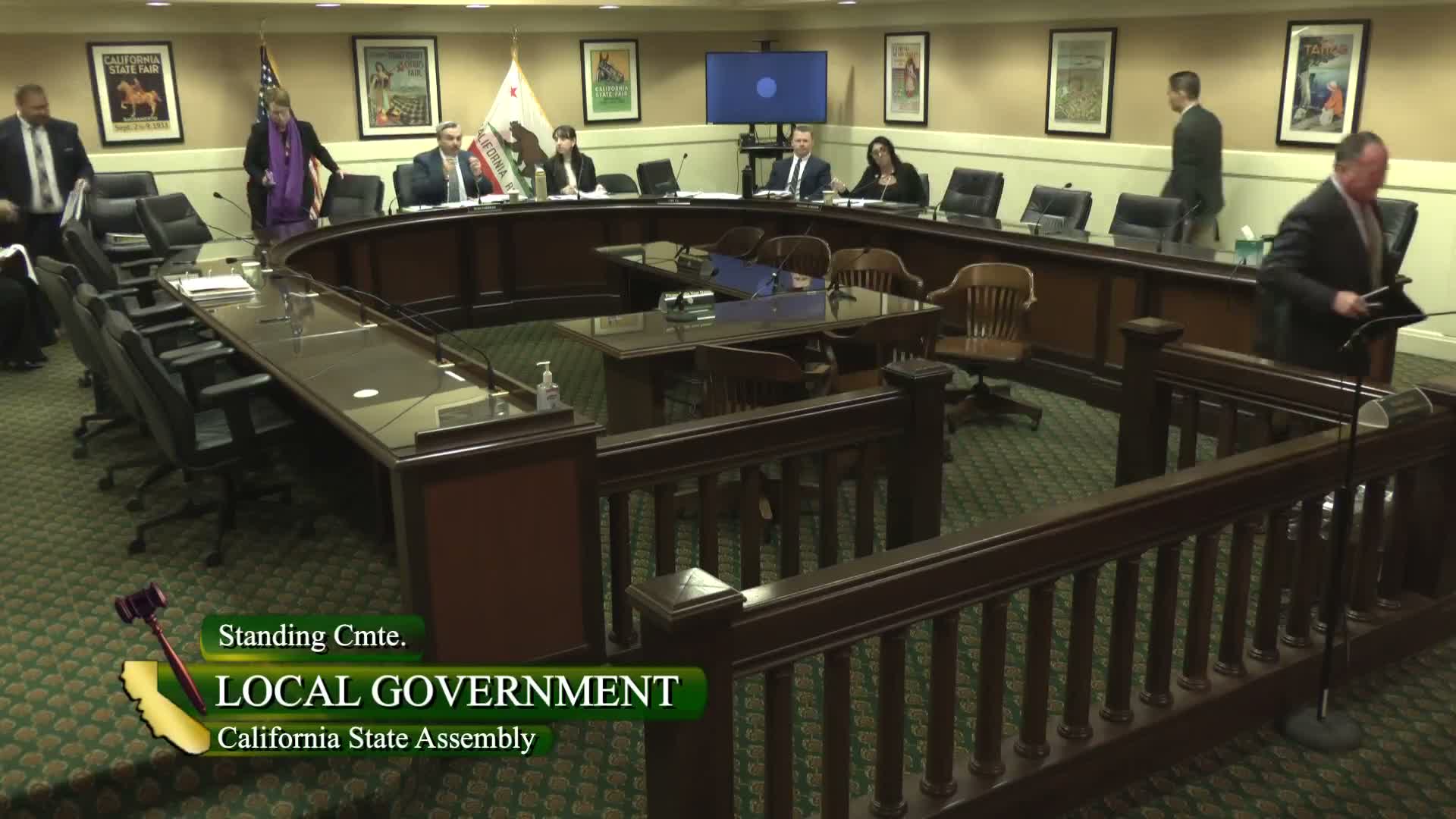
Assemblymember Quirk Silva’s AB 17 51 moved out of the Assembly Local Government Committee on a party-line and courtesy-vote push to send the measure to appropriations, after hours of testimony and debate.
The bill would create a ministerial approval pathway for qualifying townhome projects that meet objective standards, and it would establish a $28-per-hour minimum wage floor for construction workers on covered private townhome developments, with automatic inflation adjustments tied to the consumer price index. The author and supporters emphasized the measure applies to private-for-sale, low-rise townhome projects and does not change prevailing-wage law for public works.
Why it matters: Supporters said ministerial approvals will speed delivery of modest for-sale housing and the wage floor will raise pay for many nonunion residential construction workers who currently earn only the state minimum on some private projects. Ed Manning of the New California Coalition and Danny Curtin of the California Conference of Carpenters urged the committee to back the bill as a way to expand homeownership while improving worker protections.
Opposition and legal concerns: The bill drew broad opposition from building-trades groups and several unions, who argued the measure would undercut long-standing prevailing-wage standards and could become a de facto lower wage benchmark in some federal or state wage determinations. Representatives for the State Building and Construction Trades Council and allied unions said a statutory minimum could exert downward pressure on local prevailing rates and reduce access to benefit packages that prevailing wage provides. Speakers also warned of unintended interactions with federal Davis-Bacon rules for projects that receive federal funds.
Author’s response and committee action: Quirk Silva and supporters said the bill explicitly preserves prevailing-wage determinations and that the $28 figure is a floor, not a ceiling. The author also highlighted enforcement features in the bill — including joint liability provisions and expanded remedies — intended to curb wage theft and improve accountability on private projects. Committee discussion was lengthy and at times heated; several members expressed concern about long-run implications and asked the author to continue working with labor and stakeholder groups. The measure was nevertheless advanced out of committee to the next fiscal referral.
Next steps: AB 17 51 was re-referred to the Committee on Appropriations for further review and possible fiscal analysis. The author committed to continued negotiations with labor and municipal stakeholders before the bill proceeds further.