Get Full Government Meeting Transcripts, Videos, & Alerts Forever!
Get email alerts on the Tourism Funding And Impact topic
No spam. Unsubscribe anytime.
Clackamas County tourism director details funding, visitor numbers and grant investments
Summary
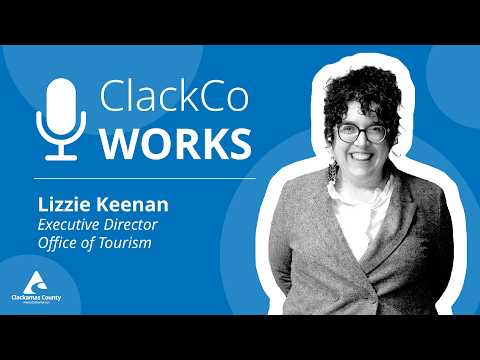
Lizzie Keenan, executive director of the Clackamas County Office of Tourism (Oregon's Mount Hood Territory), described how the office uses a 6% transient lodging tax to fund marketing, grants and infrastructure projects, said the county had about 2.8 million overnight visitors last year and outlined recent grants including funding for the Trillium Lake boardwalk.
Lizzie Keenan, executive director of the Clackamas County Office of Tourism (Oregon's Mount Hood Territory), told Clackaworks that the office is a county service funded primarily by a transient lodging tax collected on overnight stays. "We, essentially, our mission is to improve the lives and experiences of residents through this kind of venue, and industry of tourism through a transient lodging tax," Keenan said.
Keenan said the county collects a 6% transient lodging tax from hotels, motels, short‑term rentals and campgrounds to fund the office's work. The office divides its work into destination development, community relations and marketing, guided by a master plan that prioritizes investments to balance visitor flow and support local businesses.
"We run grant programs," Keenan said, describing a Strategic Investment program that the board recently funded. She said the board approved a slate of grants totaling about $1.718 million to support projects across the county, including completion and accessibility upgrades to the Trillium Lake boardwalk. "A huge chunk of it is fully accessible now," Keenan said.
On markets and visitation, Keenan said the office targets a mix of short‑haul drives, regional visitors (including Portland) and longer‑haul and international travelers. She reported about 2,800,000 overnight visitors last year and estimated total visitors, including day trips, at roughly 6 million to 10 million depending on how day visits are counted. Keenan said international visitors make up a smaller share of total spending but tend to stay longer and help fill off‑season demand.
Keenan placed the local economic impact in concrete terms: she said Clackamas County saw about $680,000,000 in direct visitor spending last year and that spending supports roughly 7,800 full‑time jobs. "Every dollar that we invest in tourism from the office of tourism... essentially correlates to about $143 in direct visitor spending into the county," she said.
Keenan also described outreach aimed at spreading visitors beyond single hotspots. She said the Wooden Shoe Tulip Festival is the county's most visited event in spring and that the office invests in storytelling and advertising to encourage visitors to extend their stay and visit nearby towns (for example, Canby and Molalla) and other attractions so dollars stay in the county longer.
Keenan noted the office is a small team: "We're 9 employees hoping to hire soon," she said, adding that the DMO model covers more than advertising and includes investments in products and places. She pointed to an example in the wake of the Riverside Fire near Estacada, saying TLT‑funded tourism investments were among the first to reopen a campground and initial trail access.
Dylan Blaylock, host and a Clackamas County Public Affairs representative, concluded the interview by thanking Keenan for explaining how transient lodging tax dollars are used to support businesses, access and visitor education across Clackamas County. The segment closed with Keenan’s reminder that many residents may not realize the office exists and that its work is intended to benefit both visitors and residents.
The office did not provide a written packet during the interview; specific grant award line items and exact timing for new hires were not specified.