Get Full Government Meeting Transcripts, Videos, & Alerts Forever!
Get email alerts on the Docket Timelines topic
No spam. Unsubscribe anytime.
House Energy Committee hears RCA on docket timelines as Legislature weighs shorter review windows
Summary
Regulatory Commission of Alaska officials told the House Energy Committee they follow statutory timelines for filings (45-day tariff action; 450-day formal docket) and can extend once 90 days; legislators raised concerns that Senate Bill 180's proposed timeline cuts could squeeze interveners and consumer protection.
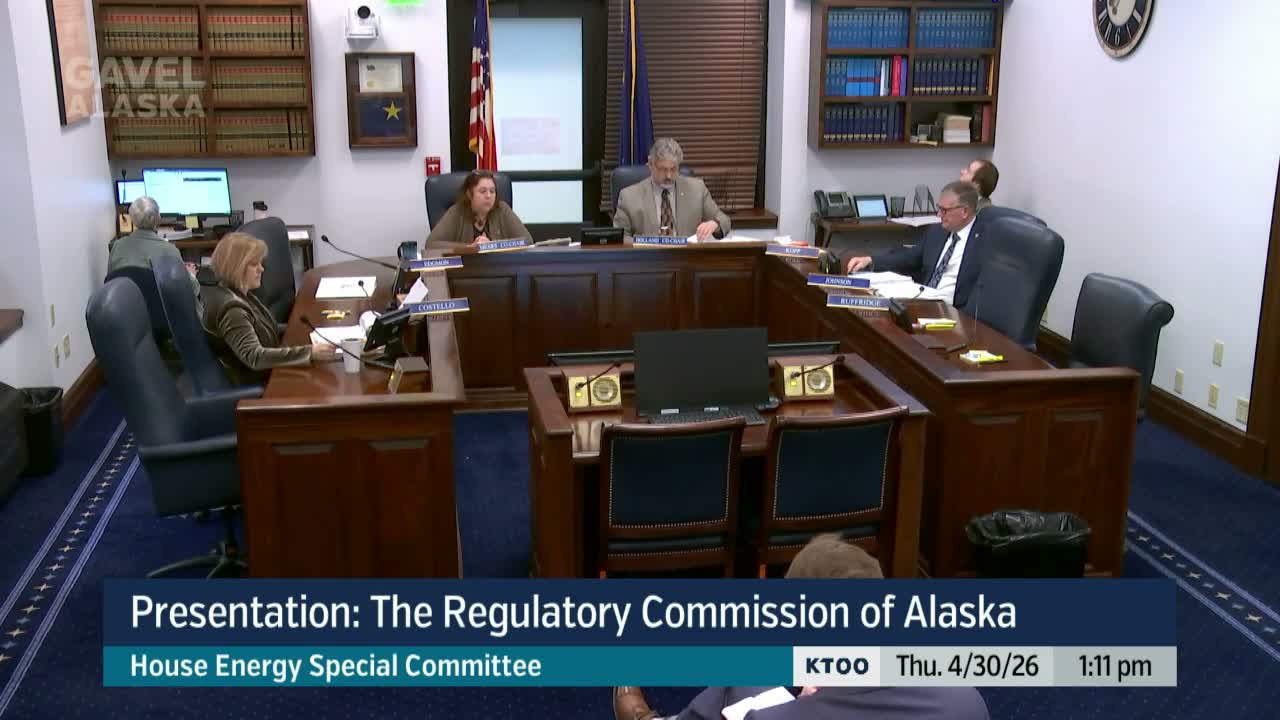
COCHAIR Mears convened the House Energy Committee on April 30 for an informational briefing from the Regulatory Commission of Alaska (RCA) on how the agency classifies filings and manages statutory review timelines.
John Espindola, chair of the RCA, and Commissioner Julie Vogler summarized the commission's docket process, saying tariff filings must be acted on within 45 days and that when a tariff is suspended the formal docket timeline is 450 days after a complete filing; the commission may extend a timeline once for up to 90 days. "We regularly and historically meet all of our statutorily mandated timelines that are imposed on us by the legislature," Espindola told the committee.
Why it matters: legislators said a proposed change in the Legislature (Senate Bill 180 and its amendment) would shorten review windows and could materially affect how utilities, interveners and ratepayers engage in complex proceedings. Cochair Mears noted the amendment under discussion would reduce some timelines from 450 days to about 270 days (and 270 to about 180 days in other amendments), and cautioned that shorter windows could compress discovery and public participation.
Vogler described the pre-hearing conference that follows a suspended filing: the parties set a procedural schedule that determines discovery deadlines, intervenor testimony dates and hearing dates. She said extensions and timeline adjustments are reported in quarterly reports to the Legislature. When Representative Costello asked about administrative law judges, Espindola said the commission has four ALJs who report to the agency and that outside Department of Law counsel is available when needed.
Committee members pressed the commission on staffing and whether compressed statutory timelines would leave sufficient time for interveners and consumer advocates to prepare. Vogler said the commission tracks extensions and staffing issues and reports them; Espindola declined to take a position on the pending legislative amendment but said the commission will meet whatever timelines the Legislature imposes.
The committee asked the RCA to provide links and a brief tutorial on navigating docket materials for several high-profile matter numbers; Espindola said staff could provide those materials as early as the next day. The committee did not take formal action at this meeting.